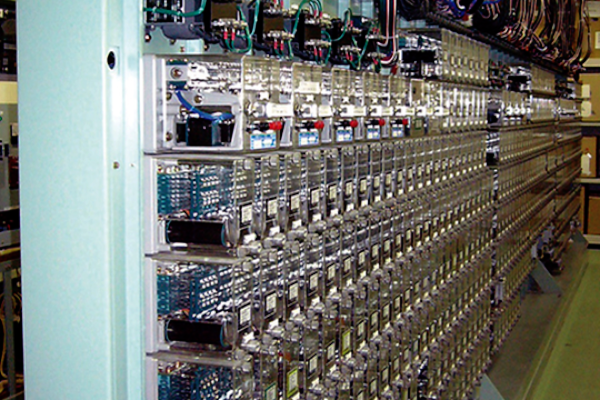
The South Central Railway has commissioned the largest state-of-the-art Electronic Interlocking (EI) system at Gooty yard that will enable operation of more passenger and freight trains in key routes and hassle-free handling of them.
This was the largest EI signalling system, with most advanced and modern features, in SCR that has 343 routes. Gooty is a major railway junction in the Guntakal Division of SCR that handles trains from four important routes of Mumbai, Chennai, Bengaluru and Hyderabad. The most distinguishing feature of this installation is that there will not be any un-signalled or manual movement of trains, leading to safer train operations. Also, Gooty will now have 11 lines with direction reception and dispatch facility, up from only four so far, the release added.
With the regular increase of traffic over time, the sections around the station yard have become highly saturated.With the regular increase of traffic over time, the sections around the station yard have become highly saturated. “The completion of this advanced and modern Electronic Interlocking signalling system and yard remodelling will ease the congestion on this important junction and facilitate running of more number of passenger and freight trains, South Central Railway GM Gajanan Mallya said.
It would help railways in smooth handling of trains, while benefiting the rail customers in speedy transportation of their consignments, he added.
The EI project was jointly executed by the Guntakal Division and Rail Vikas Nigam Limited and completed ahead of schedule.
Source: Constructionweekonline
Image Courtesy: Railwaypro
You may also like
-
Adani Power and Druk Green Power to Develop 770 MW Chamkharchhu-I Hydropower Project in Bhutan
-
India’s Infrastructure Expansion Shifts Focus From Kilometres Built to Hours Saved
-
India and United States Expand Indian Ocean Cooperation Through Strategic Connectivity and Maritime Initiatives
-
India Demonstrates First 5.56 km Free-Space Quantum Key Distribution Link
-
India’s Quantum-Secure Network Reaches 1,000 km as National Quantum Mission Advances Towards 2,000-km Goal
