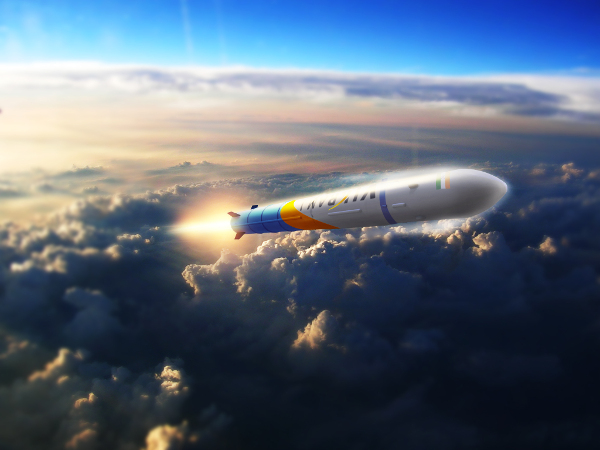
India’s private launch sector is moving rapidly from a historic first orbital mission towards repeatable commercial operations, with Skyroot Aerospace beginning the transfer of hardware for its second Vikram-1 rocket from Hyderabad to the Satish Dhawan Space Centre at Sriharikota.
The development comes only weeks after Vikram-1 successfully reached orbit on 18 July 2026, making Skyroot the first private Indian company to place payloads into orbit from Indian soil. By late August, hardware for the company’s next Vikram-1 mission was already moving towards the launch site, demonstrating the pace at which Skyroot is attempting to establish a recurring launch cadence rather than treating its maiden orbital success as a one-off technology demonstration.
Skyroot co-founder and CEO Pawan Kumar Chandana confirmed that hardware for the next launch was en route just 36 days after the first Vikram-1 mission. Contemporary reporting also indicated that the first stage had begun its journey to Sriharikota, with additional stages expected to follow as the company prepares the second vehicle for integration and launch operations.
From Historic First Flight to Repeat Launch Operations
The significance of the latest development lies in the transition it represents for India’s private space industry.
Reaching orbit for the first time is an enormous technological achievement for any launch company. Establishing a dependable commercial launch service, however, requires something more difficult: producing rockets repeatedly, transporting them to the launch site, integrating them efficiently and carrying out missions on a predictable schedule.
Skyroot’s decision to begin moving the next Vikram-1 hardware to Sriharikota within weeks of its maiden orbital mission suggests that the company has entered this next phase.
The first Vikram-1 mission, designated Mission Aagaman, lifted off from the Satish Dhawan Space Centre on 18 July 2026. ISRO officially recorded the launch at 12:05:30 PM, confirming that the privately developed vehicle successfully reached orbit on its first attempt.
The mission marked the first occasion on which a private Indian company successfully launched an orbital-class rocket from Indian territory.
Vikram-1 Successfully Placed Satellites into Low Earth Orbit
Vikram-1 carried multiple payloads during its maiden orbital mission, including the SCOPE and Grahaa satellites, which were successfully injected into Low Earth Orbit.
ISRO described the achievement as a major milestone for India’s space programme and confirmed that Skyroot had become the first private Indian company to successfully reach orbit from Indian soil.
The successful flight was especially significant because it came on Vikram-1’s first orbital attempt. Launch vehicles typically undergo one of the most difficult engineering transitions in aerospace when moving from component testing and suborbital demonstrations to a complete orbital mission involving staging, guidance, propulsion, avionics, structural loads and precise payload deployment.
Mission Aagaman demonstrated that Skyroot’s integrated launch system could perform across the full orbital flight profile.
Second Vikram-1 Already Moving Towards Sriharikota
The latest hardware movement indicates that production of the second Vikram-1 was already well advanced before the first rocket flew.
Skyroot has begun transferring the next flight vehicle’s hardware from its manufacturing facilities in Hyderabad to Sriharikota, where the rocket will undergo launch-site integration, testing and mission preparation.
Pawan Chandana highlighted the short interval between the first orbital launch and movement of hardware for the second mission, saying that only 36 days had elapsed since Vikram-1’s first flight when hardware for the next launch began moving towards the launch site.
That turnaround is strategically important for the company because commercial launch customers are interested not only in whether a rocket can reach orbit, but also in how frequently the operator can provide launch opportunities.
A launch company capable of manufacturing and flying vehicles regularly gains a major advantage in the increasingly competitive global small-satellite launch market.
Skyroot Targeting Another Vikram-1 Flight in 2026
Skyroot is working towards another Vikram-1 mission before the end of 2026 as it accelerates the transition from developmental launches towards an operational launch-service business. Reporting surrounding the second vehicle indicates that the company intends to return to flight within the same calendar year as its maiden orbital success.
The compressed schedule reflects the production philosophy behind the Vikram family, which has been designed around rapid manufacturing, simplified operations and dedicated launch services for small satellites.
For emerging satellite operators, launch frequency can be as important as payload capacity. Traditional rideshare launches often require spacecraft to wait for predetermined missions and accept orbital destinations designed around the requirements of several customers.
Skyroot is attempting to offer an alternative based on more flexible, dedicated missions.
Vikram-1 Designed for the Small-Satellite Market
Vikram-1 is designed specifically for small-satellite launches and forms the first operational member of Skyroot’s orbital launch-vehicle family.
According to the company, the rocket can carry up to 350 kilograms to Low Earth Orbit and approximately 260 kilograms to Sun-synchronous orbit, depending on mission configuration.
The vehicle incorporates extensive use of carbon-composite structures, solid-propellant propulsion and a liquid-powered orbital adjustment system.
Skyroot describes Vikram-1 as an on-demand launch vehicle intended to offer customers rapid and customisable deployment options rather than relying exclusively on large multi-payload missions.
This positioning places the vehicle directly within the global market for small satellites, where Earth-observation, communications, scientific and technology-demonstration spacecraft are creating demand for more specialised access to orbit.
Restartable Upper Stage Enables Greater Mission Flexibility
One of Vikram-1’s important features is its Orbital Adjustment Module, which uses Skyroot’s liquid propulsion technology to support precise satellite deployment.
The module incorporates the company’s Raman-2 engine, which is produced using additive manufacturing, along with smaller control thrusters and avionics required for orbital manoeuvres. Skyroot has designed the architecture to support multiple satellite deployments and greater flexibility in placing payloads into their required orbital configurations.
This capability is particularly important in the small-satellite market because customers increasingly require tailored orbital insertion rather than merely reaching a general Low Earth Orbit destination.
Greater orbital precision reduces the propulsion and fuel that satellites themselves must use after deployment, potentially extending their operational lifetime.
Carbon-Composite Construction Central to Vikram Architecture
Skyroot has made carbon-composite structures a central element of its launch-vehicle design.
Composite construction can reduce structural mass while maintaining the strength necessary to withstand aerodynamic and mechanical loads during ascent. Lower structural mass allows a larger proportion of the launch vehicle’s performance to be devoted to carrying payload.
The company had already validated key composite technologies during its Vikram-S suborbital mission in November 2022, when the rocket reached an altitude of 88.8 kilometres and a maximum velocity of Mach 5.07.
Skyroot said that mission successfully demonstrated propulsion, avionics, telemetry and carbon-composite structures that subsequently contributed to development of the orbital Vikram family.
The progression from Vikram-S to Vikram-1 illustrates how the company used an incremental flight-test strategy before attempting orbital operations.
From Vikram-S to Vikram-1 in Less Than Four Years
Skyroot entered Indian space history on 18 November 2022, when Vikram-S became the first privately developed Indian rocket to launch from the country.
That mission, called Prarambh, was suborbital and served primarily as a technology demonstrator. It validated systems intended for use across Skyroot’s future orbital rockets, including propulsion, composite structures and avionics.
Less than four years later, Vikram-1 successfully reached orbit.
The shift from a relatively small suborbital demonstrator to a complete multi-stage orbital launch vehicle represents a substantial increase in technological complexity. Orbital rockets require far higher velocity, precise staging, navigation, guidance, propulsion sequencing and highly reliable flight-control systems.
Mission Aagaman therefore represented the culmination of several years of propulsion tests, structural qualification, stage testing and launch-site integration.
The rapid preparation of a second flight vehicle suggests that Skyroot is now applying that engineering experience to serial production.
Repeatability Is the Next Major Test
For a commercial launch company, a successful maiden orbital flight establishes technological credibility. The next challenge is operational repeatability.
Commercial customers require confidence that launch vehicles can be manufactured consistently and flown according to reliable schedules. Each successful repeat mission contributes to the vehicle’s flight heritage and reduces uncertainty for satellite operators selecting a launch provider.
The movement of second-flight hardware to Sriharikota is therefore an important industrial milestone even though it is less dramatic than the maiden launch itself.
It indicates that Skyroot’s manufacturing system is producing successive flight vehicles and that the company is beginning to establish the logistics and launch-site processes required for recurring operations.
The ability to shorten the interval between missions will eventually determine whether Vikram-1 can develop into a commercially viable launch service rather than remaining primarily a technological achievement.
Hyderabad Emerging as a Private Rocket Manufacturing Centre
The Vikram programme also highlights Hyderabad’s increasingly important position within India’s private aerospace and space-manufacturing ecosystem.
Skyroot designs and manufactures a large portion of its launch-vehicle technology at its facilities in Hyderabad before transferring flight hardware to Sriharikota.
The company has developed propulsion, avionics, composite manufacturing and vehicle-integration capabilities as part of an effort to keep much of the Vikram technology stack under domestic control.
As production expands, the programme also supports a wider network of Indian suppliers providing specialised materials, electronics, precision manufacturing and aerospace components.
This industrial ecosystem is essential for increasing launch cadence because recurring rocket production depends on reliable supply chains just as much as on the design of the vehicle itself.
Sriharikota Becoming a Shared National Launch Hub
Skyroot’s operations also demonstrate how India’s established government space infrastructure is being opened progressively to private companies.
Vikram-1 launches from ISRO’s Satish Dhawan Space Centre at Sriharikota, using infrastructure made available through the reforms that opened India’s space sector to non-government entities.
The maiden orbital flight took place from Sriharikota’s historic First Launch Pad, the same national launch centre used for major ISRO missions.
This arrangement allows private companies to focus on developing launch vehicles while making use of established range safety, tracking, telemetry and launch infrastructure.
IN-SPACe has become the principal institutional mechanism for enabling this interaction between private companies and government space facilities.
The result is an emerging model in which ISRO remains the country’s principal national space agency while privately developed rockets increasingly share India’s spaceports.
Space Reforms Created the Framework for Private Orbital Launches
Skyroot’s orbital programme is one of the clearest outcomes of the space-sector reforms introduced by the Government of India beginning in 2020.
Those reforms opened activities that had previously been dominated by government institutions to substantially wider private-sector participation.
The Indian Space Policy 2023 further established a framework allowing non-government entities to participate across satellite manufacturing, launch vehicles, space-based services and downstream applications.
By 2026, the government reported that India had developed an ecosystem of more than 400 space startups, compared with only a handful in the earlier phase of the country’s private space industry.
Vikram-1 has turned that policy transition into a highly visible operational achievement by demonstrating that a privately financed Indian company can design, manufacture and fly an orbital-class launch vehicle.
Commercial Cadence Now Becomes Central
Skyroot’s stated commercial model places considerable emphasis on responsive launch.
The company markets Vikram-1 as a dedicated or rideshare launch option with flexible mission planning for small-satellite operators. It also presents the vehicle as capable of providing customised orbital deployment rather than requiring every customer to accept the same destination.
That business model depends heavily on launch cadence.
A customer seeking rapid access to orbit gains little advantage from a smaller dedicated rocket when the provider can fly only rarely. A steady production line and repeated missions are therefore fundamental to making responsive launch commercially meaningful.
The second Vikram-1 vehicle represents an early test of this model.
Skyroot Already Planning the More Powerful Vikram-II
Skyroot’s launch roadmap extends beyond Vikram-1.
The company is developing Vikram-II, a larger vehicle designed around a cryogenic propulsion architecture. According to Skyroot, Vikram-II is intended to carry up to approximately 900 kilograms to Low Earth Orbit and 600 kilograms to Sun-synchronous orbit, providing substantially greater capacity than Vikram-1.
Skyroot currently lists Vikram-II for launch beginning in 2027.
The development of the larger vehicle indicates that Vikram-1 is intended to serve as the opening stage of a broader launch family rather than as a standalone rocket.
Operational experience gained through repeated Vikram-1 missions will consequently provide valuable data for manufacturing, range operations, guidance, propulsion and mission management across the company’s future launch systems.
India’s Private Launch Industry Enters Its Operational Phase
The significance of Skyroot’s second Vikram-1 extends beyond the company itself.
India’s private launch industry has crossed a threshold between developing rockets and actually operating them.
Vikram-S demonstrated that a private Indian company could build and fly a rocket. Vikram-1 then demonstrated that such a company could reach orbit. The movement of hardware for the second orbital vehicle now addresses the next challenge: whether Indian private launch providers can turn individual successes into recurring operations.
That progression is essential for India to build a meaningful share of the international commercial-launch market.
Satellite operators increasingly seek greater choice in launch schedules, orbital destinations and spacecraft integration. A domestic ecosystem capable of supplying frequent launches would provide Indian satellite companies with greater independence while allowing Indian launch providers to compete internationally.
From First Orbit to Launch Cadence
Skyroot’s first Vikram-1 mission on 18 July 2026 was a historic event because it established India’s first successful privately developed orbital launch capability. The movement of hardware for the second Vikram-1 only weeks later is significant for a different reason.
It demonstrates the beginning of a production and operational cycle.
Rocket programmes mature not when a single vehicle succeeds, but when successive vehicles can be manufactured, integrated and flown with increasing regularity. Skyroot’s rapid preparation of the second Vikram-1 indicates that the company is now focused on establishing exactly that capability.
With hardware already moving from Hyderabad to Sriharikota and another Vikram-1 mission being prepared for 2026, India’s private launch programme is entering a new phase in which the central measure of progress will increasingly be flight frequency, reliability and commercial execution.
The first Vikram-1 proved that an Indian private company could reach orbit. The second vehicle is intended to demonstrate that it can keep going back.
You may also like
-
India’s Economic Warfare Challenge: Strategic Autonomy, Energy Security and the Rise of a Global Power
-
India-US Trade Deal Stalemate: Why Washington’s Tariff Pressure Has Failed to Secure an Agreement
-
US Double Standards in Foreign Policy: 16 Recent Cases Involving India, Russia, China and Global Trade
-
India’s Arctic Energy Ambitions: Russian Oil, LNG and a New Sea Route to Indian Ports
-
India and Russia Explore Joint Icebreaker Construction as Maritime Industrial Cooperation Expands
