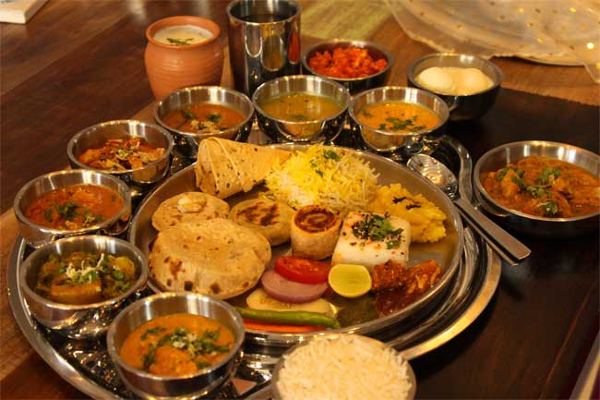
Siddhānna Prakaraṇa is one of the most valuable windows into India’s ancient food science. It belongs to the wider culinary and Ayurvedic world of Bhojanakutūhalam, the celebrated Sanskrit treatise associated with Raghunātha Sūri, also known as Raghunātha Gaṇeśa Navahasta. The name itself carries the spirit of the text. Siddhānna means prepared or cooked food, while Prakaraṇa means a section, chapter or organised treatment of a subject. Together, Siddhānna Prakaraṇa may be understood as the organised science of cooked preparations.
This is not a casual cookbook. It is a serious work of Indian dietetics where food is studied as nourishment, medicine, discipline, taste, ritual and daily health practice. In the Indian tradition, cooking was never seen as merely the transformation of raw ingredients into meals. It was the refinement of nature through fire, water, ghee, spices, timing, vessel, season and digestive intelligence. Siddhānna Prakaraṇa preserves this worldview with great clarity.
Bhojanakutūhalam stands among the important Sanskrit works that deal specifically with food, culinary art and dietetics. It belongs to the 17th-century intellectual environment where scholars gathered earlier Ayurvedic, Sanskritic, household and regional food knowledge into organised treatises. The work discusses food materials, their qualities, methods of preparation, rules of consumption, edible and unsuitable combinations, digestive effects, and the wider relationship between food and health. It shows that Indian civilisation had a highly developed science of nutrition long before modern diet charts, calorie labels and wellness industries.
Siddhānna Prakaraṇa is especially important because it moves from raw ingredients to prepared food. Ayurveda always studies food at many levels. A grain has one quality when raw, another when washed, another when soaked, another when roasted, another when boiled, another when fried in ghee, another when fermented, and another when mixed with curd, buttermilk, jaggery, spices or herbs. The same ingredient can become light or heavy, heating or cooling, nourishing or cleansing depending on how it is processed. Siddhānna Prakaraṇa captures this transformation.
The ancient Indian kitchen was a laboratory of Agni. Fire was not used only to soften food. It changed the guna, or qualities, of ingredients. It altered digestibility. It opened aroma. It reduced raw heaviness. It preserved food for a short period. It made pulses more suitable. It turned grains into edible forms. It converted milk, curd, buttermilk, ghee, sugar, flour, fruits, roots, vegetables and spices into planned preparations. This is why cooked food receives a separate place in the classical tradition.
The Siddhānna approach is deeply Ayurvedic. It does not treat every dish as suitable for everyone. A preparation is understood through rasa, guna, virya, vipaka and dosha effect. Rasa is taste. Guna is quality. Virya is potency, usually heating or cooling. Vipaka is post-digestive effect. Dosha effect refers to how the preparation influences Vata, Pitta and Kapha. This framework makes the text more than culinary literature. It becomes a guide to personalised diet.
Many recipes associated with Siddhānna Prakaraṇa are grouped under bhakshya vishesha, meaning special eatable preparations. These include vada, vataka, pupa, purika, modaka-like preparations, fried cakes, pulse-based foods, flour preparations, vegetable-based vadas, curd-based dishes and sweetened preparations. These are not random snacks. Each dish is described with ingredients, method and health qualities. Some are strengthening. Some are light. Some improve taste. Some increase nourishment. Some are useful for appetite. Some pacify specific doshas. Some are heavy and require strong digestion.
The category of vada and vataka is especially important. These preparations show how ancient Indian cooks combined pulses, vegetables, spices and souring agents into compact, fried, steamed or cooked forms. Examples from the Siddhānna-linked tradition include takra vada, masha vada, dahi vada, kushmanda vataka, nimba kusuma vataka, surana vataka and other specialised forms. Each carries a specific dietetic personality. A black gram preparation gives strength but can be heavy. A neem-flower preparation becomes sharp, bitter and cleansing. A pumpkin-based preparation carries a different balance. A buttermilk-based preparation adds digestive and sour qualities.
The pupa and purika traditions are equally revealing. These show the Indian science of flour-based cooked foods. Rice flour, wheat flour, black gram, ghee, oil, sugar, jaggery and spices were used to make cakes, fried breads and compact eatables. The texts often describe whether such preparations are guru, meaning heavy to digest, or laghu, meaning light; whether they are vrishya, meaning nourishing and aphrodisiac; whether they improve taste; and whether they suit people with weakness, low appetite or specific dosha conditions. In this system, even a sweet cake is not dismissed as indulgence. It is analysed according to digestion, strength, season and constitution.
This is the greatness of Siddhānna Prakaraṇa. It sees cooking as a change in medical character. Raw black gram is one thing. Soaked black gram is another. Fried black gram vada is another. Black gram cooked with buttermilk is another. Black gram combined with pepper, cumin, ginger, hing and salt is another. The kitchen becomes a place where dravya, or substance, meets samskara, or processing. Ayurveda teaches that samskara can transform the effect of food. Siddhānna Prakaraṇa is a practical demonstration of that principle.
The text also reflects the importance of spices in Indian food science. Maricha, jiraka, hingu, ardraka, methika, lavana, dhanyaka, ela and other ingredients appear in traditional food preparations because they help digestion, improve aroma, balance heaviness, reduce gas, stimulate appetite and make dense foods suitable for the body. Ancient Indian cuisine used spices with precision. Pepper was not only for heat. Cumin was not only for flavour. Hing was not only for smell. Ginger was not only for sharpness. These were digestive instruments.
Another major theme is freshness. Many Siddhānna-type preparations are best consumed fresh or within the day. This reflects an important Ayurvedic rule: cooked food carries prana when fresh, while stale food loses vitality and becomes harder for digestion. Ancient households understood that food safety, digestibility and vitality are connected. The recommendation to consume many preparations within the day shows the practical intelligence of the tradition. It also matches modern concerns around freshness, microbial safety and the quality of cooked foods.
Siddhānna Prakaraṇa also shows that ancient Indian food science was not restricted to elite kitchens. It includes grains, pulses, curd, buttermilk, vegetables, flowers, roots, flour, ghee, oil and common spices. These were ingredients of real households. The text gives dignity to everyday food. It treats the kitchen as a site of knowledge. A grandmother preparing vada, a vaidya advising soup, a temple cook making offerings, a farmer eating strength-giving pulse food, and a scholar classifying preparations all belong to the same civilisational chain.
The section also helps us understand regional Indian cuisine. Many foods known today as vada, appam, pupa, puri, bati, rasam, soopa, kanji and sweet cakes have older Sanskritic, Ayurvedic and regional roots. Siddhānna Prakaraṇa preserves an earlier layer of this culinary history. It shows how food names travelled, changed pronunciation, entered local languages and survived in homes. What appears today as a snack often has a long classical memory behind it.
In modern times, Siddhānna Prakaraṇa has gained new relevance because of the Ayurveda Aahara framework. Classical food preparations from texts such as Bhojanakutūhalam are being studied, decoded and listed in modern regulatory documents. This brings ancient dietary wisdom into a contemporary food-safety and wellness framework. It gives food businesses, researchers and the public a way to reconnect with classical recipes through documented ingredients, preparation methods and health claims.
This is a major development because Ayurveda Aahara is not simply about branding food as traditional. It requires textual basis. A preparation should be traceable to an authoritative Ayurvedic or classical source. Its ingredients, method and intended health benefit must be examined. Siddhānna Prakaraṇa becomes valuable here because it offers an organised source of cooked food preparations with clear traditional identity.
The deeper message of Siddhānna Prakaraṇa is that food must match the person. Heavy food is good for one person and unsuitable for another. Fried food may strengthen a weak person with strong digestion and burden a sedentary person with Kapha excess. Sweet preparations may nourish depletion but disturb people with diabetes or metabolic heaviness. Sour buttermilk preparations may kindle appetite but need caution in people with aggravated Pitta. Bitter and pungent preparations may cleanse Kapha but may be too drying for Vata. This personalised approach is the heart of Ayurveda.
The book also reminds us that the Indian meal was designed, not assembled. Taste, sequence, texture, digestion and after-effect mattered. The cook was expected to understand what is light, what is heavy, what stimulates Agni, what builds tissue, what causes heaviness, what creates clarity, what should be eaten fresh, and what should be avoided in certain conditions. This is why Ayurveda calls proper food the foundation of health. Medicine begins only after food has done its work.
Siddhānna Prakaraṇa deserves renewed attention today. India is rediscovering millets, pulses, traditional grains, fermented foods, buttermilk preparations, medicinal spices and regional recipes. At the same time, modern lifestyles have created weak digestion, irregular eating, excess processed food, metabolic disorders and loss of seasonal eating. A text like Siddhānna Prakaraṇa offers a civilisational correction. It teaches that cooked food should be intelligent, seasonal, digestible, fresh and suited to the eater.
For researchers, it is a source of food history. For Ayurveda students, it is a guide to applied dietetics. For chefs, it is a map of traditional culinary technique. For wellness writers, it is a bridge between ancient knowledge and modern nutrition. For households, it is a reminder that the kitchen itself can be a place of healing.
The greatness of Siddhānna Prakaraṇa lies in its combination of taste and therapy. It never separates flavour from health. A dish must be enjoyable, but it must also be digestible. It may be rich, but its effect must be understood. It may be simple, but its preparation must be correct. Food must satisfy the tongue, support Agni, nourish the body and respect the doshas. This is the complete Indian view of cooking.
In that sense, Siddhānna Prakaraṇa is not merely an old food section in a Sanskrit treatise. It is a living manual of India’s kitchen intelligence. It shows how Bharat studied food with the eye of a physician, the hand of a cook, the mind of a scientist and the heart of a civilisation that saw anna as sacred. Every grain, every pulse, every spice, every vada, every soup, every cake and every cooked preparation carried meaning. Food was medicine. Food was culture. Food was discipline. Food was life.
Siddhānna Prakaraṇa stands today as a powerful reminder that the ancient Indian kitchen was never ordinary. It was a place where fire refined nature, spices guided digestion, recipes preserved memory, and cooked food became a path to health.
You may also like
-
Ayurveda on Cold Foods and Iced Drinks: Why Food Temperature Matters for Digestion
-
Serum Institute of India-Manufactured Ebola Vaccine Enters Clinical Trial in Uganda
-
Ayurveda and Hydration: How Much Water Should We Really Drink?
-
Warm Water in Ayurveda: When and Why It Is Recommended
-
Women Make Up 43% of India’s Ayush Workforce as Sector Supports 17.6 Lakh Livelihoods
