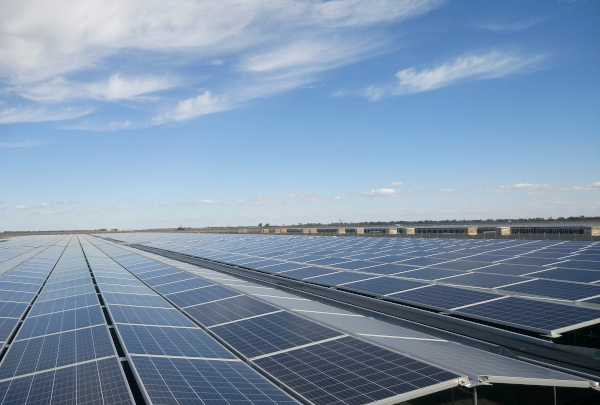
The Solar Energy Corporation of India (SECI) has invited bids for selection of solar power developers for setting up solar PV power projects.
The scope of work involves setting up 2,500 MW ISTS-connected solar PV power projects at Ultra Mega Renewable Energy Power Park (UMREPP) in Koppal district Karnataka (ISTS-X).
In another news, the Union government has appointed state-run lender Indian Renewable Energy Agency (Ireda) as the implementing agency for setting up solar power plants by Central Public Sector Undertakings (CPSU). The CPSU scheme, meant to promote domestic solar manufacturing, was being run by the Solar Energy Corporation of India (SECI).
The Cabinet has already sanctioned a viability gap funding (VGF) support of Rs 8,580 crore towards this scheme, capped at Rs 70 lakh per MW.CPSUs have not shown a keen interest in participating in this scheme which aims to set up 12,000 MW of solar capacity by government companies by FY23. The Cabinet has already sanctioned a viability gap funding (VGF) support of Rs 8,580 crore towards this scheme, capped at Rs 70 lakh per MW.
Till date, SECI had conducted two auctions under the scheme and only 2,027 MW could be awarded mainly due to tepid response from CPSUs. About 85% of this capacity has been awarded to NTPC. The auctions were conducted on the basis of discount on VGFs offered by the bidders. NTPC won the projects even after offering no discount on the VGFs. The Union government has also reduced the maximum tariff at which government entities will buy power from these plants by 20% to Rs 2.8/unit. This, experts pointed, would make the scheme more unattractive to CPSUs.
Domestic solar module makers were looking forward to this scheme as one of the major sources of demand as more than 85% of all module requirement in India is met through imported component, mainly Chinese, as these products are 8-10% cheaper than those made by Indian counterparts. Major domestic solar manufacturers are Tata Power Solar, Mundra Solar (Adani), Waaree Energies and Vikram Solar.
Power procured from projects under CPSU scheme will have to be consumed by the government entities only, which is in line with the General Agreement on Tariffs and Trade (GATT), 1994, which permits governments to purchase domestic products preferentially without violating World Trade Organisation norms.
Source: Counstructionweekonline
You may also like
-
SCI and India’s Push for a Larger Indigenous Maritime Fleet
-
Jawahar Dweep Becomes India’s First Plastic-Free Oil Terminal at Mumbai Port
-
Tata Projects and MDS Aero Partner to Build Advanced Aero-Engine Test Infrastructure in India
-
Centre Approves ₹1,176 Crore Six-Lane Bridge Across Teesta River on NH-10 at Sevoke
-
Essar-Backed Mesabi Metallics Announces $18 Billion US Steel Investment Linking Minnesota Mine With Iowa Plant
