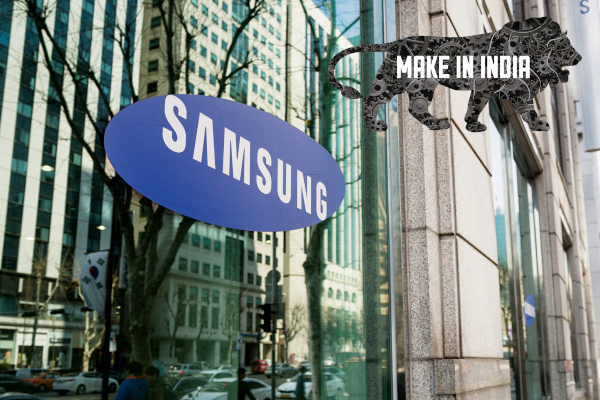
Samsung is strengthening its enterprise technology play in India with an AI-powered Business Experience Studio in Gurugram, designed to showcase how connected devices, smart displays, mobility solutions, artificial intelligence platforms and enterprise-grade security can work together for modern businesses. The move reflects Samsung’s attempt to go beyond consumer electronics and position itself as a full-stack technology partner for India’s fast-digitising enterprise sector.
The Gurugram Business Experience Studio, or BES, is built as a live demonstration centre where companies can experience industry-specific digital solutions rather than merely view standalone products. The facility focuses on sectors such as retail, banking and financial services, healthcare, education and hospitality, where businesses are increasingly looking for AI-driven tools to improve productivity, customer engagement, operational efficiency and secure digital interaction.
According to Samsung, the new enterprise push is aligned with India’s wider digital transformation, where public and private sector organisations are adopting artificial intelligence, connected infrastructure and cloud-enabled platforms at a faster pace. The company says its enterprise strategy is now centred on AI-powered ecosystems that combine hardware, software, platforms and security into a single scalable framework for businesses.
The studio demonstrates Samsung’s broader B2B portfolio, including smart displays, mobile devices, AI-enabled systems and Knox security solutions. For enterprises, this means the focus is not only on buying devices, but on understanding how those devices can be integrated into real-world business environments such as classrooms, hospitals, retail stores, hotel lobbies, boardrooms, banking zones and experience centres.
Retail is expected to be one of the important use cases for the Gurugram BES. Samsung has showcased AI-powered retail ecosystems at the facility, including immersive customer-engagement solutions and glasses-free 3D spatial signage. These technologies are designed to help brands create more interactive physical spaces, where digital displays, content platforms and AI tools can personalise and enhance the customer experience.
Banking and financial services are another major focus area. With banks and NBFCs expanding digital branches, self-service zones and secure customer-interaction platforms, Samsung’s enterprise stack aims to support secure digital engagement through connected screens, mobility devices and Knox-backed security. Such systems can help institutions create smarter branch environments while maintaining data protection and device management standards.
In healthcare, the studio highlights how connected devices and display systems can support more efficient hospital operations, patient information systems and clinical communication. In education, Samsung is showcasing smart classrooms, interactive displays and digital learning environments that can help institutions modernise teaching, campus communication and student engagement.
The Gurugram facility will also act as a co-creation hub, where enterprises, Samsung teams and technology partners can collaborate on customised solutions. This is important because most large organisations do not need generic technology stacks; they require solutions shaped around sector-specific workflows, compliance needs, customer interfaces and internal operations.
Samsung already operates a Business Experience Studio in Mumbai, and the Gurugram centre gives the company a stronger presence in North India’s enterprise market. The company has also indicated that it plans to take these AI-powered business solutions to more cities, including tier-two and tier-three markets, through its regional sales network.
The timing is significant. Indian companies are increasingly adopting AI not as a futuristic experiment, but as a practical tool for sales teams, back-end operations, customer service, retail engagement, education delivery and secure enterprise workflows. Samsung’s Business Experience Studio is aimed at helping decision-makers see these applications in action before deploying them at scale.
For Samsung, the initiative marks a deeper shift from product-led selling to solution-led enterprise engagement. Instead of positioning itself only as a maker of phones, televisions, displays and appliances, the company is trying to build an integrated enterprise ecosystem around AI, mobility, display technology, security and connected platforms. This could help Samsung compete more strongly in India’s enterprise technology market, where demand for digital infrastructure is rising across sectors.
The Gurugram BES also underlines the growing importance of physical experience centres in enterprise technology sales. Large organisations often need to see how solutions work in real environments before committing to deployment. By creating live zones for retail, banking, education, healthcare and hospitality, Samsung is giving businesses a practical view of how AI-powered connected ecosystems can be used on the ground.
Overall, Samsung’s AI-powered Business Experience Studio in Gurugram represents a strategic bet on India’s enterprise digital transformation. As more Indian businesses modernise their operations, customer-facing spaces and internal workflows, the demand for secure, integrated and AI-enabled technology platforms is likely to grow. Samsung is positioning itself to capture this opportunity by turning its hardware strength into a broader enterprise solutions ecosystem.
You may also like
-
India’s Startup Ecosystem Expands Beyond Bengaluru and Hyderabad as Tier-II Cities Gain Momentum
-
NABARD Report Highlights Growing Strength of Women-Led Farmer Producer Organisations in India
-
Indian Banks Expected to Record 25.4% Profit Growth in Q2 FY27 as Lending Expands and Margins Prepare for Recovery
-
India Targets 1 Billion 5G Users by 2030 as Telecom Sector Prepares for Global 6G Leadership
-
GHCL Begins Production at 2,800-Tonne Bromine Manufacturing Facility in Gujarat
