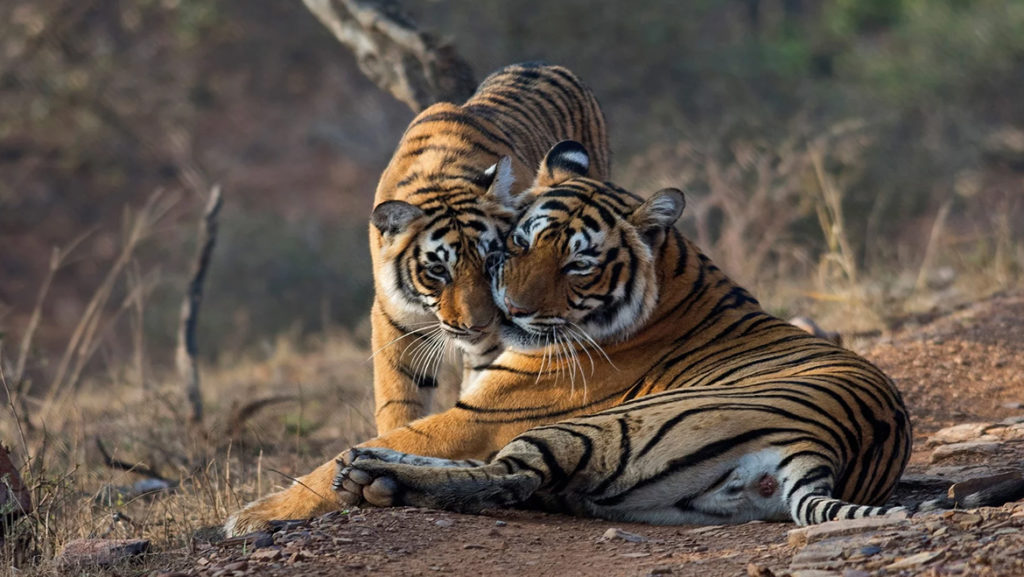
India is set to host the first International Big Cat Alliance Summit in New Delhi on June 1 and 2, 2026, marking a major milestone in the country’s global conservation leadership. The summit will bring together leaders, policymakers, conservation experts and representatives from big cat range countries to strengthen international cooperation for the protection of the world’s most iconic wild cat species.
Union Minister for Environment, Forest and Climate Change Bhupender Yadav launched the official website and logo for the IBCA Summit 2026 in New Delhi. A promotional film on the summit was also released during the event. Several Heads of Mission from big cat range countries, along with senior officials from the Ministry of Environment, Forest and Climate Change, Ministry of External Affairs and the International Big Cat Alliance, attended the programme.
Addressing the event, Mr. Yadav said the summit would be an important global gathering dedicated to the conservation of big cats. He also called upon big cat range countries that are not yet part of IBCA to join the alliance and contribute to securing the future of these species. The summit is expected to see participation from Heads of State and Heads of Government of member and observer countries.
The International Big Cat Alliance is an inter-governmental international organisation headquartered in India. It has been established for the conservation of seven major big cat species — tiger, lion, leopard, snow leopard, cheetah, jaguar and puma. Of these, five species — tiger, lion, leopard, snow leopard and cheetah — are found in India, giving the country a special role in global big cat conservation.
A key outcome of the summit is expected to be the adoption of the first-ever global declaration on big cat conservation, titled the “Delhi Declaration.” The declaration is expected to outline shared priorities, promote transboundary cooperation and support a landscape-based approach for conserving big cats and their habitats.
The landscape-based approach is significant because big cat conservation cannot be limited to isolated protected areas alone. Species such as tigers, leopards, snow leopards, lions and cheetahs require connected habitats, prey availability, safe corridors, strong anti-poaching systems and cooperation between local communities, forest departments and neighbouring countries. The Delhi Declaration is expected to push conservation beyond narrow park boundaries and toward wider ecological protection.
India’s leadership in this area is built on decades of conservation work. Project Tiger, launched in 1973, became one of the world’s most recognised species recovery programmes. India has also taken major steps for the conservation of Asiatic lions, leopards, snow leopards and cheetahs. The government has repeatedly highlighted scientific management, habitat protection, institutional coordination and community participation as key reasons behind India’s conservation progress.
The IBCA Summit also comes at a time when big cats face serious global threats. Habitat loss, illegal wildlife trade, poaching, shrinking prey base, climate pressures and human-wildlife conflict continue to endanger several big cat populations across the world. Many big cat species also live across political borders, making international cooperation essential for their long-term survival.
For India, the summit is not only an environmental event but also a diplomatic platform. By hosting the first IBCA Summit, India is positioning itself as a global voice for wildlife conservation, ecological balance and South-South cooperation. The alliance can help range countries share best practices in habitat management, anti-poaching technology, scientific monitoring, veterinary care, community-based conservation and conflict mitigation.
The summit is also expected to strengthen cooperation between governments, conservation organisations, scientists and local communities. Big cat protection is closely linked to forest health, water security, biodiversity and climate resilience. Protecting apex predators often helps protect entire ecosystems, because conserving big cats also means conserving forests, grasslands, mountains, wetlands and the species that live within them.
India’s hosting of the first IBCA Summit therefore marks an important step in turning national conservation experience into global cooperation. With the Delhi Declaration expected to become the summit’s major outcome, the event could provide a common framework for countries to work together in protecting the seven big cat species and their habitats for future generations.
Sources:
https://www.newsonair.gov.in/india-to-host-1st-ibca-summit-in-june-this-year/
https://www.pib.gov.in/PressReleasePage.aspx?PRID=2258491
https://www.pib.gov.in/PressReleaseIframePage.aspx?PRID=2010122
https://ibca.world/about_ibca
https://ddnews.gov.in/en/india-to-host-first-international-big-cat-alliance-summit-in-new-delhi-in-june/
You may also like
-
India Emerges as a Global Hub for Multinational Military Exercises, Bridging Diverse Defence Partnerships
-
India, Brazil and South Africa Strengthen Maritime Security Cooperation Through IBSAMAR IX Naval Exercise
-
India and Canada Move to Strengthen Trade, Energy and Defence Cooperation as Foreign Minister Anita Anand Announces Visit
-
India’s Three-Part Russia–Ukraine Peace Proposal: A Practical Path to Ceasefire, Black Sea Security and Global Economic Stability
-
India and UK Strengthen Cooperation in Space, Nuclear Energy and Emerging Technologies
