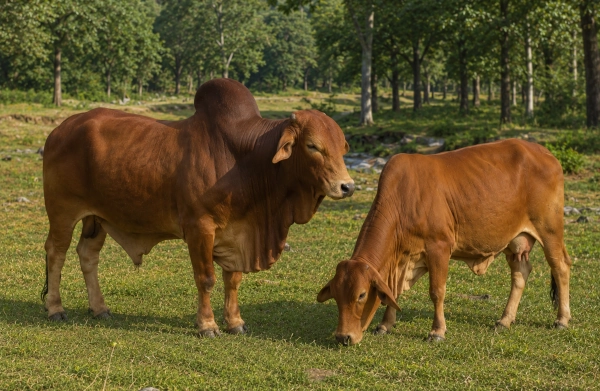
Sahiwal cattle are among the finest dairy breeds developed within the Indian subcontinent. Recognised by their reddish-brown coat, short horns, heavy body and well-developed udder, they combine useful milk production with heat tolerance, fertility and the ability to remain productive under demanding tropical conditions.
The breed emerged within the historic Punjab region and takes its name from Sahiwal, formerly known as Montgomery, in present-day Pakistan. Following Partition, important Sahiwal populations continued to be maintained in India, particularly in Punjab and Rajasthan, along with organised herds at research institutions and government farms.
The ICAR–National Bureau of Animal Genetic Resources officially records Punjab and Rajasthan as the breed’s Indian home tract. The National Dairy Development Board identifies Ferozpur and Amritsar districts in Punjab and Sri Ganganagar district in Rajasthan as its principal native breeding area in India.
Sahiwal cattle are also known by regional names such as Lambi Bar, Lola, Montgomery, Multani and Teli. Their survival across political borders and changing agricultural systems reflects the enduring value of a breed shaped by generations of farmers and pastoral communities.
Origins in the Historic Punjab Region
The Sahiwal developed in the central and southern parts of the wider Punjab plains, a region characterised by hot summers, seasonal rainfall, irrigated agriculture and periods of fodder scarcity.
Its original environment included parts of the former Montgomery district and neighbouring areas of undivided Punjab. These lands supported pastoral cattle herds long before intensive canal irrigation transformed the region’s agricultural economy.
The breed was selected primarily for milk production, although its large body and strength also allowed bullocks to perform limited farm and transport work. Sahiwal bullocks were generally slower than specialised draught breeds, which gradually strengthened the breed’s identity as a dairy animal.
India’s organised work with Sahiwal cattle gained importance during the early twentieth century. A notable herd was established at Pusa in Bihar in 1912, where systematic selection demonstrated the breed’s potential for improved milk production. The National Dairy Research Institute at Karnal later became one of India’s principal centres for maintaining, studying and improving Sahiwal germplasm.
How to Identify Sahiwal Cattle
Sahiwal cattle have a distinctive dairy-zebu appearance. Their bodies are deep, broad and comparatively heavy, with strong legs and a loose, flexible skin suited to warm conditions.
The coat is usually reddish brown, although considerable variation occurs. Animals may range from pale red and copper to deep mahogany or dark brown. Some possess greyish-red colouring, and occasional white patches may appear on the body.
Bulls are usually darker than cows, particularly around the neck, shoulders, hump and extremities. Their muscular hump is large and may lean slightly to one side in mature animals.
The head is broad with a slightly convex forehead. The horns are short and thick, growing outward and then slightly upward. Some females have loose or poorly attached horns.
The ears are medium-sized and generally droop slightly. They are less elongated and folded than the dramatic pendulous ears of Gir cattle.
A Sahiwal cow usually has a deep abdomen, gently sloping rump and well-developed udder. The teats can be comparatively prominent, reflecting the breed’s long selection for hand milking. The dewlap is moderate to large, while the skin around the neck and underside of the body is loose.
The tail is long and ends in a dark switch. The muzzle and hooves are usually darkly pigmented.
Official Indian breed descriptions identify the brownish-red coat, darker colouring in bulls, short horns, developed udder and sloping rump among the principal identifying features.
Body Size and Strength
Sahiwal is one of the larger specialised dairy breeds within the zebu group. Mature cows commonly possess a substantial yet feminine dairy frame, while bulls are powerful animals with heavily developed shoulders and humps.
Historical FAO breed records placed mature cow weights at approximately 340 to 400 kilograms, with mature bulls capable of reaching around 700 kilograms under suitable conditions. Actual size varies according to bloodline, age, nutrition and management.
The breed’s heavy frame distinguishes it from many smaller indigenous dairy cattle. Its body capacity allows cows to consume significant quantities of roughage and support sustained milk production when nutrition is adequate.
The breed’s traditional strength and durability remain valuable even though mechanisation has greatly reduced the agricultural demand for working bullocks.
Milk-Producing Ability
Sahiwal is regarded as one of India’s leading indigenous milch breeds. Its importance lies in producing useful quantities of milk while remaining better adapted to tropical heat than many specialised temperate dairy cattle.
The National Dairy Development Board records an average lactation yield of approximately 2,325 kilograms, with a general range of 1,600 to 2,750 kilograms. Individual performance depends on genetics, feeding, age, lactation number, health, calving interval and farm management.
Elite animals maintained under scientific management can produce substantially more than the breed average. At ICAR–National Dairy Research Institute, an elite Sahiwal cow was reported with a 305-day yield of 3,854 kilograms and total lactation production of 4,220 kilograms. Such performances represent selected animals under organised conditions rather than the expected yield from every village cow.
For farmers, the breed’s value should be measured across an entire productive life. A cow that calves regularly, resists heat stress, remains healthy and produces dependable milk over several lactations may prove more economical than an animal with a brief period of exceptional output followed by reproductive or health problems.
Sahiwal milk is also valued for its relatively rich composition, although fat and protein levels vary according to individual genetics, feed quality and stage of lactation.
Adapted to Heat
Heat tolerance is one of the Sahiwal’s defining strengths.
The breed developed under the intense summers of the Punjab plains, where temperatures can place severe physiological pressure on dairy animals. Its short coat, pigmented skin, loose body covering and efficient thermoregulatory responses help it manage heat more effectively than many temperate breeds.
Research on Sahiwal cattle has identified genetic markers associated with heat-tolerance traits, demonstrating that climatic resilience is linked to measurable biological characteristics rather than appearance alone.
Sahiwal cows can continue feeding and producing during warm conditions that may sharply reduce the appetite and milk yield of less adapted animals. Their advantage becomes particularly important where mechanical cooling, high-energy feeding and intensive housing remain limited.
Heat tolerance still requires responsible management. Animals need shade, clean drinking water, ventilation and protection from severe afternoon heat. Indigenous adaptation reduces climatic stress while good husbandry allows that inherited resilience to express itself fully.
Resistance and Low-Input Adaptability
Sahiwal cattle have earned an international reputation for functioning under tropical and subtropical conditions. They are frequently described as comparatively resistant to ticks and internal and external parasites, traits that supported their use in Africa, Asia, Australia and the Caribbean.
Their strong digestive capacity allows them to use crop residues, dry fodder and grazing resources efficiently. Higher milk yields, however, require balanced nutrition containing sufficient energy, protein, minerals and vitamins.
Hardiness should never be confused with the ability to thrive through neglect. Even resilient indigenous cattle need vaccination, parasite control, hoof care, reproductive monitoring and prompt treatment of illness.
A well-managed Sahiwal herd can combine moderate feeding costs with dependable production, making the breed especially relevant to small and medium dairy farmers in warm regions.
Temperament and Maternal Behaviour
Sahiwal cattle are generally known for an unhurried and comparatively placid disposition. Their calm nature makes cows suitable for routine dairy handling when they are raised with regular human contact.
The animals respond best to consistent and patient management. Familiar milking schedules, gentle movement and quiet restraint support milk let-down and reduce stress.
Cows are attentive mothers and usually care strongly for their calves. In traditional systems, calves are often allowed to stimulate milk let-down before hand milking.
Mature bulls require experienced handling because of their considerable size and strength. Secure housing, appropriate restraints and trained stock handlers remain essential regardless of a bull’s apparent calmness.
Feeding and Management
Sahiwal cattle can perform under grazing and mixed crop-livestock systems, although organised feeding significantly improves milk output and reproductive efficiency.
A productive cow requires a balanced combination of green fodder, dry roughage and concentrate feed. Seasonal fodders may include maize, sorghum, pearl millet, berseem, lucerne and cultivated grasses. Wheat straw, paddy straw and other crop residues can provide roughage when supplemented appropriately.
Oilseed cakes, grains and balanced compound feed supply additional energy and protein during lactation. Mineral mixture and salt are important for fertility, skeletal health and milk production.
Clean water must remain available throughout the day, particularly during the hot season. Lactating cows require considerably more water than dry animals.
Housing should provide shade, air movement and a clean resting surface. Floors need adequate drainage to reduce hoof problems and udder contamination. During winter, young calves and recently calved cows require protection from cold winds and damp bedding.
Calf Rearing and Herd Development
The future of a Sahiwal herd depends on the survival and development of its calves.
Newborn calves should receive adequate colostrum soon after birth. Colostrum supplies energy, nutrients and maternal antibodies essential for early immunity.
Female calves from high-performing cows deserve careful rearing because they may become valuable replacement animals. Balanced calf starter, clean water, green fodder and disease prevention support early growth and future reproductive performance.
Male calves from genetically superior families can contribute to breed improvement when selected through reliable pedigree and performance records. Using an attractive but untested bull may spread poor milk, fertility or structural traits across many offspring.
Scientific herd development therefore depends on recording each animal’s identity, parentage, calving history, milk yield, disease incidence and reproductive performance.
Breeding Programmes in India
India maintains Sahiwal cattle through institutional herds, semen stations, dairy farms and farmer-owned populations.
The National Dairy Development Board lists multiple graded semen stations producing or distributing Sahiwal germplasm across India. This allows farmers beyond the traditional home tract to access the breed through artificial insemination.
Modern genetic-improvement programmes estimate breeding values using milk records, pedigree information and the performance of daughters and related animals. NDDB published updated breeding values for Sahiwal bulls in December 2025, reflecting the continued use of performance-based selection.
Breeding values can cover traits such as 305-day milk yield, milk-fat percentage, protein production, service period and calving interval. Selecting bulls through these measurements provides a more reliable path to improvement than choosing animals entirely on size, colour or outward appearance.
Genomic tools can further identify animals carrying favourable combinations of genes for milk production, heat tolerance, fertility and disease resistance.
Sahiwal’s Role in Crossbreeding
Sahiwal has played an important role in developing cattle that combine tropical adaptability with the higher milk potential of European dairy breeds.
One major Indian example is Karan Swiss, developed using Sahiwal and Brown Swiss inheritance. The objective was to unite the Sahiwal’s heat tolerance and environmental adaptability with the dairy characteristics of Brown Swiss cattle.
Sahiwal also contributed to Frieswal, a synthetic Indian dairy breed developed with 37.5 per cent Sahiwal and 62.5 per cent Holstein Friesian inheritance. Frieswal was created to combine the milk potential of Holstein Friesian cattle with the adaptability of Sahiwal under Indian conditions.
Crossbreeding can produce valuable animals when conducted through clear breeding objectives and long-term performance recording. Unplanned crossing can dilute indigenous populations while producing animals with unpredictable productivity and climatic tolerance.
Pure Sahiwal herds therefore remain essential as sources of well-documented genetics for both conservation and structured crossbreeding programmes.
Sahiwal in Kenya
Sahiwal cattle have had an especially important international history in Kenya.
The first animals were imported into Kenya in 1939 from India’s Pusa herd, followed by further introductions after the Second World War. A national Sahiwal stud was established at Naivasha in 1962 to support selection and breeding under East African conditions.
Kenyan breeders used Sahiwal cattle for milk, beef and crossbreeding in environments where heat, parasites and variable grazing conditions placed pressure on European breeds.
The Kenyan population became an important genetic resource in its own right, demonstrating that the breed could adapt beyond the Indian subcontinent while retaining its tropical production qualities.
Sahiwal and Sahiwal-cross cattle have supported dairy and livestock systems in both higher-altitude regions and warmer coastal environments.
Expansion Across the Tropical World
The breed’s international value led to its introduction into Australia, Tanzania, Thailand, Zambia and several other tropical and subtropical countries.
FAO recognised Sahiwal as an international animal genetic resource because of its ability to survive, reproduce and produce milk under climatic conditions that limit many conventional dairy breeds.
Its genes contributed to several planned cattle populations and synthetic breeds, including Jamaica Hope in the Caribbean, Karan Swiss in India and Australian Friesian Sahiwal. Sahiwal ancestry was also used in experimental dairy crosses in coastal Kenya.
These programmes sought a practical balance: strong milk production from temperate dairy breeds combined with heat tolerance, parasite resistance and environmental adaptability from Sahiwal cattle.
The breed’s global journey illustrates the wider importance of Indian zebu genetics in building livestock systems suited to warm climates.
Cultural and Agricultural Importance
Sahiwal cattle belong to the shared livestock heritage of the greater Punjab region.
Before modern machinery and organised dairy supply chains, cattle were central to rural households. Cows supplied milk, dung supported soil fertility and domestic fuel, and bullocks contributed to transport and agricultural work.
The breed’s reddish coat and heavy dairy frame became familiar across cattle fairs, institutional herds and farming communities in northern India.
Its survival in India following Partition owes much to government farms, research institutions, gaushalas and private breeders that maintained pure animals and organised breeding populations.
Sahiwal cattle therefore represent more than productive livestock. They preserve the memory of older pastoral landscapes and the shared agricultural civilisation of historic Punjab.
Conservation Challenges
The continued popularity of crossbred dairy cattle has placed pressure on several indigenous breeds, including Sahiwal.
Uncontrolled crossbreeding can gradually reduce the number of pure animals. Inadequate pedigree records also allow mixed cattle to be marketed as pure Sahiwal, weakening farmer confidence and breed identity.
Selection based mainly on colour and body size creates another risk. True breed improvement must include milk performance, fertility, udder structure, disease history, heat tolerance, temperament and longevity.
A limited number of frequently used breeding bulls can also narrow genetic diversity. Breeding programmes need a sufficiently broad base of unrelated and properly evaluated males and females.
ICAR–NBAGR has included Sahiwal semen within the National Livestock Gene Bank, where indigenous livestock germplasm is preserved for long-term conservation.
Conserving a Productive Living Breed
The strongest protection for Sahiwal cattle comes from keeping them economically valuable to farmers.
Milk recording, reliable artificial insemination, pedigree registration and disease-control services can help improve productivity while preserving breed identity.
Farmers maintaining pure and productive animals should receive access to specialised markets, breeding programmes and recognition for their role as custodians of indigenous genetic resources.
Conservation herds and frozen semen banks provide vital security, while living populations in villages and dairy farms remain the true foundation of the breed.
Research should continue improving milk yield, fertility and udder health while retaining the heat tolerance and resilience that distinguish Sahiwal from specialised temperate cattle.
A Dairy Breed for a Warming World
Climate change is increasing the strategic importance of cattle capable of producing milk under rising temperatures and variable feed conditions.
Sahiwal offers a valuable combination of tropical adaptation and dairy potential. Its performance may remain below elite Holstein cattle maintained in highly controlled conditions, yet it can deliver greater stability where heat, disease pressure and limited cooling reduce the productivity of temperate breeds.
This balance makes Sahiwal relevant to the future of climate-resilient dairying across India, Africa, Asia and other warm regions.
From the Punjab plains to organised farms in India and breeding programmes across the tropical world, Sahiwal cattle have demonstrated the enduring value of indigenous genetics.
The breed is a productive dairy animal, a resource for scientific crossbreeding and a living expression of the subcontinent’s pastoral heritage. Protecting it preserves both rural history and a genetic foundation that may become increasingly important to global milk production in a warmer century.
References
ICAR–National Bureau of Animal Genetic Resources. “Cattle Breeds of India: Sahiwal.” Government of India.
https://nbagr.res.in/cattle-breed
National Dairy Development Board. “Sahiwal.” Farmers’ Corner—Indigenous Cattle Breeds.
https://www.nddb.coop/farmer/animal-breeding/breeds/cattle/sahiwal
Dairy Knowledge Portal. “Sahiwal Cattle Breed.” National Dairy Development Board.
https://www.dairyknowledge.in/dkp/article/sahiwal
National Dairy Development Board. “Latest Sire Proofs and Breeding Values: Sahiwal Cattle.” December 2025.
https://www.nddb.coop/services/animalbreeding/geneticimprovement/sireproofs
ICAR–National Dairy Research Institute. “Annual Report 2019.” Includes production records of elite Sahiwal cattle.
https://ndri.res.in/sites/default/files/Annual_report_2019.pdf
Food and Agriculture Organization of the United Nations. “Sahiwal in Kenya and Pakistan.” In Animal Genetic Resources Information.
https://www.fao.org/4/ah806e/AH806E08.htm
Food and Agriculture Organization of the United Nations. “The Management of Global Animal Genetic Resources: The Sahiwal Breed.”
https://www.fao.org/4/t0665e/T0665E07.htm
Food and Agriculture Organization of the United Nations. “Types and Breeds of Tropical and Temperate Cattle.”
https://www.fao.org/4/t0095e/t0095e04.htm
ICAR–National Bureau of Animal Genetic Resources. “National Livestock Gene Bank.”
https://nbagr.res.in/gene-bank
You may also like
-
Tiny 3.3-mm Parasitic Wasp Discovered in Assam Marks First Record of Its Genus in India
-
How India Brought the Greater One-Horned Rhinoceros Back From the Brink
-
From Periyar to Thuruthi, New Surveys Reveal the Remarkable Diversity of Kerala’s Dragonflies, Birds and Butterflies
-
Delhi Biodiversity Survey Records Two Dragonfly and Damselfly Species for the First Time
-
Rare Leafless Orchid Gastrodia keyiensis Discovered in Arunachal Pradesh’s Keyi Valley
