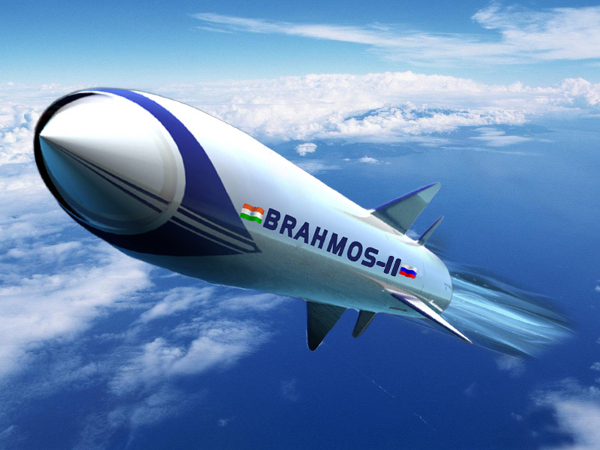
Russia has publicly called for another round of improvements to the BrahMos supersonic cruise missile, with Kremlin spokesperson Dmitry Peskov arguing that India and Russia should add new capabilities to the weapon and improve its effectiveness and competitiveness in the export market.
Peskov made the comments during a virtual interaction with Indian journalists on September 8, ahead of talks between Prime Minister Narendra Modi and Russian President Vladimir Putin in New Delhi.
“We are jointly producing the BrahMos missiles, and it is time to think about improving those missiles,” Peskov said, referring to additional characteristics, effectiveness and international competitiveness.
The statement should not be read as confirmation that India and Russia have approved a specific new BrahMos variant. Neither India’s Ministry of Defence nor BrahMos Aerospace has announced a fresh upgrade programme linked to Peskov’s comments. What the remarks do indicate is that Moscow sees further development of BrahMos as a practical area for continued defence-industrial cooperation.
That would not require starting from scratch.
BrahMos has been continuously modified since the original land and ship-launched missile entered service. Air-launched versions have been integrated with the Su-30MKI, extended-range versions have been tested, Indian subsystems have progressively replaced imported components and a smaller BrahMos-NG is already part of the company’s development roadmap. BrahMos Aerospace itself says it intends to develop more capable derivatives of the existing missile.
What could realistically be improved?
If India and Russia decide to pursue another upgrade, simply increasing maximum range would be only one part of the equation.
A useful operational improvement would be better performance against defended and moving targets. Modern warships rarely operate without layered electronic warfare, decoys and air-defence systems. A cruise missile therefore depends not only on speed but on its ability to locate the correct target, distinguish it from other contacts and retain guidance accuracy when electronic countermeasures are being used.
India has already developed and tested an indigenous seeker for BrahMos. A BrahMos carrying an Indian seeker successfully completed a flight trial at Pokhran in 2018, and subsequent missiles have incorporated increasing levels of indigenous content.
Further work on seekers, signal processing and resistance to electronic countermeasures would be a logical way of improving the missile without fundamentally changing the weapon.
Flight profiles could also evolve. BrahMos can already use different trajectories and descend to very low altitude during the terminal phase. Improving route planning, terminal manoeuvring and the ability to approach a target from less predictable directions would complicate the task faced by an opposing air-defence system. BrahMos Aerospace lists adaptive trajectories and low-altitude terminal flight among the existing missile’s characteristics.
None of these specific upgrades has been announced following Peskov’s remarks, but they illustrate where improvements to an established cruise missile can produce operational gains without requiring an entirely new weapon.
A smaller BrahMos may be just as important as a longer-range one
The most consequential change already on the BrahMos roadmap may be reduction in size and weight.
The present air-launched BrahMos is a large missile and requires substantial modification of the Su-30MKI to carry it. BrahMos Aerospace describes the air-launched weapon as the heaviest missile integrated with the fighter.
BrahMos-NG is intended to change that.
The company describes the next-generation missile as smaller, lighter and stealthier, with improved resistance to electronic countermeasures and greater indigenous content. Its reduced dimensions are intended to permit integration with a wider range of aircraft and allow individual platforms to carry more missiles. BrahMos Aerospace currently plans the first prototype in an air-launched configuration, initially for the Su-30MKI and subsequently for the LCA Tejas.
That has practical military consequences.
A lighter missile would reduce the dependence of the air-launched BrahMos capability on specially modified Su-30MKIs. Integration with Tejas or other smaller fighters would increase the number of aircraft capable of carrying the weapon. A Su-30MKI could potentially carry multiple smaller missiles instead of the current large centreline weapon, increasing the number of targets that could be engaged during a mission.
For naval forces, smaller dimensions would also make the weapon easier to accommodate on vessels where space and displacement impose tighter limits on missile load.
BrahMos Aerospace says the NG design is eventually intended for air, surface, naval and underwater applications. The company’s new integration and testing facility at Lucknow is expected to manufacture existing BrahMos systems and later support serial production of BrahMos-NG.
In that sense, improving BrahMos may increasingly mean making the missile easier to deploy in larger numbers rather than simply making the existing missile bigger or faster.
Range will remain important
Greater stand-off range remains another obvious area of interest.
The original BrahMos was developed around a range of approximately 290 kilometres. An extended-range version was successfully tested in 2017, establishing the technical path for progressively longer-range derivatives.
For aircraft, ships and land batteries, additional range allows launch platforms to remain farther from hostile air defences or maritime threats. It also expands the geographic area that can be covered by a single missile unit.
But range cannot be considered separately from targeting. The farther a missile travels against a mobile target such as a warship, the greater the possibility that the target will move from its previously known position. Improvements in sensors, reconnaissance networks, targeting information and potentially mid-course updates become increasingly important as engagement distances increase.
This is why a useful BrahMos upgrade would be measured by the complete kill chain rather than maximum range alone.
Export competitiveness changes the calculation
Peskov’s reference to making BrahMos more competitive internationally is particularly noteworthy.
BrahMos is no longer solely an Indian military programme. The Philippines became its first foreign customer after signing a $375-million contract in January 2022 for a shore-based anti-ship missile system.
India is seeking additional export customers, and the BrahMos production base has expanded accordingly. In 2025, the first missiles manufactured at the new Lucknow integration and testing facility were dispatched, adding another major production centre to the programme.
Export competitiveness, however, involves more than missile performance.
Potential customers must consider acquisition cost, the number of missiles that can be deployed on a launcher or aircraft, maintenance requirements, training, availability of spare parts, delivery schedules and compatibility with platforms they already operate.
A smaller BrahMos that can be integrated on more aircraft and ships may therefore prove commercially more attractive than a substantially larger missile offering only additional range.
Higher Indian content could matter as well. India has already developed indigenous seekers and other major subsystems, while BrahMos production now involves an extensive Indian industrial supply chain. Further localisation could increase production capacity and give New Delhi greater control over cost, supply and export schedules.
Evolution rather than replacement
BrahMos remains unusual among India-Russia defence projects because the relationship goes beyond importing and operating a Russian weapon.
The missile is produced by BrahMos Aerospace, the joint venture between India’s DRDO and Russia’s NPO Mashinostroyenia. It is operational with India’s armed forces in land, naval and air-launched configurations and has now entered the export market. DRDO describes it as a long-range supersonic system designed for both anti-ship and land-attack roles.
The next stage is unlikely to revolve around a single dramatic change.
A more useful path would combine better seekers and electronic-countermeasure resistance, longer engagement range where required, reduced size and weight, wider platform compatibility, higher indigenous content and production at a scale that supports both Indian orders and exports.
Some of those developments are already under way through BrahMos-NG and the continuing localisation of the existing missile. Others remain possible directions rather than confirmed projects.
Peskov’s September 8 statement is important for that reason. Russia is not announcing a new BrahMos missile. It is signalling that Moscow wants the India-Russia joint venture to keep developing the weapon rather than treat the current BrahMos as a finished product.
With BrahMos now established in Indian service, entering overseas markets and gaining new production capacity in India, the practical question is no longer whether the missile works. It is how to make the next generation easier to deploy, harder to defeat and economical enough to manufacture in much larger numbers.
You may also like
-
ICAR Scientists Develop Indigenous Protective Gloves for Cotton Farmers, Sign Commercial Manufacturing Agreement
-
India Moves Towards Five-Year Assured Orders for Defence Startups Under New Procurement Reforms
-
BHEL–Coal India Joint Venture Begins Construction of ₹25,016 Crore Indigenous Coal Gasification Project in Odisha
-
Zen Technologies Introduces Indigenous Hyper-Strike Falcon AI-Guided Counter-Drone Interceptor
-
L&T and Germany’s SCHOTTEL Expand Partnership for Controllable Pitch Propeller Systems in Indian Shipbuilding
