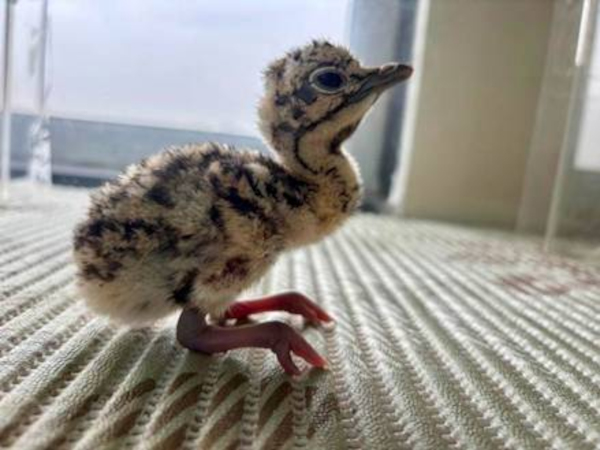
India’s effort to save the Great Indian Bustard has received another important boost, with Project GIB adding three more chicks to its conservation breeding programme. The latest additions have taken the captive stock to 94 birds, strengthening one of the country’s most important species recovery missions.
Union Minister for Environment, Forest and Climate Change Bhupender Yadav announced that the three new chicks emerged in the last couple of days from one wild-collected egg and two captive-laid eggs. The development comes during the fourth year of the captive breeding programme, in which 26 chicks have hatched so far.
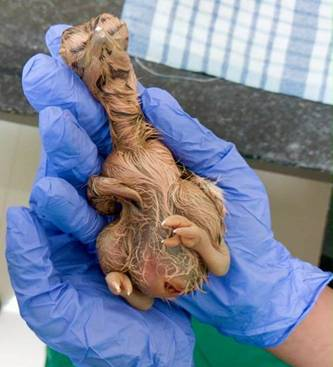
The numbers show steady progress in a highly sensitive conservation effort. Out of the 26 chicks hatched this season, 18 came through artificial insemination, four through natural breeding and four from wild-collected eggs. This mix of scientific intervention, natural breeding and field-based egg collection is helping conservationists strengthen the founder population and preserve genetic diversity.
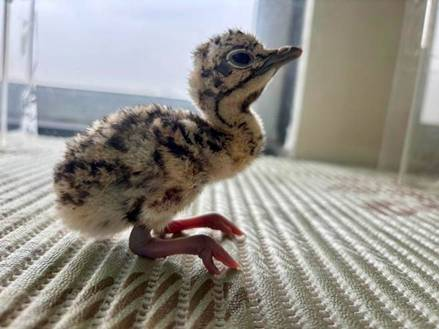
The Great Indian Bustard, also known as Godawan in Rajasthan, is one of India’s most threatened grassland birds. Once found across wider parts of the Indian landscape, the species now survives in small numbers, mainly in the arid grasslands of western India. Its survival depends on habitat protection, scientific breeding, predator-risk management and long-term field monitoring.
Project GIB has therefore become more than a breeding programme. It is a national rescue mission for a bird that represents India’s grassland ecology. The project combines field protection, captive breeding, genetic management, artificial insemination, wild egg collection and jumpstart interventions to give the species a stronger chance of recovery.
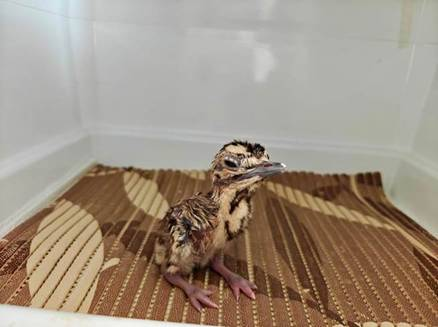
The latest update also highlights an important field success. In exchange for wild eggs collected for the breeding programme, three chicks have hatched in the wild in Rajasthan through jumpstart intervention. This approach helps improve founder genetic diversity while also reducing predation risk during the most vulnerable stage of the bird’s life cycle.
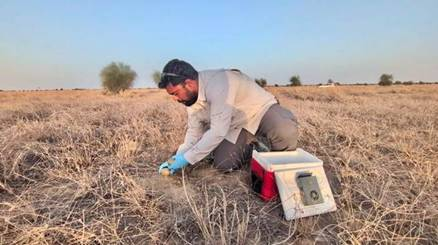
This is important because the Great Indian Bustard has a slow breeding rate. Every chick carries high conservation value. Each successful hatch strengthens the future pool from which the species can be stabilised and eventually supported in natural habitats. The rise of captive stock to 94 birds shows that careful scientific work is beginning to create a safety net for the species.
The conservation breeding programme also reflects the importance of cooperation between scientists, forest officials, field staff and local conservation teams. Saving a species like the Great Indian Bustard requires patient work across breeding centres, desert habitats, nesting sites and protected landscapes. The success of each chick depends on precise care, monitoring and coordination.
Rajasthan remains central to this mission because it holds the strongest remaining habitat for the species. The state’s desert grasslands provide the ecological base for both wild populations and conservation interventions. Protecting these landscapes is essential for the long-term recovery of the bird.
The latest hatching success gives Project GIB renewed momentum. It shows that India’s conservation strategy is moving from emergency protection toward structured population recovery. With more chicks expected this season, the programme now has a stronger foundation for future breeding, research and eventual reinforcement of wild populations.
The rise of the captive stock to 94 birds is therefore a milestone for Indian wildlife conservation. It represents hope for one of the world’s most endangered birds and demonstrates how science-led conservation can support the survival of a species standing at the edge of extinction.
Source: PIB
You may also like
-
Indian Scientists Discover How Rapidly Spinning Black Holes Produce High-Frequency X-Ray Oscillations
-
ISRO Completes Historic SPADEX Mission as Both Satellites Re-enter Earth’s Atmosphere After Successful Space Docking Experiments
-
Indian Scientists Discover Rare Accretion Disk Around Neutron Star 24,000 Light-Years Away
-
BARC Scientists Develop Indigenous Technology to Recover 90% of Lithium from Seawater
-
How Indigenous Indian Technologies Are Helping Aircraft and Trains Navigate Safely Through Dense Fog
