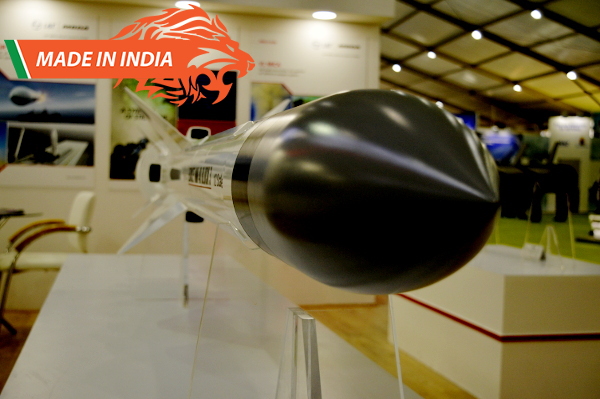
India’s Pralay missile system is emerging as one of the most important conventional strike weapons in the country’s defence arsenal. Developed by the Defence Research and Development Organisation, Pralay is an indigenously developed, solid-propellant, quasi-ballistic surface-to-surface missile designed to deliver precision strikes against high-value battlefield and theatre-level targets. The Ministry of Defence describes Pralay as a solid-propellant quasi-ballistic missile equipped with advanced guidance and navigation systems for high precision, and capable of carrying multiple types of warheads against different targets.
The missile is important because it fills a crucial gap between India’s long-range strategic missiles, cruise missiles like BrahMos, and battlefield rocket artillery systems such as Pinaka. Pralay gives the Indian Armed Forces a fast, mobile and accurate conventional missile option that can be used against enemy command centres, radar sites, airfields, ammunition dumps, logistics hubs and other critical military infrastructure without entering the nuclear domain.
Its quasi-ballistic profile makes it more dangerous than a simple ballistic projectile. A conventional ballistic missile follows a relatively predictable path, but a quasi-ballistic missile can fly on a depressed or manoeuvrable trajectory, making interception more difficult. This is especially relevant in modern battlefields where air defence systems, missile shields and radar networks are becoming more advanced. Pralay is designed not only to reach the target, but to complicate the enemy’s ability to detect, track and intercept it.
The system has already crossed major test milestones. In July 2025, DRDO conducted two consecutive successful flight tests of Pralay from Dr APJ Abdul Kalam Island off the Odisha coast as part of user evaluation trials. These tests validated the missile’s maximum and minimum range capability, with the missile following the intended trajectory and reaching the target point with pinpoint accuracy. Representatives of both the Indian Air Force and Indian Army witnessed the trials, signalling the missile’s relevance for operational users.
A further major milestone came on 31 December 2025, when DRDO successfully conducted a salvo launch of two Pralay missiles in quick succession from the same launcher off the Odisha coast. Both missiles followed their intended trajectories and met all flight objectives. This was a critical operational demonstration because salvo firing shows that the system can deliver rapid sequential strikes, potentially overwhelming enemy defences or hitting multiple targets in a compressed time window. Defence Minister Rajnath Singh said the successful salvo launch established the reliability of the missile, while DRDO chief Dr Samir V. Kamat said it indicated the system’s imminent readiness for induction.
Pralay has been developed by Research Centre Imarat, Hyderabad, in collaboration with several DRDO laboratories, including DRDL, ASL, ARDE, HEMRL, DMRL, TBRL, R&DE Engineers and the Integrated Test Range. Its development-cum-production partners include Bharat Dynamics Limited and Bharat Electronics Limited, along with other Indian industries. This makes Pralay not just a missile programme, but a wider example of India’s growing indigenous defence-industrial ecosystem.
The strategic value of Pralay lies in its role as a conventional deterrence weapon. In a two-front security environment involving Pakistan and China, India needs rapid-response systems that can strike military targets across the border while staying below the nuclear threshold. Pralay gives commanders that option. It can be road-mobile, quickly deployable and capable of precision strikes against targets that may otherwise require risky air operations.
This is where Pralay fits into the broader idea of an Indian Integrated Rocket Force or missile-heavy conventional strike structure. Modern wars have shown that long-range precision fires can shape the battlefield before large formations even move. Missiles, drones, loitering munitions, rocket artillery and real-time surveillance are now central to battlefield dominance. Pralay strengthens India’s hand in this new era by giving it a high-speed, accurate, conventional missile that can be deployed for theatre-level deterrence.
The missile’s importance is now being discussed beyond India’s own military requirements. Armenia, which has emerged as one of the biggest foreign buyers of Indian defence systems, is reportedly exploring the acquisition of the Pralay missile system. The New Indian Express recently reported that Armenia has procured complete frontline weapon systems from India, including Pinaka multi-barrel rocket launchers, Akash surface-to-air missile systems, Swathi weapon-locating radars, anti-drone platforms, missiles, rockets, ammunition and support equipment, with contracts estimated at over $1.5 billion.
This shift is part of a larger geopolitical realignment. Armenia was once heavily dependent on Russia for defence supplies, but that dependence has weakened sharply after Moscow became tied down by the Ukraine war and Armenia began diversifying its military partnerships. Reuters reported that India supplied 43% of Armenia’s imported arms between 2022 and 2024, up from almost nothing between 2016 and 2018, marking one of India’s clearest defence-export breakthroughs in a market traditionally dominated by Russia.
Many news outlets report that Armenia once sourced nearly 90% of its weapons from Russia but is now turning increasingly to India and other suppliers shows confidence of nations on Indian defence systems.
India’s export momentum with Armenia is already visible through Pinaka. In January 2026, Defence Minister Rajnath Singh flagged off the first batch of guided Pinaka rockets meant for Armenia from a facility in Nagpur. The Times of India reported that Armenia had signed an agreement worth around ₹2,000 crore with India in 2022 for four Pinaka multi-barrel rocket launcher batteries, anti-tank rockets, ammunition and other equipment, with earlier deliveries of unguided Pinaka systems beginning in 2023 and concluding by November 2024.
The reported Armenian interest in Pralay would therefore be a natural next step. Indian Defence News has reported that Armenia is in advanced cost negotiations with India for the Pralay tactical surface-to-surface missile system, with the export variant expected to be capped at around 290 km to remain within Missile Technology Control Regime limits. This report should be treated carefully because no final official contract has been announced yet, but if it materialises, it would mark one of India’s most high-end missile exports so far.
For Armenia, Pralay would provide a different class of capability from artillery rockets or air-defence systems. It would give Yerevan a road-mobile, precision-strike weapon capable of threatening high-value targets such as command posts, airfields, logistics hubs and radar installations. In the South Caucasus security environment, where Azerbaijan has benefited from Israeli and Turkish-origin military systems, Armenia’s interest in Indian missiles reflects its effort to rebuild deterrence through diversified suppliers.
For India, a Pralay export to Armenia would be even more significant. BrahMos exports to the Philippines showed that India could sell advanced cruise missiles. Pinaka and Akash exports to Armenia showed that India could supply rocket artillery and air-defence systems. A Pralay deal would move India into the export space for quasi-ballistic tactical missiles, a far more sensitive and strategically valuable category.
Pralay therefore stands at the intersection of three major Indian defence trends: indigenous missile development, conventional deterrence, and defence exports. It strengthens the Indian military’s ability to conduct rapid, precise, non-nuclear strikes, while also showing that Indian-made systems are gaining credibility among countries looking beyond traditional suppliers like Russia.
In simple terms, Pralay is not just another missile. It is India’s battlefield thunderbolt — fast, mobile, precise and designed for modern limited-war scenarios. If it enters service in numbers and eventually finds export customers such as Armenia, it could become one of the defining weapons of India’s new defence-industrial rise.
You may also like
-
DRDO Opens Actuators, Infrared Seeker, Lightweight Torpedo and Armour Technologies to Indian Industry
-
Indian Army to Add 225 Indigenous FPV Drones; Aerodrone Says Systems Were Tested Up to 17,500 Feet
-
DRDO Opens Indigenous Electro-Mechanical Actuator Technologies to Indian Industry
-
Hical Technologies Expands Rafale and Aerospace Manufacturing with New Bengaluru Facility
-
IZI Enterprise Wins DRDO Order for VANA Surveillance Drones
