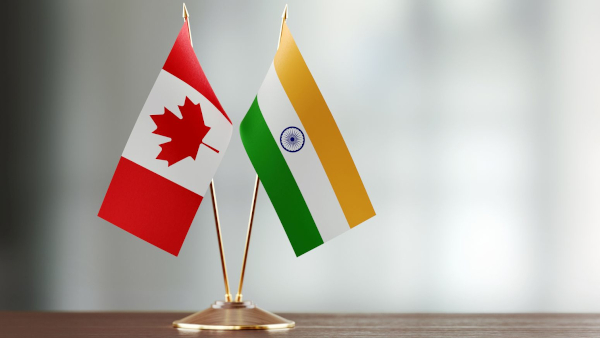
Commerce and Industry Minister Piyush Goyal’s upcoming visit to Canada marks an important step in the renewed economic engagement between New Delhi and Ottawa. The three-day visit, scheduled from 25 to 27 May 2026, is expected to accelerate talks on the proposed India–Canada Comprehensive Economic Partnership Agreement, or CEPA, while also deepening business-to-business cooperation between the two countries.
The visit comes at a sensitive but promising moment. India and Canada have gone through a difficult diplomatic phase in recent years, and trade negotiations had slowed during that period. The renewed CEPA push indicates that both sides are now trying to rebuild economic confidence through structured engagement, sectoral cooperation and high-level political signalling. Reuters reported that Goyal will lead a delegation of about 150 Indian industry leaders and hold meetings with Canadian ministers, business leaders and industry groups in Ottawa and Toronto.
The foundation for this renewed push was laid earlier this year. On 2 March 2026, India and Canada formally launched negotiations for the CEPA in New Delhi. The Terms of Reference for the negotiations were signed by Piyush Goyal and Canada’s Minister of International Trade Maninder Sidhu in the presence of Prime Minister Narendra Modi and Canadian Prime Minister Mark Carney. The official PIB release stated that the Terms of Reference would guide the format, frequency and approach of negotiations for an ambitious, balanced and mutually beneficial agreement.
The proposed CEPA is expected to cover trade in goods, services and other mutually agreed policy areas. This makes the agreement wider than a narrow tariff-reduction arrangement. For India, the deal could create opportunities for pharmaceuticals, textiles, leather, engineering goods, seafood, chemicals, digital services and technology firms. For Canada, India offers a fast-growing market for energy, agriculture, critical minerals, education, investment and high-technology collaboration.
The economic target is ambitious. During the March 2026 ceremony, Prime Minister Modi highlighted the goal of taking bilateral trade to US$50 billion by 2030. PIB data placed India–Canada bilateral merchandise trade at US$8.66 billion in FY 2024–25, with Indian exports at US$4.22 billion and imports from Canada at US$4.44 billion. India’s key exports to Canada include drugs and pharmaceuticals, iron and steel, seafood, cotton garments, electronic goods and chemicals, while major imports from Canada include pulses, coal, fertilizer, paper, petroleum crude, pearls and semi-precious stones.
The visit is also important because Canada is a major source of capital and technology. Goyal said Canadian pension funds and companies have invested nearly US$100 billion in India, while around 600 Canadian companies operate in the country, with both sides aiming to increase that number to 1,000. That gives the visit a strong investment angle, beyond trade negotiations alone.
Critical minerals could become one of the most strategic areas of cooperation. Canada has significant reserves and capabilities in minerals needed for electric vehicles, batteries, clean energy systems and advanced manufacturing. India, meanwhile, is trying to secure resilient supply chains for its energy transition, semiconductor ambitions, defence manufacturing and green industrial growth. A stronger India–Canada economic framework could therefore help reduce dependence on concentrated global supply chains.
Clean energy is another natural area of convergence. PIB had earlier noted that both ministers agreed to explore cooperation in nuclear energy and other critical areas, including agriculture and critical minerals. Reuters also reported that Goyal’s Canada discussions would focus on clean energy, technology, food processing and critical minerals.
The business delegation gives the visit practical weight. Trade agreements move faster when industry identifies real market opportunities, regulatory challenges, investment needs and supply-chain gaps. Indian companies will likely look for openings in manufacturing, services, food processing, technology, education-linked services and clean-energy supply chains. Canadian businesses, in turn, may look at India’s expanding consumer market, infrastructure growth, digital economy and manufacturing incentives.
For India, the CEPA talks also fit into a larger trade-policy pattern. New Delhi has been actively negotiating or expanding trade partnerships with major economies and regional blocs while trying to preserve policy space for domestic manufacturing. A balanced deal with Canada would help India widen access to a developed market while strengthening supply chains in areas where Canada has natural advantages.
The visit should therefore be seen as more than a routine ministerial trip. It is part of a broader attempt to normalise economic engagement after a period of political strain, convert diaspora and education links into stronger commercial ties, and build a future-facing partnership around trade, investment, technology, energy and minerals.
If the negotiations move smoothly, the India–Canada CEPA could become an important bridge between India’s growth economy and Canada’s resource, capital and technology strengths. The next challenge will be converting diplomatic intent into a detailed agreement that protects sensitive sectors, opens real market access, and creates measurable gains for businesses, workers, exporters and investors on both sides.
You may also like
-
India, Russia and the Ukraine Conflict: Putin Highlights Modi’s Continued Push for Dialogue and a Negotiated Settlement
-
India and France Discuss Aerospace Manufacturing, UPI Integration and India-EU FTA
-
Côte d’Ivoire Military Delegation Visits HAL, Shows Interest in India’s Indigenous Aerospace Platforms
-
India and Netherlands Move to Deepen Agricultural Cooperation in Seeds, Horticulture and Innovation
-
Tarang Shakti Delegates from 28 Countries Visit HAL and BEL to Explore India’s Defence Manufacturing Ecosystem
