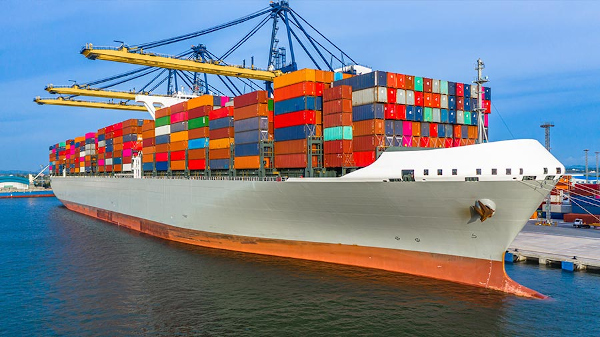
India’s external trade opened FY 2026-27 with strong export momentum, as the country’s combined merchandise and services exports during April-May 2026-27 reached an estimated US$162.69 billion, compared with US$141.89 billion in the same period of the previous year. This marks an estimated growth of 14.66 percent, showing continued strength in India’s export economy at the beginning of the financial year.
The May 2026 numbers show the same upward direction. India’s total exports of goods and services for May 2026 were estimated at US$81.96 billion, registering 15.83 percent growth over May 2025. Total imports for the month stood at US$92.47 billion, growing 19.23 percent over the same month last year. The overall trade balance for May 2026 was US$10.51 billion in deficit, compared with US$6.79 billion in May 2025.
Merchandise exports were a major contributor to the export rise. Goods exports during May 2026 stood at US$45.20 billion, compared with US$38.30 billion in May 2025. Merchandise imports reached US$73.41 billion, compared with US$60.86 billion a year earlier. This shows that India’s goods trade expanded on both the export and import sides, reflecting stronger demand, higher trade volumes and continued movement in key industrial sectors.
For the first two months of FY 2026-27, merchandise exports stood at US$88.91 billion, compared with US$76.59 billion in April-May 2025-26. This represents a 16.09 percent increase. Merchandise imports during April-May 2026-27 stood at US$145.35 billion, compared with US$126.24 billion in the corresponding period of the previous year. The merchandise trade deficit for April-May 2026-27 stood at US$56.44 billion, compared with US$49.65 billion in April-May 2025-26.
The most important feature of the export data is the broad-based rise across several major product groups. Petroleum products, engineering goods, organic and inorganic chemicals, electronic goods, and gems and jewellery were among the main drivers of merchandise export growth in May 2026. Petroleum product exports rose by 54.89 percent, from US$5.44 billion in May 2025 to US$8.42 billion in May 2026.
Engineering goods exports also showed strong performance, increasing by 24.48 percent from US$9.89 billion in May 2025 to US$12.31 billion in May 2026. This category is important because it reflects India’s growing industrial export base, including machinery, auto components, electrical equipment and capital goods. A strong engineering export performance signals that India’s manufacturing sector is gaining deeper presence in global markets.
Electronic goods remained another strong performer. Exports in this category rose by 11.62 percent, from US$4.57 billion in May 2025 to US$5.10 billion in May 2026. The continued rise of electronics exports is significant because it reflects India’s effort to become a stronger manufacturing hub for mobile phones, components and electronic systems.
Organic and inorganic chemicals exports grew by 12.71 percent, rising from US$2.41 billion in May 2025 to US$2.72 billion in May 2026. Gems and jewellery exports increased by 6.66 percent, from US$2.38 billion to US$2.53 billion. Together, these categories show that India’s export growth came from both traditional sectors and newer manufacturing-led sectors.
Non-petroleum exports also remained strong. During April-May 2026-27, non-petroleum exports were valued at US$70.74 billion, compared with US$64.03 billion in April-May 2025-26, registering 10.49 percent growth. This is important because it shows that export growth was not dependent only on petroleum products. The non-petroleum export base continued to expand across manufacturing, agriculture-linked goods, chemicals, pharmaceuticals and other value-added sectors.
India’s non-petroleum and non-gems-and-jewellery exports also showed a healthy increase. In May 2026, this category stood at US$34.24 billion, compared with US$30.49 billion in May 2025. For April-May 2026-27, these exports reached US$65.89 billion, compared with US$59.15 billion in the same period last year. This category gives a clearer picture of India’s core export strength by excluding petroleum and precious metals-linked trade.
Services trade continued to provide stability to India’s external account. Services exports in May 2026 were estimated at US$36.76 billion, compared with US$32.46 billion in May 2025. Services imports were estimated at US$19.06 billion, compared with US$16.70 billion last year. For April-May 2026-27, services exports were estimated at US$73.79 billion, compared with US$65.30 billion in April-May 2025-26.
The services trade surplus remained a major cushion. During April-May 2026-27, India’s services surplus was estimated at US$36.31 billion, compared with US$31.69 billion in the corresponding period of the previous year. This surplus helped offset a large part of the merchandise trade deficit and shows the continued strength of India’s IT, business services, professional services, financial services and other service export sectors.
The release also shows growth in a wide range of product categories during May 2026. Other cereals, meat, dairy and poultry products, oil meals, handicrafts, plastic and linoleum, iron ore, drugs and pharmaceuticals, rice, coffee, cotton yarn and handloom products recorded positive export growth over May 2025. This indicates that India’s export expansion was spread across industrial, agricultural and value-added product lines.
Country-wise trends also point to expanding market opportunities. In May 2026, the top export destinations showing positive growth in value terms included Singapore, South Africa, Tanzania, Italy and Sri Lanka. For April-May 2026-27, Singapore, Tanzania, Sri Lanka, South Africa and China were among the major destinations showing positive growth.
On the import side, Russia, China, the United States, Oman and Brazil were among the major sources showing import growth in May 2026. For April-May 2026-27, Russia, China, Oman, the United States and Brazil remained among the top import sources showing growth. These patterns reflect India’s continuing demand for energy, industrial inputs, technology goods, raw materials and strategic commodities.
The broader message from the May 2026 trade data is clear. India’s export engine has started FY 2026-27 on a strong footing, with merchandise exports rising sharply and services exports continuing to generate a large surplus. Imports also rose, reflecting the needs of a growing economy and higher demand for industrial inputs. The challenge ahead will be to sustain export growth, deepen manufacturing competitiveness, expand value-added exports and manage the trade deficit through stronger domestic production and diversified global markets.
You may also like
-
India to Track Challenges Faced by Women Entrepreneurs in New National Business Survey
-
India Updates Vehicle Rules to Strengthen E85 and E100 Flex-Fuel Technology
-
Adani Green Energy Expands Battery Storage to 6.63 GWh at Khavda, Strengthening India’s Renewable Power Infrastructure
-
Manastu Space Secures ₹116 Crore Government Support to Develop Indigenous Green Propulsion Systems
-
GeM’s AABHAR Collection Showcases 294 Indigenous Products, Strengthens Market Access for Indian Artisans
