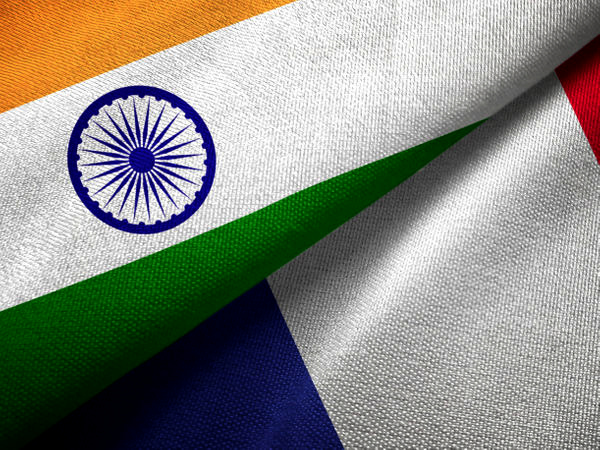
Prime Minister Narendra Modi’s visit to France gave fresh momentum to one of India’s most trusted strategic partnerships. During his bilateral talks with French President Emmanuel Macron at Villa Kerylos in Nice on 14 June 2026, the two leaders reviewed the full range of India-France relations and pushed the partnership into a broader phase covering defence, space, artificial intelligence, innovation, energy, trade, education, culture and global diplomacy.
The meeting carried special significance because it was the first interaction between the two leaders after India-France ties were elevated to the level of a Special Global Strategic Partnership earlier this year. This elevation reflects the depth of trust built over decades, especially in defence, space, nuclear energy and high-technology cooperation. The latest discussions showed that both countries now want to convert this trust into long-term industrial, technological and strategic outcomes.
Defence remained one of the strongest pillars of the talks. Prime Minister Modi and President Macron expressed satisfaction at the growth of bilateral defence collaboration across all domains. They agreed to intensify cooperation through co-design, co-development and co-production of defence platforms and advanced technologies. This approach aligns closely with India’s push for self-reliance in defence manufacturing, while also allowing France to remain a key technology partner in India’s military modernisation.
The defence partnership also gained an important institutional layer through the General Security Agreement on the Exchange and Protection of Classified Information. Such an arrangement strengthens confidence between the two sides and supports deeper cooperation in sensitive strategic sectors. It also creates a stronger framework for advanced projects where data protection, technology security and operational trust are essential.
Space cooperation formed another major pillar of the visit. India and France already share a long legacy in satellite technology, launch cooperation and space science. During the talks, both sides discussed expanding work in human spaceflight, space situational awareness and private-sector participation in the space economy. A Letter of Intent between ISRO and CNES on cooperation in microgravity research and human space exploration added a concrete outcome to this agenda.
This space agenda is important for both civilian and strategic reasons. Human spaceflight, microgravity research and space situational awareness represent the next stage of space cooperation. As space becomes a domain of science, security, communications, navigation and commerce, India-France cooperation can help build reliable capabilities for the future.
Civil nuclear energy also found a central place in the discussions. The two leaders noted that India’s SHANTI Act creates new opportunities for collaboration, including small modular reactors and advanced modular reactors. These technologies are becoming important in the global search for clean, reliable and scalable energy. For India, cooperation with France in this field supports long-term energy security, industrial growth and climate goals.
Economic cooperation received a major push through the decision to create a high-level mechanism to double bilateral trade within five years. The two leaders reviewed progress under the Horizon 2047 Roadmap and discussed ways to strengthen trade, investment, supply chains and industrial cooperation. They also called for early implementation of the India-EU Free Trade Agreement, which can open larger opportunities for businesses on both sides.
The outcomes list also included the institution of an Economic Security Dialogue. This is a timely step because modern economic strength is closely linked to supply chain resilience, critical minerals, technology access and secure industrial ecosystems. India and France agreed to strengthen cooperation in these areas, especially where strategic industries depend on stable and trusted supply chains.
Railway cooperation also entered the agenda through a Declaration of Intent on cooperation in railway and high-speed railway development in India. France has strong capabilities in rail technology, urban mobility and high-speed transport. For India, this cooperation fits into the larger modernisation of railway infrastructure, mobility corridors and future transport systems.
The aviation sector received a strong skilling dimension through the Memorandum of Understanding for establishing a National Centre of Excellence for Skilling in Aeronautics and Allied Sectors at NSTI, Kanpur. This centre can support India’s growing aviation ecosystem by creating trained manpower for aircraft manufacturing, maintenance, repair, allied engineering and aerospace services.
Technology and innovation became one of the most visible themes of the visit. India and France adopted the India-France Innovation Roadmap 2030 to give long-term direction to cooperation in research, education, start-ups and emerging technologies. This roadmap can help both countries build joint capabilities in sectors such as deep-tech, semiconductors, agri-tech, med-tech, renewable energy, defence and space.
Artificial intelligence also gained a dedicated institutional mechanism. The two sides agreed to create a Joint India-France AI Working Group focused on AI governance. This reflects the growing importance of artificial intelligence in public policy, industry, defence, education, health and digital governance. India and France can use this platform to shape responsible AI frameworks while supporting innovation and digital sovereignty.
The visit also gave fresh support to start-ups and digital innovation. An additional 10 Indian start-ups will be incubated at Station F in France, one of Europe’s most prominent start-up hubs. This opens a wider European window for Indian innovators and helps connect Indian entrepreneurship with global investors, mentors and technology networks.
Digital cooperation was further strengthened through expanded possibilities for using India’s Unified Payments Interface in France. UPI has become a symbol of India’s digital public infrastructure, and its expansion abroad increases convenience for Indian travellers, students, professionals and businesses. It also shows how India’s domestic digital innovations are gaining international relevance.
Research cooperation gained depth through the proposed Centre of Digital Sciences between India’s Department of Science and Technology and France’s INRIA. This centre can support work in digital technologies, computing, data systems and advanced research. The establishment of an ICCR India Chair on “AI, Innovation and Culture” at Université Paris-Saclay adds an academic and cultural dimension to the technology partnership.
Health data and medical research also entered the cooperation framework through a Letter of Intent between the Indian Council of Medical Research and the Health Data Hub of France. This can support collaboration in health research, data-driven medicine and digital health systems. With both countries investing in advanced healthcare and biomedical research, this area can become an important part of the future partnership.
People-to-people ties received strong attention during the talks. Prime Minister Modi thanked President Macron for the swift operationalisation of visa-free transit for Indian nationals at French airports. The leaders discussed talent mobility, student movement and mutual recognition of educational qualifications. Prime Minister Modi also invited French universities to open campuses in India under the New Education Policy.
Cultural cooperation added warmth to the strategic conversation. The two leaders agreed to enhance cooperation among museums and cultural institutions, including the National Maritime Heritage Complex in Lothal. They also viewed works by French artists Thibault De La Lance and Théophile de Bascher, created during their 10-day art residency in Jaipur. These artworks reflected the cultural confluence between Indian heritage and French artistic expression.
The visit also had a wider global dimension. Prime Minister Modi and President Macron exchanged views on global issues, including West Asia and Ukraine. Prime Minister Modi also looked forward to participating in the upcoming G7 Summit in Evian and thanked President Macron for engaging India in substantive discussions ahead of the summit. This shows that the India-France partnership now carries weight beyond bilateral cooperation and contributes to wider conversations on global stability, peace and prosperity.
The combined outcomes of the visit show a partnership moving from traditional cooperation to future-oriented strategic convergence. Defence co-production, space exploration, AI governance, digital payments, high-speed rail, clean energy, health data, start-up incubation, education mobility and cultural exchange now sit together in one broad framework. India and France are building a partnership that links strategic trust with economic opportunity and technological ambition.
President Macron hosted a lunch in honour of Prime Minister Modi after the talks, giving the visit a diplomatic close. The larger message was clear: India and France are preparing their relationship for the next decade through practical agreements, institutional mechanisms and long-term roadmaps. The Special Global Strategic Partnership is now taking shape through defence strength, innovation depth, economic security and people-centred cooperation.
You may also like
-
India Strengthens Trade Ties with Netherlands as Piyush Goyal Visits Port of Rotterdam
-
India to Train 600 Nigerian Army Soldiers in Specialised Jungle and Mountain Warfare
-
India and Russia Strengthen Parliamentary Diplomacy as Om Birla Meets State Duma Chairman Vyacheslav Volodin
-
India Seeks South Korean Shipbuilding Partnerships as Sarbananda Sonowal Begins Four-Day Visit to Busan
-
India and Italy Hold First Maritime Security Dialogue in Rome, Strengthen Strategic Maritime Cooperation
