
A new study by scientists from the Birbal Sahni Institute of Palaeosciences and collaborating institutions has developed an India-specific method to distinguish pollen from cultivated cereals and wild grasses, opening a sharper scientific window into the agricultural and settlement history of the Central Ganga Plain. The study, released by the Ministry of Science and Technology on April 6, 2026, is expected to help researchers reconstruct how early farming communities transformed one of India’s most fertile regions over thousands of years.
The research addresses a long-standing challenge in palaeoecology and archaeology. Cereal crops such as wheat, rice, barley and millets belong to the grass family, and their pollen often looks very similar to that of wild grasses under a microscope. Because pollen preserved in sediments can reveal patterns of cultivation, deforestation and settlement across the Holocene period, the ability to reliably separate crop pollen from wild grass pollen is crucial for understanding ancient land use and human activity.
In what PIB described as a first-of-its-kind study from India, the researchers analysed 22 cereal and non-cereal grass species using Light Microscopy, Confocal Laser Scanning Microscopy and Field Emission Scanning Electron Microscopy. Their work established a paired biometric threshold for the Central Ganga Plain, with cereal pollen generally measuring above 46 micrometres in grain diameter and above 9 micrometres in annulus size, while wild grasses typically fall below those values, with pearl millet noted as an exception.
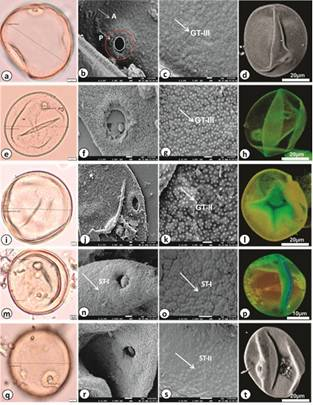
The significance of the work lies in its local scientific grounding. Until now, reconstructions of India’s agricultural past have often depended on reference frameworks developed outside the country, particularly in Europe. This new analogue, built from indigenous data from the Ganga Plain itself, gives researchers a region-specific tool for identifying fossil pollen more accurately and tracing the onset and intensity of ancient farming practices in India’s food basket.
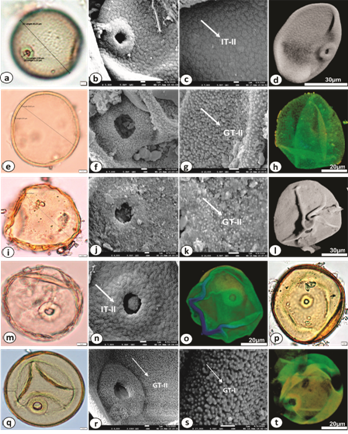
Published in The Holocene, the study was led by Senior Scientist Dr. Swati Tripathi of BSIP, Lucknow, in collaboration with researchers from the Botanical Survey of India, the Indian Institute of Geomagnetism, BSIP and Lucknow University. According to the PIB release, the findings are expected to improve research on ancient agriculture, land use change and human impact on ecosystems, while helping archaeologists and environmental historians better understand how the fertile plains of the Ganga evolved into a major agricultural hub.
Publication link: https://doi.org/10.1177/09596836251414010.
Source: PIB
You may also like
-
IISc Scientists Show How Strong Magnetic Fields Could Allow White Dwarfs to Exceed Chandrasekhar Limit
-
IIT Madras to Launch Global Mission to Map 100 Human Brains in 3D
-
3,898 Indian Scientists Feature in 2026 Global Top 2% Research Database; IISc Leads Indian Institutions
-
New Metal-free Porous Material can Help Produce Affordable Clean Energy
-
A Decade of Cosmic Flickering Reveals New Clues About A Rare Giant Binary Black Hole System
