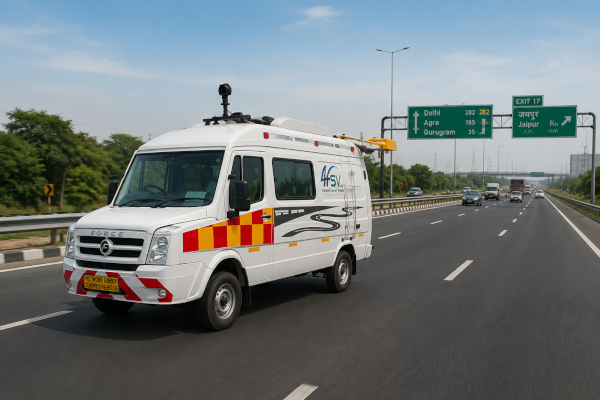
India’s National Highways are entering a new phase of technology-driven maintenance with the deployment of Network Survey Vehicles, or NSVs, across highway corridors. These advanced vehicles use 3D laser-based systems, laser profilers, GPS and high-resolution imaging to scan road surfaces, identify cracks, potholes, uneven stretches and damaged patches, and convert highway conditions into actionable digital data. The Ministry of Road Transport & Highways has described the initiative as a major step towards safer, smoother and more accountable highway management.
The importance of NSVs lies in their ability to turn road inspection from a slow manual process into a fast, evidence-based digital system. Earlier, highway surveys could cover only 20 to 80 km in a day. With the new technology, NSVs can survey up to 300 km per day, allowing defects to be detected quickly and repair action to begin faster. This speed matters because potholes, surface cracks and uneven road patches directly affect passenger comfort, vehicle safety and accident risk.
The new system follows a structured three-step process. Raw survey data is encrypted and sent to a centralised NSV centre within 48 hours. Expert teams placed across five zones examine and monitor the findings. Within 10 days, the raw data is converted into actionable insights, a process that previously took four to six months. This gives India’s highway maintenance agencies a faster and more transparent method to identify problems and act on them.
The data collected by NSVs is uploaded directly to NHAI’s AI-based Data Lake portal. This allows expert teams to analyse road condition reports, identify priority repair needs and take evidence-backed maintenance decisions. Every report goes through expert quality checks before it is accepted. Once validated, digital notices are issued automatically to concerned stakeholders, reducing manual delays and improving accountability.
The surveys will cover two-lane to eight-lane National Highways across different landscapes, including freight corridors, traffic-heavy routes and weather-prone regions. These surveys will be conducted at regular six-month intervals, helping authorities track the condition of road assets over time. This approach makes highway maintenance more proactive, because problems can be detected early instead of waiting for public complaints or visible deterioration.
A new mobile app has also been developed for site inspectors. Through the app, inspectors can view NSV findings in real time, upload geo-stamped photographs, post comments from the site and track rectification work directly. This creates a complete digital trail from defect detection to repair completion. The system is designed to close the loop only after every reported issue is fully rectified.
This initiative is important for citizens because highways are not only transport routes. They are economic arteries that carry passengers, freight, emergency services, agricultural produce and industrial supply chains. Better road quality reduces travel time, improves vehicle efficiency, lowers accident risks and gives commuters a smoother experience. For a country building large-scale expressways and logistics corridors, maintenance is as important as construction.
The deployment of NSVs marks a shift in India’s infrastructure governance. Highways are now being monitored through data, imaging, AI analysis and digital accountability. The result is a smarter maintenance ecosystem where defects are identified faster, agencies are held responsible, and citizens benefit from safer roads. India is not only building highways at scale; it is now creating a technology-backed system to keep them efficient, reliable and safe.
Source: PIB
You may also like
-
ICAR Scientists Develop Indigenous Protective Gloves for Cotton Farmers, Sign Commercial Manufacturing Agreement
-
BHEL–Coal India Joint Venture Begins Construction of ₹25,016 Crore Indigenous Coal Gasification Project in Odisha
-
PM Modi to Inaugurate RBI’s Tier IV Data Centre and Cybersecurity Training Institute in Bhubaneswar
-
India Creates 11 Crore Digital Farmer IDs Five Months Ahead of Target, Strengthening AgriStack Infrastructure
-
Chak-Hao Black Rice of Manipur and Nagaland: The Aromatic Purple Heritage Grain with GI Recognition
