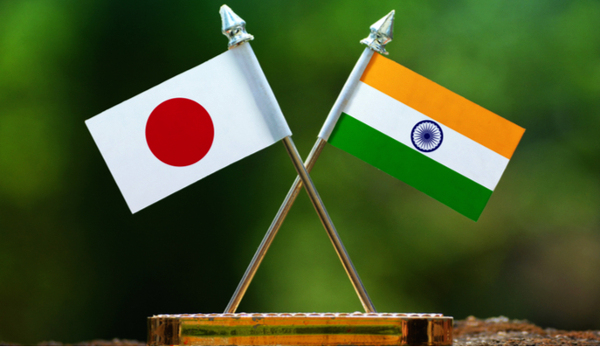
Japan has formally opened applications for the LOTUS Programme FY2026, offering around 1,000 opportunities for Indian Master’s students, PhD scholars and postdoctoral researchers to undertake research exchanges at Japanese institutions. The official announcement comes from the Japan Science and Technology Agency (JST), which says the call opened on March 13, 2026 and will remain open until June 9, 2026.
The programme, officially called the India-Japan Circulation of Talented Youths in Science Programme, is designed to strengthen joint research between Indian and Japanese institutions while also building long-term research and career pathways in Japan for young Indian scholars. JST says the FY2026 edition will focus on priority areas such as AI and intelligent robotics, biotechnology, energy, materials, quantum technologies, semiconductors, and network and telecommunications, while also allowing related interdisciplinary work.
LOTUS 2026 has two tracks. LOTUS Basic supports shorter research stays of up to 12 months, while the newly added LOTUS-ASPIRE track supports longer engagement of up to 36 months and places stronger emphasis on generating tangible research outcomes. Both tracks provide monthly living support of ₹140,000, while the ASPIRE stream carries a significantly larger supervision and research support component. JST says the final selections are expected in late August 2026, with implementation scheduled to begin from October 2026.
A key feature of the programme is that Indian candidates cannot apply independently. Applications must be submitted by a host Principal Investigator in Japan, reflecting the programme’s structure as a joint India-Japan research collaboration mechanism rather than a conventional scholarship call. Eligible invitees must be enrolled in an Indian university or research institution as Master’s students, doctoral students, or postdoctoral fellows, and must be 40 years old or below.
The latest call also fits into a larger bilateral policy push. Official India-Japan documents released in August 2025 had already identified LOTUS as a flagship mechanism to deepen research exchanges and develop next-generation talent in frontier sectors. Those documents linked the programme to internships and wider industry-academia collaboration in Japan, underscoring that LOTUS is emerging as more than just a mobility scheme; it is becoming part of the strategic science and technology architecture of the India-Japan partnership.
How to submit
The LOTUS FY2026 call is not a direct student self-application scheme. JST says the proposal must be submitted by a Principal Investigator in Japan through the e-Rad system. The Japanese PI must belong to a Japanese research institution and take responsibility for the joint research plan and the invited participants. JST also says direct applications from Indian institutions, students, or researchers are not accepted.
An Indian Master’s student, PhD scholar, or postdoctoral researcher first needs to identify a collaborating professor or research group in Japan, prepare a joint research plan with the Indian side, and then have the Japanese host PI file the application on e-Rad under the correct LOTUS category. JST warns that e-Rad registration can take time, so applicants should prepare well before the deadline.
Important dates
JST’s official schedule says the FY2026 call opened on 13 March 2026 and the submission deadline is 9 June 2026 at 12:00 noon JST. Review and selection are scheduled for June to August 2026, final selection is expected from late August 2026 onward, and support is set to begin in October 2026.
For the two programme tracks, JST says LOTUS Basic runs for up to 12 months, while LOTUS-ASPIRE can run for up to 36 months, with implementation beginning on or after early October 2026.
Research fields
JST lists seven target research fields for LOTUS FY2026: AI, Information and Intelligent Robotics; Biotechnology; Energy; Materials; Quantum; Semiconductors; and Network and Telecommunications. JST also notes that other fields may be eligible if they are relevant to these seven areas.
Reference:
JST LOTUS Programme home:
https://www.jst.go.jp/program/india/en/
JST FY2026 open call:
https://www.jst.go.jp/program/india/en/call/
JST FY2026 call overview PDF:
https://www.jst.go.jp/program/india/dl/2026/lotus_fy2026call_overview_en.pdf
PIB – India-Japan Joint Vision for the Next Decade:
https://www.pib.gov.in/PressReleasePage.aspx?PRID=2161986
PIB – Action Plan for India-Japan Human Resource Exchange:
https://www.pib.gov.in/PressReleseDetailm.aspx?PRID=2161975
PIB – 15th India-Japan Annual Summit Joint Statement:
https://www.pib.gov.in/PressReleasePage.aspx?PRID=2161985
You may also like
-
National Institute of Naturopathy Opens Admissions for BNYS Programme at Pune for 2026–27
-
Yudhishthira’s Counter-Diplomacy With Shalya: Working With an Ally Who Has Joined the Other Side
-
Gnani AI Launches Nationwide Challenge Offering Up to 100 Paid AI Internships
-
NMMSS Scholarship Application Deadline Extended to October 31, 2026
-
DGCA Introduces Training Framework for Gyroplane Pilots in India
