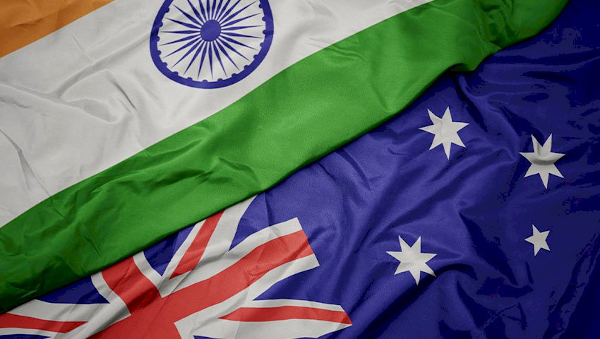
External Affairs Minister Dr. S. Jaishankar’s arrival in Brisbane marked an important moment in India’s growing engagement with Australia and the wider Indo-Pacific region. His visit carried diplomatic, strategic, economic and diaspora significance, reflecting the steady expansion of India’s relationship with one of its closest partners in the southern hemisphere.
A major highlight of the visit was the inauguration of India’s fourth consulate in Australia at Brisbane. The opening of a new consulate is more than an administrative expansion. It shows the rising importance of Queensland in India’s diplomatic map and strengthens India’s ability to serve its growing community, students, professionals and businesses in the region. Brisbane has become increasingly relevant due to its educational institutions, economic links, technology ecosystem and Indian-origin population.
The visit also came at a time when India and Australia have been deepening cooperation across several fields. Defence, trade, education, critical minerals, clean energy, technology, maritime security and people-to-people ties have become strong pillars of the relationship. Both countries are active partners in the Indo-Pacific, where secure sea lanes, stable supply chains and respect for international rules carry major strategic importance.
Dr. Jaishankar’s schedule included the 15th Foreign Ministers’ Framework Dialogue with Australian Foreign Minister Penny Wong in Canberra. This dialogue provides a structured platform for both sides to review bilateral cooperation and discuss regional developments. Such high-level engagement helps convert shared interests into practical coordination, especially in areas like maritime security, economic resilience, regional connectivity and multilateral cooperation.
Another important part of the visit was his keynote address at the second edition of Raisina Down Under, held at the Australian Parliament House. This platform brings strategic thinkers, policymakers, diplomats and experts together to discuss major regional and global issues. India’s presence at such forums reflects its growing role as a leading voice in debates on the Indo-Pacific, global governance, technology, security and economic transformation.
The visit also included meetings with Australian leadership, parliamentarians, members of the Indian diaspora, business leaders, media representatives and think tanks. This wider outreach shows how modern diplomacy extends beyond government-to-government engagement. It includes business communities, academic institutions, strategic experts and citizens who help shape the long-term strength of a partnership.
The Indian diaspora remains one of the strongest bridges between India and Australia. Indian-origin communities have contributed significantly to Australia’s economy, education, healthcare, technology and public life. Their presence gives the bilateral relationship a living social foundation. A stronger consular network helps support this community while also deepening India’s institutional presence in Australia.
The Australia visit also fits into India’s larger Act East and Indo-Pacific strategy. India sees Australia as a key partner in building a stable, open and prosperous regional order. As both nations expand cooperation through bilateral mechanisms and wider platforms, the relationship is moving from traditional diplomacy into a more strategic and future-oriented partnership.
After completing the Australia leg, Dr. Jaishankar’s visit was scheduled to continue in Singapore. There, he was expected to address the 8th Roundtable of the ASEAN-India Network of Think Tanks and meet Singapore’s leadership. This second leg added a wider Southeast Asian dimension to the tour, linking India’s engagement with Australia to its continuing partnership with ASEAN.
Singapore holds a special place in India’s regional diplomacy as a financial hub, technology partner and gateway to Southeast Asia. Discussions with Singapore’s leadership were expected to review the close partnership between the two countries and explore new areas for cooperation. The visit therefore connected two important diplomatic tracks: India’s strategic partnership with Australia and its long-standing engagement with ASEAN.
Dr. Jaishankar’s Brisbane arrival and wider tour reflected India’s expanding diplomatic confidence. The visit combined consular outreach, strategic dialogue, diaspora engagement, policy discussion and regional diplomacy. It showed an India that is building deeper partnerships across the Indo-Pacific through institutions, people, ideas and practical cooperation.
In the larger picture, the visit strengthened India’s profile as a serious Indo-Pacific actor. By engaging Australia and Singapore in a single diplomatic tour, India reinforced its commitment to regional stability, economic partnership and people-centred diplomacy. The Brisbane consulate, the Canberra dialogue, the Raisina Down Under address and the Singapore engagements together formed a compact but powerful expression of India’s evolving regional strategy.
You may also like
-
US Double Standards in Foreign Policy: 16 Recent Cases Involving India, Russia, China and Global Trade
-
Indian Navy Vice Chief Inspects Japan’s Mogami-Class Stealth Frigate as India-Japan Shipbuilding Cooperation Expands
-
INS Trishul Arrives in UK for Exercise KONKAN 2026 as India and Royal Navy Expand Maritime Cooperation
-
INS Sahyadri Arrives in Russia for Exercise INDRA 2026 to Strengthen India-Russia Naval Cooperation
-
India and Qatar Deepen Strategic Partnership with Focus on Energy Security, Trade and West Asia
