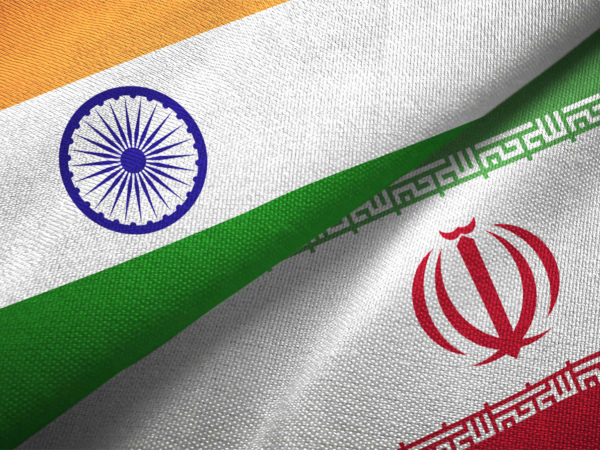
India’s hosting of the BRICS Foreign Ministers’ Meeting in New Delhi on May 14-15 has gained added diplomatic weight with Iranian Foreign Minister Abbas Araghchi expected to attend the gathering. His arrival comes at a sensitive moment for regional politics, as tensions in West Asia are expected to dominate discussions among the expanded BRICS members.
The meeting is being held under India’s 2026 BRICS presidency, whose theme is “Building for Resilience, Innovation, Cooperation and Sustainability.” The New Delhi programme includes multiple ministerial sessions at Bharat Mandapam, a joint call on Prime Minister Narendra Modi, and a dinner hosted by External Affairs Minister S. Jaishankar.
Araghchi’s participation gives the summit a sharp geopolitical edge. Iran is now part of the expanded BRICS framework, and Tehran is expected to use the platform to seek stronger diplomatic support over the ongoing crisis in West Asia. Reuters reported that Iran has urged India, as BRICS chair, to help build consensus within the grouping over the conflict.
For India, the meeting presents both an opportunity and a diplomatic balancing act. New Delhi has long maintained strong ties with Iran, particularly in connectivity, energy and regional security. At the same time, India also has deep strategic and economic relations with the Gulf Arab states, including the UAE and Saudi Arabia, both of which are important energy suppliers and home to millions of Indians. This makes India’s role as BRICS chair especially delicate.
One of the key concerns for India is energy security. West Asia remains central to India’s crude oil, LNG and LPG supply chains, while the Strait of Hormuz is among the world’s most critical maritime chokepoints. Any prolonged instability in the region can affect shipping routes, insurance costs, fuel prices and inflation management. This is why discussions involving Iran at the BRICS platform will be watched closely in New Delhi.
The BRICS meeting also comes at a time when the grouping itself is trying to redefine its global role after expansion. With new members from West Asia and Africa, BRICS is no longer just a platform for emerging economies; it is increasingly becoming a forum where energy security, conflict diplomacy, supply chains, trade settlements and Global South priorities intersect.
However, consensus may not be easy. The West Asia crisis has created divisions within the grouping, especially because some BRICS members have differing strategic alignments and regional interests. Reuters reported that India is still hopeful of securing a joint statement, but the challenge will be to find language that reflects concern over the crisis without deepening internal divisions.
Iranian Deputy Foreign Minister Kazem Gharibabadi has also indicated that Tehran would welcome any peace initiative from India. His comments underline how New Delhi is increasingly being seen as a country that can maintain communication across rival camps without being locked into one bloc.
Araghchi’s expected visit is therefore more than a routine ministerial attendance. It places India at the centre of a high-stakes diplomatic moment where BRICS unity, West Asia stability, energy security and India-Iran ties all converge. For New Delhi, the challenge will be to keep the conversation open, preserve balance among competing partners, and use the BRICS platform to push for restraint, dialogue and practical cooperation.
You may also like
-
India and Ghana Expand Agricultural Partnership Through New ICAR–CSIR-CRI Agreement
-
India Hands Over Three Tonnes of Anti-Tuberculosis Medicines to Sri Lanka
-
Adani Power and Druk Green Power to Develop 770 MW Chamkharchhu-I Hydropower Project in Bhutan
-
India and Austria Move to Deepen Security and Strategic Cooperation
-
India Offers Space-Based Climate Monitoring and Ocean Science Expertise to Pacific Partners at Pre-COP31
