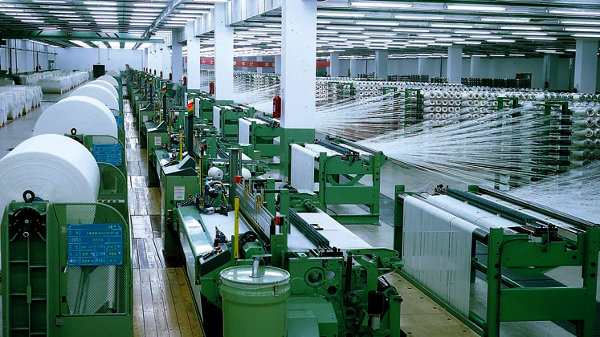
India’s textile and apparel industry is moving into a new phase of expansion, with Union Textiles Minister Giriraj Singh stating that the sector has grown to nearly US$190 billion in 2025–26 and is now positioned to reach the US$350 billion target by 2030. The statement reflects the government’s larger push to transform textiles into one of India’s strongest engines of manufacturing, exports, employment and rural-industrial linkage.
The domestic textile market has also expanded sharply over the last decade. According to the minister, it has grown from around ₹6 lakh crore in 2014–15 to more than ₹16 lakh crore, showing how rising consumption, manufacturing capacity, organised retail, e-commerce, exports and policy support are combining to strengthen the sector.
Textiles remain one of India’s most employment-intensive industries. The sector currently provides direct employment to more than 5.3 crore people, covering workers in spinning, weaving, processing, garments, technical textiles, handlooms, handicrafts, jute, silk and allied activities. The government expects the industry to create nearly 2 crore additional jobs over the next three years, making textiles a major pillar of India’s employment strategy.
A major part of this growth is being driven by flagship schemes such as PM MITRA Parks, the Production Linked Incentive scheme, the National Technical Textiles Mission, the Textiles Export Promotion Mission, the National Fibre Mission and the Raw Material Support Scheme. These programmes are designed to strengthen the full value chain, from raw material and fibre production to manufacturing, design, exports and high-value technical textiles.
The PM MITRA Parks initiative is especially important because it aims to build large integrated textile manufacturing hubs with modern infrastructure, plug-and-play facilities, logistics support and investment potential. Earlier, the Ministry of Textiles had said that PM MITRA Parks are expected to attract around ₹70,000 crore in investment and generate nearly 21 lakh jobs, giving India the scale required to compete with major global textile manufacturing centres.
Technical textiles are another important growth frontier. These are specialised fabrics used in sectors such as defence, agriculture, infrastructure, automobiles, healthcare, sports, packaging and environmental protection. India’s push into this segment can help the country move beyond conventional garments and fabrics into higher-value manufacturing. The government has earlier set a target of US$10 billion in technical textile exports by 2030, showing that the sector is being treated as a strategic manufacturing opportunity.
The textile industry also carries deep social and regional importance. It connects cotton farmers, silk cultivators, jute growers, handloom workers, artisans, women’s self-help groups, MSMEs, exporters and large manufacturers into one economic chain. Growth in textiles therefore has a direct impact on rural incomes, women’s employment, traditional crafts, export earnings and industrial development across states.
India’s challenge now is to convert scale into global competitiveness. The next stage will depend on better quality, faster logistics, modern machinery, sustainable production, diversified exports, skilled labour and stronger branding. If these areas move together, the US$350 billion target can become more than an industry projection. It can become one of the central stories of India’s manufacturing rise by 2030.
You may also like
-
Paras Semiconductors Secures 43 Acres in Madhya Pradesh for Proposed ₹6,200 Crore Advanced Chip Packaging Facility
-
Petronet LNG Plans ₹1,200 Crore Joint Venture for Ten Compressed Biogas Plants Across India
-
India Seeks South Korean Shipbuilding Partnerships as Sarbananda Sonowal Begins Four-Day Visit to Busan
-
Koraput Kalajeera Rice of Odisha: The GI-Tagged Aromatic Heritage of India’s Ancient Rice-Growing Region
-
ICAR Scientists Develop Indigenous Protective Gloves for Cotton Farmers, Sign Commercial Manufacturing Agreement
