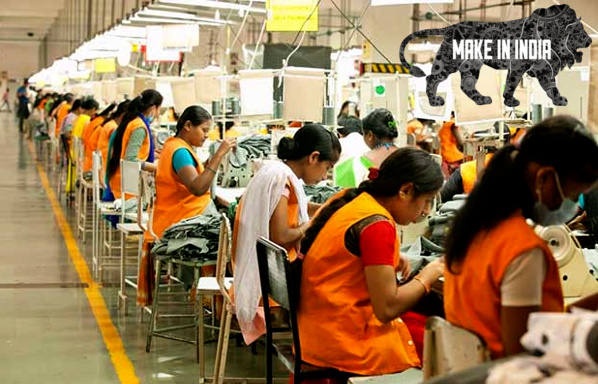
India’s textile exports recorded strong growth in August 2026, rising 16.1% year-on-year to ₹29,776 crore, supported by gains across cotton textiles, man-made fibres, carpets, handicrafts and ready-made garments.
Exports stood at ₹25,656 crore in August 2025, meaning the sector added more than ₹4,100 crore in exports compared with the same month last year.
The broader trend has also remained positive during the first five months of the current financial year. Between April and August 2026, India’s cumulative textile exports reached ₹1.43 lakh crore, an increase of 10.3% over the corresponding period in 2025.
Cotton Textile Exports Rise More Than 24%
Cotton yarn, fabrics, made-ups and handloom products were among the strongest contributors during August, recording 24.1% year-on-year export growth.
The performance is significant because cotton textiles represent a broad manufacturing chain extending from spinning and weaving to processing, finished fabrics and made-up textile products.
Growth has also remained strong over a longer period. During April-August 2026, cumulative exports from the cotton textile segment increased by 18% compared with the corresponding five months of the previous year.
The figures indicate that India’s export expansion is not being driven solely by finished garments but is extending across important intermediate and value-added textile categories.
Man-Made Textiles Record Nearly 20% Growth
India’s man-made textile segment also registered substantial expansion during the month.
Exports of man-made yarn, fabrics and made-ups increased 19.9% in August, while cumulative exports during April-August were 13.6% higher than a year earlier.
Growth in this category is particularly important for India’s longer-term textile ambitions. Synthetic and man-made fibres account for a substantial part of international textile consumption, making expansion in these products important for diversifying India’s traditionally strong natural-fibre textile industry.
Greater participation in man-made textiles can also broaden India’s presence across technical fabrics, performance clothing and other segments where synthetic and blended materials are widely used.
Handicraft Exports Surge 41.4%
The strongest percentage growth among the major categories came from handicrafts.
Exports of handicrafts excluding handmade carpets increased 41.4% year-on-year in August. The performance was not limited to a single month, with cumulative handicraft exports during April-August recording an even stronger 44% increase.
Carpets also maintained positive momentum. Carpet exports grew 15% in August, while cumulative exports for the first five months of the financial year increased 11.9%.
The performance of handicrafts is particularly relevant because the sector combines export earnings with employment across numerous traditional manufacturing clusters, artisan communities and small enterprises.
Ready-Made Garments Maintain Export Growth
India’s ready-made garment industry recorded more moderate but continued expansion, with exports of garments across textile categories increasing 6.1% in August.
Garments occupy the consumer-facing end of the textile value chain and generally contain greater value addition than exports of raw fibre or yarn. Continued expansion of garment exports is therefore important for India’s effort to capture a larger share of the economic value generated from its domestic textile production.
The August figures show that growth is occurring simultaneously across raw-material processing, fabrics, made-ups, traditional handicrafts, carpets and finished apparel rather than being concentrated in one product category.
Export Basket Becomes More Diversified
The Ministry of Textiles attributed the performance to improving competitiveness, better market access, policy support, value addition and efforts to diversify export destinations.
Market diversification has become increasingly important as exporters seek to reduce excessive dependence on individual overseas markets and take advantage of India’s expanding network of trade agreements.
For textile manufacturers, preferential market access can be particularly valuable because even relatively modest tariffs can affect competitiveness in an industry where international suppliers compete closely on price, quality and delivery schedules.
India’s ability to expand across cotton, man-made textiles, garments, carpets and handicrafts also provides some diversification within the textile export basket itself.
Textiles Remain Important to Manufacturing and Employment
The importance of the textile industry extends considerably beyond export earnings. The sector supports a long domestic value chain covering cotton cultivation, fibre production, spinning, weaving, processing, garment manufacturing, handicrafts, logistics and retail.
It is also highly employment-intensive, creating opportunities ranging from large organised manufacturing facilities to small enterprises, handloom workers and individual artisans.
Increasing exports can therefore transmit demand through several layers of the domestic economy rather than benefiting only companies directly engaged in international trade.
The August performance provides a strong start to the latter part of 2026. With monthly textile exports reaching ₹29,776 crore, cumulative April-August exports at ₹1.43 lakh crore, and several major categories recording double-digit growth, India’s textile export expansion is becoming increasingly broad-based across both industrial and traditional segments.
Reference: https://www.pib.gov.in/PressReleaseDetail.aspx?PRID=2311463®=48&lang=1
You may also like
-
JISA Softech Unveils Indigenous QuLens-CryptoBind Quantum-Safe Cybersecurity Platform at Pragati Q-Foundry 2026
-
Sensorise Launches Made-in-India Wega M1 4G Module for EVs, Smart Meters and Industrial IoT
-
Katarni Rice — Bihar’s Fragrant Ceremonial Grain from the Gangetic Plains
-
Nayan Technologies Selected by JSW MG Motor to Advance AI-Based Road Monitoring and Smart Mobility
-
From ‘We Will Coup Whoever We Want’ to Starlink in India: Elon Musk, Corporate Pressure and National Sovereignty
