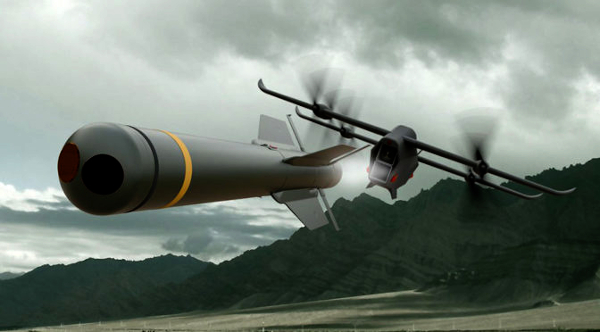
India’s long-range military drone programme has entered a decisive phase, with around ten Indian defence companies submitting bids for the Indian Air Force-led Medium Altitude Long Endurance UAV project. The contract, valued at over Rs 30,000 crore, covers the procurement of 87 MALE unmanned aerial vehicles designed for surveillance, reconnaissance, electronic warfare and precision strike missions.
This is one of India’s most important unmanned aviation programmes because it aims to create a domestic ecosystem for long-endurance combat drones. The project is meant to move India beyond limited imports and emergency purchases into a structured industrial model where Indian firms build, integrate, maintain and upgrade advanced UAVs inside the country.
The publicly named contenders include Hindustan Aeronautics Limited, Solar Defence and Aerospace Limited, Adani Defence Systems Limited, Tata Advanced Systems Limited, Larsen & Toubro and Raphe mPhibr. The participation of public sector companies, large private defence groups and specialised drone firms shows how India’s UAV industry has widened over the past few years. The contest is now about more than supplying airframes. It is about building full production lines, integrating payloads, developing weapons compatibility and creating long-term support infrastructure.
The 87 drones are expected to fill a major operational gap for the armed forces. MALE UAVs operate at medium altitude for long durations and give commanders persistent eyes over large areas. They can watch borders, track enemy movement, monitor military infrastructure, support targeting, relay battlefield intelligence and carry weapons for precision engagement. In India’s security environment, such platforms are important across the western front, the northern borders, the Indian Ocean region and sensitive high-altitude areas.
The programme gained urgency after India’s recent operational experience showed the central role of drones, electronic warfare, air defence and precision weapons in modern conflict. Operation Sindoor demonstrated how unmanned systems and counter-drone systems have become part of the normal battlefield. Drones are now used for surveillance, deception, target marking, strike missions and saturation attacks. A modern air force needs long-endurance unmanned aircraft that can remain on station, detect threats early and support real-time decision-making.
The current procurement is also important because India has traditionally depended on foreign suppliers for high-end drones. Israeli-origin UAVs have served Indian requirements for years, while India has separately moved ahead with the acquisition of MQ-9B high-altitude long-endurance drones from the United States. Those systems give India valuable capability, especially for maritime surveillance and strategic ISR. The MALE UAV programme adds another layer by creating an Indian production base for a larger fleet of armed and sensor-heavy drones.
The structure of the contract is designed to build resilience. The order is expected to be split between two winning firms, with the lowest bidder receiving the larger share. This two-line approach can prevent overdependence on a single manufacturer and allow India to scale production faster during a crisis. It also creates competition between domestic production lines and gives the armed forces greater flexibility for future upgrades, exports and maintenance.
The industrial conditions attached to the programme are equally significant. The bidders are expected to localise major aerostructures and key parts. Drone engines are expected to be assembled and tested in India. Critical payload components linked to electro-optical sensors, satellite communication, navigation and mission systems are expected to move towards domestic production and integration. This is where the real value of the programme lies. A drone is not just an aircraft. It is a flying intelligence system built around sensors, communications, software, weapons and secure data links.
India’s armed forces have also finalised the broad specifications after scientific study. That is important because Indian requirements are unique. A UAV meant for India must deal with deserts, mountains, maritime humidity, high-altitude conditions, long borders, electronic warfare and dense air-defence environments. Imported designs can provide a starting point, but the final platform must be adapted to Indian operational geography.
For Indian industry, the programme can become a turning point similar to what missile, artillery, radar and naval projects have done in their own sectors. Companies that succeed in this tender will gain experience in military airworthiness, flight control systems, secure communications, ground control stations, mission planning software, weapons integration, payload management and life-cycle support. These capabilities can later support export versions, smaller tactical UAVs, loitering munitions and future unmanned combat aircraft.
The role of private industry is especially important. India’s drone sector has moved quickly from small surveillance drones to larger battlefield systems. Companies such as Raphe mPhibr represent the rise of specialised drone manufacturers with in-house engineering depth. Adani Defence has already worked on larger surveillance UAVs through its Drishti-10 experience. Tata Advanced Systems has built strong aerospace and UAV capabilities. Solar Defence is investing in a major drone and robotics manufacturing ecosystem. Larsen & Toubro brings systems engineering and defence manufacturing strength. HAL brings aviation experience, certification knowledge and public-sector scale.
This combination can help India build a layered unmanned warfare architecture. Small drones will serve infantry and tactical units. Loitering munitions will give commanders quick strike options. MALE UAVs will provide persistent surveillance and armed overwatch. HALE systems such as MQ-9B will serve strategic and maritime missions. Future high-altitude pseudo-satellite systems can add another layer above them. The 87-drone programme therefore fits into a larger shift towards unmanned, networked and sensor-driven warfare.
The maintenance element is also crucial. Long-endurance drones require sustained availability, reliable spare parts, trained operators, mission crews, sensor specialists and secure ground infrastructure. A ten-year support model can create a stable domestic maintenance ecosystem. This helps the armed forces avoid the delays that often come with foreign repair chains and overseas dependence.
The tender also has an export angle. Once Indian companies build certified production lines for MALE UAVs, they can target friendly countries looking for affordable, rugged and combat-ready drone systems. Many countries cannot afford expensive Western UAVs. India can offer platforms suited for border surveillance, maritime monitoring, counter-terrorism and internal security. A successful MALE programme can therefore add strength to India’s growing defence export profile.
The larger message is clear. India is no longer treating drones as auxiliary battlefield tools. It is building them as core military systems. The Rs 30,000 crore MALE UAV programme can give the armed forces long-endurance surveillance, precision strike options and stronger battlefield awareness. It can also give Indian industry the confidence to move from assembly to design, from components to full systems, and from domestic supply to global competition.
If executed with discipline, this programme can become one of the foundations of India’s unmanned airpower. It brings together operational need, industrial policy, private-sector participation and strategic autonomy. The bid stage is only the beginning, but it marks a serious step towards making India a major producer of military drones.
Reference
ANI / The News Mill — current bid-stage report on around ten Indian firms submitting bids for the Rs 30,000 crore, 87 MALE UAV programme.
Press Information Bureau, Ministry of Defence — DAC approval on 5 August 2025 for MALE RPAs for the three Services under the Rs 67,000 crore acquisition package.
Economic Times — earlier programme details on two winning bidders, 64:36 order split, domestic production lines, local aerostructures, engine assembly/testing in India, payload localisation and ten-year maintenance support.
Press Information Bureau — Operation Sindoor official note highlighting drone warfare, layered air defence and electronic warfare in India’s modern operational environment.
Press Information Bureau — Raksha Mantri’s 2026 call for India to become a global hub of indigenous drone manufacturing.
You may also like
-
Rajnath Singh to Lead Indian Delegation at ASEAN Defence Summit in Philippines, Strengthening Indo-Pacific Security Cooperation
-
Bengaluru Startup Paar Autonomy Develops AI-Powered Drone Systems for GPS-Denied Environments
-
Sigma Advanced Systems Secures Fresh ₹973 Crore NATO Artillery Ammunition Order
-
India Advances Indigenous Defence and Space Technologies Through Naval Innovation, Drones and Advanced Electronics
-
Thales Seeks Indian Partnerships for Next-Generation Missiles, Radars and Electronic Warfare Systems
