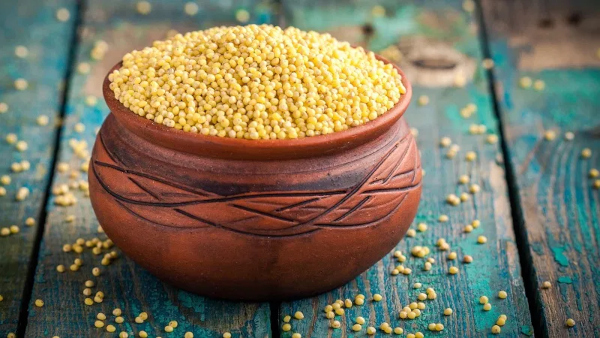
India’s millet export journey has taken a fresh step into the global health-food market with the first-ever sea shipment of botanical-infused ready-to-cook millet functional foods from Karnataka to New Zealand. The shipment was facilitated by the Agricultural and Processed Food Products Export Development Authority, APEDA, and was flagged off on 3 June 2026. The Press Information Bureau release was published on 4 June 2026.
The consignment carried one metric tonne of value-added millet-based products from M/s Infini Agrotek LLP, Bengaluru. This is important because the export is not merely a raw grain shipment. It represents India’s move towards processed, ready-to-cook, health-focused millet foods that match the rising global demand for nutrition, convenience and traditional grain-based wellness products.
The New Zealand order also shows how trade promotion platforms are helping Indian companies reach international buyers. The exporter had participated in APEDA-supported events such as World Food India 2025, Indus Food 2025 and Gulfood 2026. These exhibitions helped the company build buyer connections, expand its market presence and convert business networking into an actual export order.
The shipment was virtually flagged off by APEDA Chairman Shri Abhishek Dev. During the interaction, the exporter was encouraged to continue using APEDA’s export promotion initiatives, trade fairs and business platforms to explore more overseas markets. This reflects a larger policy direction where government-backed market access, product innovation and private enterprise are being linked together to strengthen India’s agri-export ecosystem.
Millets have become one of India’s most important agricultural strengths in the global food conversation. They are climate-resilient crops, nutritionally rich, suitable for diverse food processing and increasingly attractive to health-conscious consumers. When these grains are converted into ready-to-cook functional foods, their value rises sharply, creating better opportunities for farmers, processors, exporters, packaging units and supply-chain partners.
This export also supports India’s larger “Shree Anna” push, where millets are being promoted as both a traditional Indian food and a modern global nutrition product. For farmers, stronger international demand can improve market access and create better price opportunities. For food entrepreneurs, it opens the door to product categories such as millet mixes, breakfast foods, functional blends, health snacks and botanical-infused ready meals.
The Karnataka-to-New Zealand shipment may be small in quantity, but its strategic meaning is large. It shows that India’s millet sector is moving from domestic consumption to premium international shelves. It also shows that Indian agriculture can earn greater value when traditional crops are combined with innovation, branding, processing and export promotion. In this sense, one tonne of millet-based functional food becomes a signal of a much bigger transformation in India’s farm-to-global-market journey.
You may also like
-
India’s Economic Warfare Challenge: Strategic Autonomy, Energy Security and the Rise of a Global Power
-
India-US Trade Deal Stalemate: Why Washington’s Tariff Pressure Has Failed to Secure an Agreement
-
US Double Standards in Foreign Policy: 16 Recent Cases Involving India, Russia, China and Global Trade
-
India’s Arctic Energy Ambitions: Russian Oil, LNG and a New Sea Route to Indian Ports
-
India and Russia Explore Joint Icebreaker Construction as Maritime Industrial Cooperation Expands
