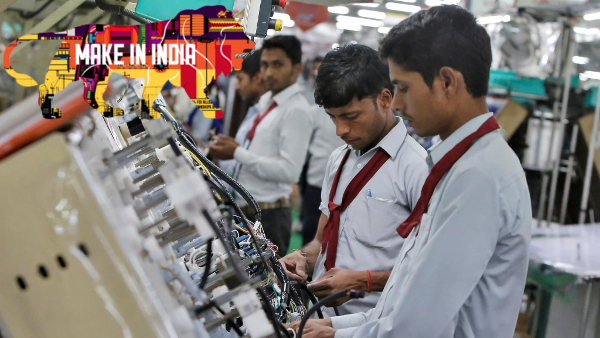
India’s electronics sector has recorded a strong export performance, with shipments rising sharply in December 2024 and confirming the country’s growing position in global electronics manufacturing. Electronics exports surged by 35.11% to reach US$ 3.58 billion in December 2024, compared with US$ 2.65 billion in the same month of the previous year.
This growth marks an important moment in India’s export journey. Electronics, once seen mainly as an import-heavy sector, is now emerging as one of the fastest-growing segments in the country’s export basket. The shift reflects stronger domestic production, better manufacturing capacity, global demand for Indian-made electronic goods and the impact of policy support through the Production Linked Incentive scheme.
The wider trend is equally significant. During the April–December period of the current financial year, India’s electronics exports rose by 28.6% to US$ 26.11 billion, compared with US$ 20.3 billion during the same period in 2023–24. This shows that the December performance was part of a broader export expansion rather than a one-month spike.
The rise of electronics exports also shows how India’s manufacturing base is changing. Mobile phones, components, consumer electronics and other high-value products are becoming important contributors to export growth. As global companies diversify supply chains and expand manufacturing outside traditional hubs, India is positioning itself as a reliable production centre with scale, skilled manpower and a large domestic market.
The Production Linked Incentive scheme has played a major role in this transformation. By encouraging companies to manufacture more within India, the scheme has helped build new capacity, attract investment and increase export competitiveness. The result is visible in the steady rise of electronics shipments and the growing confidence of global buyers in Indian manufacturing.
This export growth is also important for India’s larger economic strategy. Strong electronics exports can reduce the trade imbalance in technology goods, create jobs, support component manufacturing, attract foreign investment and strengthen India’s role in global supply chains. A successful electronics export ecosystem can also support related sectors such as semiconductors, chargers, batteries, display systems, telecom equipment and precision components.
The sector’s rise carries strategic meaning as well. Electronics are at the centre of modern economic power. From smartphones and communication devices to defence systems, electric vehicles, industrial automation and digital infrastructure, every major growth sector depends on reliable electronics manufacturing. A country that builds strength in electronics also builds strength in technology sovereignty.
India’s performance in December 2024 signals that the country is moving from assembly strength towards deeper manufacturing capability. The next challenge will be to increase domestic value addition, strengthen component ecosystems, expand semiconductor capacity and support Indian companies in design-led manufacturing. If these steps continue, electronics can become one of India’s strongest export engines in the coming years.
The surge in exports is therefore more than a trade statistic. It is a sign of India’s manufacturing transition. The country is no longer only a large consumer market for electronics. It is becoming a producer, exporter and future hub for high-value technology goods.
You may also like
-
India Seeks South Korean Shipbuilding Partnerships as Sarbananda Sonowal Begins Four-Day Visit to Busan
-
Koraput Kalajeera Rice of Odisha: The GI-Tagged Aromatic Heritage of India’s Ancient Rice-Growing Region
-
ICAR Scientists Develop Indigenous Protective Gloves for Cotton Farmers, Sign Commercial Manufacturing Agreement
-
BHEL–Coal India Joint Venture Begins Construction of ₹25,016 Crore Indigenous Coal Gasification Project in Odisha
-
PM Modi to Inaugurate RBI’s Tier IV Data Centre and Cybersecurity Training Institute in Bhubaneswar
