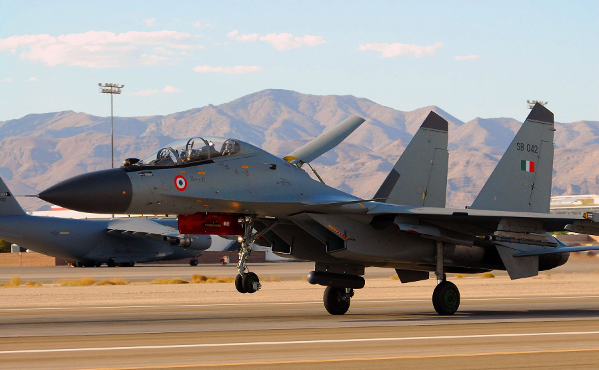
The Indian Air Force has been placed sixth in the Global Air Powers Ranking 2026, a worldwide assessment published by the World Directory of Modern Military Aircraft. The WDMMA ranking does not simply count aircraft numbers. It studies the overall fighting value of an air arm by looking at fleet balance, combat aircraft strength, support platforms, strike capability, logistics, modernisation, and operational depth. Its proprietary TruVal Rating is designed to compare real-world air power rather than raw inventory size.
According to WDMMA, the Indian Air Force currently has an active inventory of 1,716 aircraft, covering fighters, helicopters, transports, trainers, support aircraft and future procurement categories. The IAF has been given a TruVal Rating of 69.4.
India’s sixth-place position reflects the expanding weight of the IAF in global military aviation. The force continues to operate a wide mix of aircraft, including Su-30MKI fighters, Rafale jets, Mirage 2000 aircraft, MiG-29 variants, Tejas light combat aircraft, heavy-lift helicopters, transport platforms and training fleets. This combination gives India a broad operational profile across air defence, deep strike, logistics, mobility, training and high-altitude missions.
The top rankings also show the scale of American military aviation. The U.S. Air Force leads the list, followed by other major air arms, with U.S. naval, army and marine aviation also appearing among the highest-ranked forces. The Indian Air Force is listed ahead of the Chinese and Japanese air forces in the 2026 top-ten ranking reported from the WDMMA index.
WDMMA says its wider database tracks 48,082 aircraft, covering 129 air services across 103 countries. This includes separate air wings operated by air forces, armies, navies and marine corps.
For India, it highlights capability rather than fleet size alone. The IAF’s strength comes from a mix of frontline fighters, transport reach, helicopter operations, training infrastructure, air mobility and continuing modernisation. Indigenous programmes such as the Tejas fighter, along with planned future acquisitions and upgrades, are central to this long-term transformation.
The ranking also points to the changing nature of air power. Modern air forces are judged not only by how many aircraft they possess, but by how well those aircraft are supported, upgraded, integrated and deployed. In this environment, readiness, sustainability, technology and operational balance matter as much as numbers.
The Indian Air Force’s sixth-place position in the 2026 ranking therefore marks another indicator of India’s growing military aviation profile. It places the IAF among the world’s leading air arms and reinforces the importance of continued investment in indigenous aircraft, advanced weapons, air defence systems, force multipliers and network-centric operations.
You may also like
-
PRAHAAR: India’s First National Counter-Terrorism Policy and Strategy
-
Takshak Heavyweight Torpedo: How India’s Indigenous Submarine Weapon Compares With the World’s Leading Torpedoes
-
Embraer Builds Dual Aerospace Strategy in India Through C-390 Military and E175 Regional Aircraft Programmes
-
NextLeap Tests Indigenous Jet Engine for Long-Range Stryker Kamikaze UAV
-
Côte d’Ivoire Military Delegation Visits HAL, Shows Interest in India’s Indigenous Aerospace Platforms
