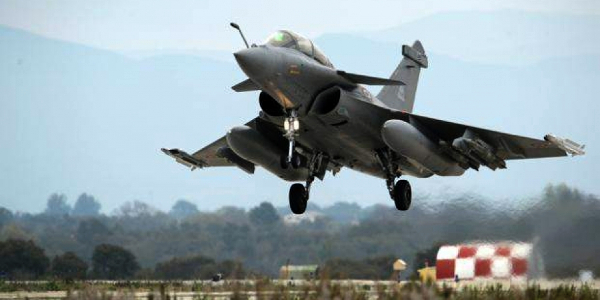
The Indian Air Force (IAF) has invited bids for the procurement of specialised flying clothing and protective equipment for personnel operating its Rafale multirole fighter aircraft. The limited tender, published on 13 November 2026, covers anti-G trousers, life vests and oxygen masks designed to support aircrew safety during demanding flight conditions and emergencies. The procurement initiative forms part of the requirements associated with maintaining pilot safety and operational readiness across the Rafale fleet.
Procurement of Specialised Flying Equipment
According to available procurement records, the tender has been issued under the title “Procurement of Flying Clothing for Rafale Aircrew” by the Directorate of Procurement at Air Headquarters. The procurement documentation lists 17 equipment variants across three principal categories, comprising six variants of anti-G trousers, seven variants of life vests and four variants of oxygen masks. The different variants should not be interpreted as the total number of individual equipment units being procured.
According to the published procurement schedule, bid submission is expected to commence on 22 December 2026 and conclude on 5 January 2027, with bid opening scheduled for 12 January 2027. The procurement remains at the tendering stage, and no contract award or equipment delivery has been established.
Anti-G Trousers for High-Performance Fighter Operations
Anti-G trousers constitute an essential component of protective flying equipment used by fighter aircraft pilots. During high-acceleration manoeuvres, gravitational forces can cause blood to accumulate in the lower extremities, reducing blood circulation to the brain and potentially affecting consciousness. Anti-G garments help counter these physiological effects through controlled compression of the lower body.
For pilots operating high-performance multirole fighter aircraft such as the Rafale, appropriate protective equipment contributes to their ability to withstand demanding flight conditions. Such equipment complements specialised pilot training and aircraft-integrated life-support systems. Its effectiveness depends upon correct fitting, compatibility with aircraft systems and compliance with applicable aviation safety requirements.
Life Vests for Maritime Emergency Survival
The procurement also includes specialised life vests intended to support aircrew survival during emergencies over water. Fighter pilots operating over maritime regions require appropriate flotation equipment to improve their chances of survival following an emergency evacuation or ejection. Aviation life vests form an important component of the broader personal survival equipment carried by military aircrew.
Unlike conventional flotation garments, military aviation life vests must be compatible with the pilot’s flying clothing, cockpit environment and emergency escape systems. Their design must balance flotation capabilities with mobility, comfort and accessibility during flight. The inclusion of life vests in the tender reflects the importance of maintaining appropriate survival equipment for Rafale aircrew.
Oxygen Masks and High-Altitude Flight Safety
Oxygen masks are another critical component of fighter aircraft life-support equipment, providing respiratory assistance during flight at high altitudes and under demanding operational conditions. Reduced atmospheric oxygen availability can impair cognitive performance, physical coordination and consciousness if adequate respiratory support is unavailable. Specialised aviation oxygen masks are designed to work with aircraft life-support systems to address these challenges.
Military aviation oxygen masks must also accommodate the communication and ergonomic requirements of fighter pilots. Reliable respiratory support, secure fitting and compatibility with other protective equipment are essential considerations in their selection. The tender’s inclusion of multiple oxygen mask variants indicates that the procurement covers a range of equipment configurations.
Supporting the Operational Readiness of India’s Rafale Fleet
The Rafale fleet represents an important component of the Indian Air Force’s multirole combat aviation capabilities. Sustaining these aircraft requires not only maintenance, spare parts and technical support but also the continued availability of compatible protective flying equipment. Aircrew safety remains an integral element of the operational preparedness of any modern combat aviation establishment.
The procurement of specialised flying clothing and survival equipment highlights the importance of human factors in military aviation. Advanced aircraft capabilities must be complemented by equipment that supports pilots in managing physiological stress, high-altitude conditions and potential emergencies. Maintaining these supporting systems contributes to the safe and effective utilisation of high-performance aircraft throughout their operational service.
Strengthening Military Aviation Safety
The Indian Air Force’s tender reflects the continuing requirement to maintain specialised protective equipment for its Rafale aircrew. While the procurement does not represent an expansion of the aircraft fleet or the acquisition of new combat platforms, it addresses an essential component of aviation safety and operational sustainability. Its successful completion would contribute to maintaining the protective equipment required by personnel operating one of India’s advanced fighter aircraft fleets.
Sources
- Indian Air Force procurement reference: AIR HQ/DPROC/26-27/W25011/PUR.
- Tender identification number: 2026_IAF_798554_1.
- TenderKart and TenderDetail procurement records, published on 13 November 2026.
You may also like
-
Vindhyagiri Delivery Marks Completion of India’s Project 17A Stealth Frigate Programme
-
Walchandnagar Industries Secures ₹18.46 Crore Universal Vertical Launcher Order
-
India Optel Commences Production of Indigenous CM-3 MR Sight at Dehradun
-
Solar Defence Successfully Completes Trials of Indigenous Bhargavastra Counter-Drone System
-
India and Seychelles Strengthen Partnership Across Six Strategic Sectors
