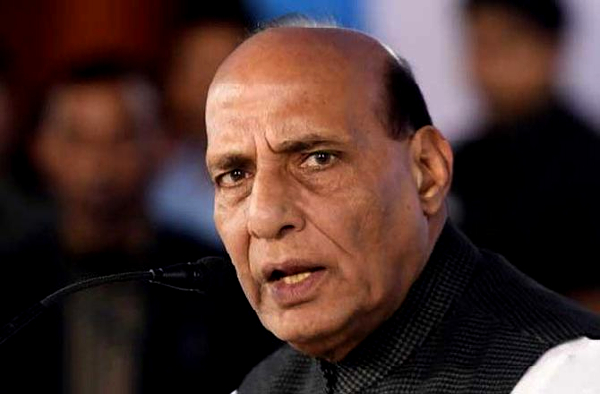
India remains committed to peace and global stability but will not compromise on its security or strategic autonomy when confronted with threats, Defence Minister Rajnath Singh said while outlining the country’s evolving defence, security and self-reliance strategy at a Defence Conclave in New Delhi on September 27, 2026.
Singh said India does not seek to occupy the territory of other countries and views peaceful coexistence as an important part of its civilisational outlook. At the same time, he stressed that India’s preference for peace should not be interpreted as an unwillingness to defend its interests.
“India believes in peace and does not seek to occupy the territory of any country. However, peace should not be mistaken for weakness,” the Defence Minister said. He added that India seeks international stability without sacrificing its strategic autonomy and remains prepared to safeguard national security whenever necessary.
Terrorism Cannot Become an Instrument of State Policy
Addressing cross-border terrorism, Singh said meaningful dialogue cannot take place with countries that continue to promote or support terrorism directed against India.
He argued that terrorism cannot serve as a sustainable strategic instrument for any state and said countries that provide support, sanctuary or assistance to terrorist organisations must recognise the consequences of such policies. Referring to Prime Minister Narendra Modi’s remarks at the recent Shanghai Cooperation Organisation meeting, Singh said India retains the right to take measures necessary to protect itself from terrorism.
The remarks formed part of a broader articulation of India’s national security doctrine in which diplomatic engagement, strategic autonomy and military preparedness are expected to operate together rather than as competing objectives.
National Unity Central to India’s Security
Singh also placed national unity at the centre of India’s security architecture, arguing that protecting the country cannot remain the responsibility of the Armed Forces alone.
He said citizens have an important role in strengthening national resilience and called for divisions based on religion, caste, language, region, creed and other identities to be placed below the larger national interest when issues of security and sovereignty are involved.
The Defence Minister presented social cohesion as an important element of national power, alongside military capability, technological strength and economic resilience.
India as a Civilisational Power
Describing India as a civilisational power, Singh said the country’s rise is intended to be based on inclusive development rather than territorial expansion or confrontation.
He identified India’s democratic traditions, the civilisational idea of Vasudhaiva Kutumbakam and the principle of Sabka Saath, Sabka Vikas as important elements shaping India’s engagement with the world.
According to Singh, India’s wider strategic outlook rests on five broad pillars: respect, dialogue, prosperity, security and culture. Together, these principles are intended to provide a framework for India’s relations with both established powers and countries of the Global South.
India’s Expanding Role Across the Global South
The Defence Minister highlighted India’s growing engagement with developing countries and described the country as seeking the role of a trusted global partner or Vishwa Bandhu.
He cited India’s assistance during the COVID-19 pandemic, including the Vaccine Maitri initiative, under which India supplied more than 30 crore vaccine doses to countries overseas. India has also expanded cooperation with developing nations through medicines, digital public infrastructure, payment technologies, training, expertise and development assistance.
Initiatives such as the Voice of Global South Summit have been used by New Delhi to provide a platform for developing countries to raise concerns relating to financing, food and energy security, technology access, development and reform of international institutions.
Singh said responsible use of national power would require countries to maintain avenues for cooperation even when competition intensifies.
India Moves From Defence Importer to Defence Exporter
A substantial part of the Defence Minister’s address focused on India’s transformation from a predominantly import-dependent defence market towards a larger domestic manufacturing and export ecosystem.
India’s defence exports increased from ₹686 crore in 2013-14 to a record ₹38,424 crore during 2025-26. The Ministry of Defence has set a target of taking annual defence exports to ₹50,000 crore by 2029.
Official Ministry of Defence data released during 2026 showed that Indian defence products were being exported to more than 80 countries. The export basket increasingly includes ammunition, electronic systems, radars, components, naval equipment, protective systems and other defence products.
Singh said growing overseas demand for Indian defence equipment demonstrates increasing international confidence in the country’s manufacturing standards, technology and ability to execute defence contracts.
The government is simultaneously trying to position “Made in India” defence products as part of a wider transition from licensed manufacturing and imported systems towards indigenous design, development and production.
Defence Budget Reaches ₹7.85 Lakh Crore
India’s defence allocation for 2026-27 has reached approximately ₹7.85 lakh crore, compared with about ₹2.53 lakh crore in 2013-14.
A large proportion of the capital procurement budget has also been reserved for purchases from the domestic defence industry. Singh said approximately 75 per cent of the capital acquisition allocation, amounting to around ₹1.39 lakh crore, has been earmarked for domestic procurement.
The policy is intended to provide longer-term demand visibility for Defence Public Sector Undertakings, private manufacturers, MSMEs and companies entering specialised defence supply chains.
India’s annual defence production reached a record ₹1.78 lakh crore in 2025-26, reflecting the wider expansion of domestic manufacturing capacity.
Preparing for Cyber, Space, AI and Hypersonic Warfare
Singh said the character of warfare is changing rapidly and that future conflicts cannot be understood exclusively through traditional land, air and maritime operations.
Cyber warfare, military space systems, electronic warfare and information warfare are becoming increasingly important, while Artificial Intelligence, autonomous systems, unmanned aerial vehicles, quantum technologies and hypersonic weapons are beginning to reshape military planning.
India, he said, must therefore develop technological capabilities capable of operating across both conventional and emerging domains.
The government is also attempting to reduce vulnerabilities in strategically important areas including semiconductors, critical minerals, energy, digital infrastructure and supply chains, recognising that modern national security extends considerably beyond the production of weapons alone.
Positive Indigenisation Lists Reduce Import Dependence
Defence indigenisation has become one of the principal mechanisms through which the government is attempting to reduce dependence on imported weapons, components and subsystems.
Five Positive Indigenisation Lists issued for the Armed Forces cover hundreds of major defence platforms, systems and equipment that are progressively required to be sourced domestically.
Defence Public Sector Undertakings have separately issued Positive Indigenisation Lists covering thousands of components, Line Replaceable Units, subsystems and spares that were previously imported.
The objective is not simply to assemble complete defence platforms in India but progressively develop their underlying components, electronics, materials, software and manufacturing processes within the country.
Private Industry, Startups and MSMEs Take Larger Role
India’s defence manufacturing ecosystem now extends well beyond the traditional public-sector structure.
Along with Defence Public Sector Undertakings, the sector includes major private defence manufacturers, more than 16,000 MSMEs, startups, universities, research institutions and specialised engineering companies.
The Uttar Pradesh and Tamil Nadu Defence Industrial Corridors are central to this expansion. Singh said investment proposals worth approximately ₹70,000 crore have been received for projects across the two corridors, while around ₹10,000 crore has already been invested.
The corridors are intended to create regional defence manufacturing clusters where major system integrators can operate alongside component manufacturers, electronics companies, precision engineering firms, material suppliers and research organisations.
SRIJAN Pushes Import Substitution
The SRIJAN portal has emerged as another important instrument in the government’s defence indigenisation programme by identifying imported items that Indian companies could potentially manufacture domestically.
Singh said approximately 33,000 imported defence items have been identified for possible import substitution through the initiative, with about 15,700 already indigenised.
The government has also developed SRIJAN DEEP as a broader digital database connecting defence requirements with India’s manufacturing base. According to the Defence Minister, the platform covers more than 40,000 manufacturers and sellers along with a much larger database of products.
Such digital platforms are intended to make it easier for smaller companies to identify opportunities within defence supply chains that were traditionally dominated by established manufacturers.
DPSUs and Former Ordnance Factories Undergo Transformation
Singh also highlighted structural changes within India’s public-sector defence industry following the corporatisation of the former Ordnance Factory Board.
The reorganisation divided the earlier ordnance factory structure into specialised corporate entities intended to improve financial accountability, technological development, efficiency and responsiveness to military requirements.
The Defence Minister said all 16 Defence Public Sector Undertakings are currently operating without losses and are increasingly directing attention towards research, development, exports and advanced manufacturing.
The wider objective is to ensure that public-sector defence companies remain important strategic manufacturers while operating alongside an expanding private defence industry.
iDEX Expands Defence Startup Participation
Defence innovation programmes including Innovations for Defence Excellence, or iDEX, and iDEX Prime have created new avenues for Indian startups and independent innovators to work on military technologies.
As of March 2026, 676 startups and innovators had been engaged through iDEX and 551 contracts had been signed.
The Ministry of Defence had also approved procurement proposals exceeding ₹2,400 crore from startups and MSMEs, along with development projects valued at more than ₹1,500 crore.
Programmes such as ADITI are attempting to move this ecosystem further towards advanced and strategically important technologies rather than restricting startup participation to relatively small systems and components.
DRDO Missile Technologies to Be Opened to Indian Industry
Among the significant announcements highlighted by Singh was the decision to transfer DRDO-developed technologies relating to conventional missile systems to eligible Indian industries.
Qualified private-sector companies will be able to participate more extensively in production using technologies originally developed through India’s defence research establishment.
The policy reflects a broader attempt to allow the Defence Research and Development Organisation to concentrate a larger share of its resources on advanced research and development while industry assumes greater responsibility for serial production.
Expanding industry’s role could also create additional manufacturing capacity when the Armed Forces require larger quantities of missiles and other high-value systems within relatively short delivery schedules.
It represents an important change in India’s defence industrial model, where private manufacturers are increasingly being expected to move beyond supplying components and become production partners for sophisticated weapon systems.
Building Strategic Autonomy Through Indigenous Defence Technology
Singh said India’s ultimate objective is to establish domestic capabilities across the complete spectrum of defence manufacturing, from individual components and materials to engines, sensors, missiles, aircraft and complete weapon platforms.
That transition is increasingly linked to India’s broader concept of strategic autonomy. Dependence on foreign suppliers for critical weapons, technologies or components can become a vulnerability during international crises, especially when supply chains, export restrictions or geopolitical pressures disrupt access.
India’s defence industrial strategy is consequently moving towards combining indigenous research, domestic manufacturing, private-sector participation, startup innovation and selective international partnerships.
The approach does not seek isolation from the global defence industry. Instead, it attempts to ensure that international cooperation contributes to the development of capabilities that can eventually be manufactured, maintained and upgraded within India.
As the country’s economic and technological capabilities expand, the government is seeking to create a defence ecosystem capable not only of meeting the requirements of the Indian Armed Forces but also of supporting India’s emergence as a significant global defence supplier.
At the centre of this strategy is the principle articulated by the Defence Minister: India intends to remain committed to peace and international cooperation while retaining the military, technological and industrial capabilities required to protect its national security and strategic autonomy.
References
Press Information Bureau, Ministry of Defence — “India does not seek to occupy any country’s territory, but will safeguard its security and strategic autonomy when threatened: Rajnath Singh”, September 27, 2026.
Press Information Bureau, Ministry of Defence — “Defence exports skyrocket to record Rs 38,424 crore in Financial Year 2025-26”, April 2, 2026.
https://www.pib.gov.in/PressReleasePage.aspx?PRID=2248124
Press Information Bureau, Ministry of Defence — “The Defence Decade: Enhanced Capability, Greater Capacity, and Stronger Credibility”, June 17, 2026.
https://www.pib.gov.in/PressNoteDetails.aspx?ModuleId=3&NoteId=158925
Press Information Bureau, Ministry of Defence — Defence Export SOP and Open General Export Licence reforms, August 28, 2026.
https://www.pib.gov.in/PressReleasePage.aspx?PRID=2304130
You may also like
-
Indian Army Special Forces Depart for Indonesia for Exercise Garuda Shakti 2026
-
India to Train 600 Nigerian Army Soldiers in Specialised Jungle and Mountain Warfare
-
India Moves Towards Five-Year Assured Orders for Defence Startups Under New Procurement Reforms
-
Zen Technologies Introduces Indigenous Hyper-Strike Falcon AI-Guided Counter-Drone Interceptor
-
L&T and Germany’s SCHOTTEL Expand Partnership for Controllable Pitch Propeller Systems in Indian Shipbuilding
