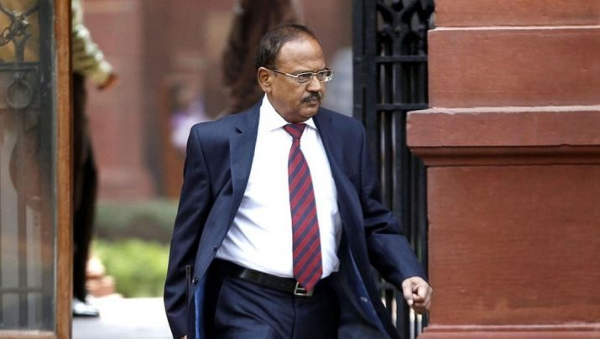
India has welcomed the memorandum of understanding reached between the United States and Iran, with National Security Adviser Ajit Doval expressing “cautious optimism” over the development and its possible impact on regional stability, energy security and global trade flows.
Speaking at the 16th BRICS National Security Advisers’ Meeting, Doval said the agreement between Washington and Tehran could help ease tensions in a strategically important region and create a more stable environment for international commerce. He noted that the reopening of the Strait of Hormuz is a welcome step, especially for countries like India that depend heavily on secure maritime routes for energy supplies.
The Strait of Hormuz is one of the world’s most critical energy corridors, connecting the Persian Gulf with global shipping lanes. Any disruption in this narrow maritime passage can affect crude oil, liquefied natural gas and other key commodity flows. For India, which imports a large share of its energy requirements, the smooth functioning of this route is directly linked to national energy security and price stability.
Doval said India welcomes the US-Iran understanding and hopes that it will work in a constructive manner. His use of the phrase “cautious optimism” reflects India’s balanced diplomatic approach: welcoming de-escalation while remaining mindful of the complex political and security dynamics in West Asia.
The easing of tensions could also support global maritime trade by reducing uncertainty for shipping companies, insurers, energy traders and import-dependent economies. A stable Gulf region can help lower supply-chain risks and create a more predictable environment for movement of oil, gas, fertilisers, chemicals and industrial raw materials.
Doval also highlighted that improved regional stability could help address supply-chain bottlenecks in important sectors such as fertilisers and chemicals. These sectors are closely linked to agriculture, industry and manufacturing, making uninterrupted supply lines important for economic stability.
India’s response reflects its long-standing interest in peace, dialogue and stability in West Asia. The region is vital for India’s energy imports, trade routes, diaspora connections and strategic partnerships. Any diplomatic progress between major regional and global players is therefore closely watched in New Delhi.
The US-Iran understanding comes at a time when global energy markets remain sensitive to geopolitical developments. For emerging economies, stability in maritime trade corridors can support inflation management, industrial planning and food security by ensuring smoother availability of fuel, fertilisers and critical inputs.
By welcoming the agreement with cautious optimism, India has signalled support for diplomatic efforts that reduce tensions and protect global trade routes. The reopening of the Strait of Hormuz, if sustained, could strengthen energy security, improve supply-chain confidence and contribute to a more stable economic environment across Asia and beyond.
You may also like
-
Tarang Shakti Delegates from 28 Countries Visit HAL and BEL to Explore India’s Defence Manufacturing Ecosystem
-
Swiss President Guy Parmelin to Visit India as EFTA Economic Partnership Deepens
-
India and Brazil Move to Expand Mercosur Trade Pact Beyond 450 Tariff Lines
-
India and Qatar Accelerate FTA and Investment Treaty Talks
-
India and Russia Review Bilateral Ties and International Developments in Moscow
