India has unveiled a new long-term framework for defence diplomacy as it seeks to deepen military partnerships, expand defence exports and strengthen its security role across the Indian Ocean and the wider international system.
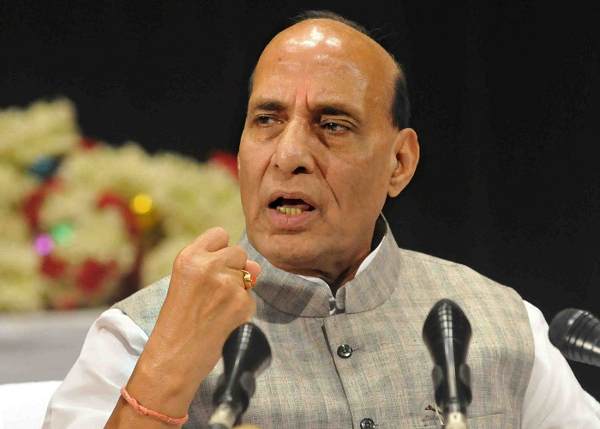
Defence Minister Rajnath Singh released the ‘RAKSHA’ document on Defence Diplomacy in New Delhi on September 3, setting out India’s strategic roadmap and vision for global defence partnerships over the next ten years. The Ministry of Defence describes the framework as a shift towards more proactive strategic engagement in which India’s national-security objectives will increasingly be supported by international defence cooperation.
Rather than treating defence diplomacy largely as a collection of military visits, exercises and bilateral engagements, the new roadmap brings several strands of India’s external security policy under a broader strategic framework. It identifies strategic partnerships, capacity building, indigenous defence exports and maritime security as the four principal pillars for the coming decade.
The first pillar focuses on strengthening India’s bilateral and multilateral security relationships. India has steadily expanded defence engagement with countries across the Indo-Pacific, Europe, West Asia and Africa through ministerial dialogues, service-to-service interactions, logistics agreements and institutional mechanisms. RAKSHA seeks to give such engagements greater long-term direction by aligning them more closely with India’s wider security and foreign-policy objectives.
The second pillar places greater emphasis on capacity building with friendly countries. Joint military exercises, professional military education, training programmes and the exchange of operational experience are expected to remain important tools of Indian defence diplomacy. Such cooperation allows India to build interoperability with partner militaries while strengthening relationships that can become particularly valuable during maritime-security operations, humanitarian emergencies and regional crises.
An increasingly important part of the strategy is the third pillar — defence exports and indigenous manufacturing. The government intends to use defence diplomacy to promote Indian-made military equipment internationally and position India as a reliable defence manufacturing and supply partner. This connects the RAKSHA framework directly with the wider Make in India and Aatmanirbhar Bharat programmes, under which Indian public-sector companies and private manufacturers are being encouraged to develop systems not only for domestic requirements but also for overseas customers.
Defence diplomacy can consequently become an economic and industrial instrument as well as a strategic one. Military relationships can create opportunities for government-to-government sales, joint production, technology partnerships, maintenance support and long-term supply arrangements. For Indian manufacturers attempting to enter highly competitive global defence markets, stronger institutional relationships with partner countries can help provide the foundation for sustained industrial cooperation.
The fourth pillar gives maritime security a prominent place in India’s defence diplomacy. According to the Ministry of Defence, the roadmap seeks to strengthen India’s role as a Net Security Provider and First Responder in the Indian Ocean Region. That objective reflects India’s geographical position at the centre of major sea lanes connecting the Middle East, Africa and Asia and the growing importance of securing maritime trade, energy routes and critical infrastructure.
India has already been expanding naval cooperation through exercises, coordinated patrols, training, hydrographic assistance and humanitarian and disaster-relief missions. Under the new framework, such activity can increasingly form part of a coordinated effort to build maritime partnerships while improving India’s ability to respond quickly to crises across the region.
RAKSHA also arrives as India’s defence relationships are becoming increasingly diverse. Recent partnerships have extended beyond conventional arms purchases into areas such as artificial intelligence, quantum technologies, cyber defence, maritime-domain awareness, logistics, training and joint development. India has simultaneously promoted defence co-production rather than dependence on traditional buyer-seller relationships, particularly with technologically advanced partners.
This broader approach was visible in India’s recent defence engagements with countries including Vietnam, South Korea and Australia. India and Vietnam expanded cooperation into artificial intelligence and quantum technologies, while discussions with South Korea included defence cyber cooperation, training and advanced technology development. India and Australia have similarly emphasised defence-industrial collaboration and research into future technologies. These relationships illustrate the type of multi-layered cooperation that the RAKSHA framework can bring into a more systematic long-term strategy.
The roadmap therefore represents more than an expansion of India’s military diplomacy. It brings together security partnerships, military training, defence manufacturing, exports and maritime engagement within a single strategic vision.
For India, the underlying objective is strategic autonomy combined with wider international engagement. Rather than relying on formal military alliances, New Delhi has traditionally built security relationships with multiple partners while retaining independence in foreign and defence policy. RAKSHA appears designed to strengthen that model by creating deeper and more durable defence partnerships without abandoning India’s freedom of strategic decision-making.
With global security increasingly influenced by contested sea lanes, rapidly evolving military technologies and fragile supply chains, India’s ability to build dependable defence relationships is becoming more important. The next decade of Indian defence diplomacy is therefore likely to involve not only more exercises and military exchanges but also deeper industrial cooperation, technology partnerships and exports of Indian-developed military platforms.
The Ministry of Defence says the framework is intended to provide an actionable vision that helps India remain an anchor of peace, stability and a rule-based order in an evolving global environment. If implemented effectively, RAKSHA could turn defence diplomacy into one of the principal instruments connecting India’s growing military capability, expanding defence industry and increasingly active global strategic role.
You may also like
-
India Moves Towards Five-Year Assured Orders for Defence Startups Under New Procurement Reforms
-
Zen Technologies Introduces Indigenous Hyper-Strike Falcon AI-Guided Counter-Drone Interceptor
-
L&T and Germany’s SCHOTTEL Expand Partnership for Controllable Pitch Propeller Systems in Indian Shipbuilding
-
India to Train 60,000 Civil Defence Volunteers Across 12 States and UTs with Indian Army Support
-
Indian Army’s Northern Command Opens 75-Day Defence Technology Internship Programme for Young Innovators
