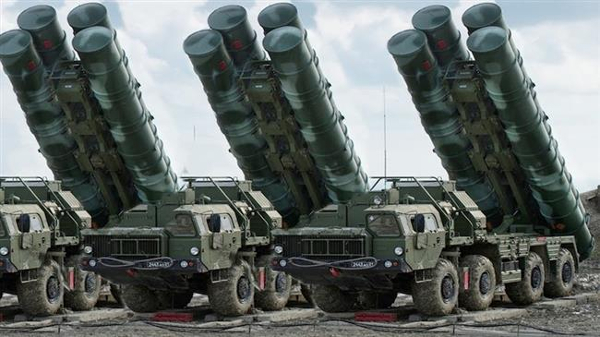
The S-400 is one of Russia’s most sophisticated long-range surface to air missile systems and is arguably the most versatile in the world with over half a dozen types of surface to air missile each specialised in intercepting different types of target at different ranges.
The system makes use of an advanced cold launch system and is capable of guiding up to 160 missiles simultaneously and engaging up to 80 targets at a time – including combinations of ballistic and cruise missiles and all types of manned and unmanned aircraft.
The platform is prized for its advanced capabilities against stealth aircraft and will allow Indian air defences to threaten advanced next-generation jets fielded by China’s People’s Liberation Army Air Force such as the Chengdu J-20 – as well as upcoming Pakistani stealth fighter being developed with China under Project AZM.
Vladimir Drozhzhov, deputy director of Russia’s Federal Service for Military-Technical Cooperation, announced on February 5th that Russia would begin training Indian specialists to operate the S-400 system shortly – and that the implementation of the contract was on schedule.
India’s S-400 purchase will make it the largest operator of the system outside of Russia, and the country is expected to require more S-400 specialists than any other country.
Belarus and China each operate two battalions of the S-400, while the number of systems operated by Algeria which is also considered to operate them is thought to be similar. Turkey is also expected to operate two battalions. The number of S-400s in Indian service will thus be more than double that of any other export client.
Source: Eurasian Times
You may also like
-
India’s First Fleet Support Ship Set for Launch as Hindustan Shipyard Expands Capacity for 45,000-Tonne Vessels
-
HAL Koraput to Add ₹218-Crore Shakti Engine Production Line as India Marks 2,000th Aero-Engine Milestone
-
Indian Defence Production Delegation Visits Saab in Sweden as Defence Co-Manufacturing Talks Deepen
-
DRDO Expands Space-Based ELINT and RF Geolocation Technologies for Future Defence Surveillance
-
Indian Army Tests Apache 30 mm Cannon Against Aerial Target in Counter-Drone Validation
