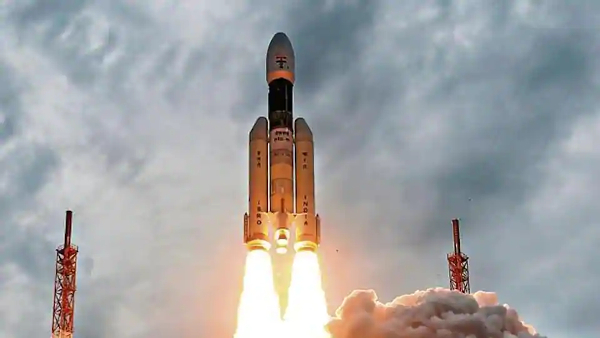
India has set an ambitious goal of building the capacity to conduct 50 space launches every year by 2030, signalling a major expansion of the country’s launch infrastructure, manufacturing base and private space industry.
The target was highlighted on September 6, 2026, by the Indian National Space Promotion and Authorisation Centre (IN-SPACe) as part of the roadmap for the next phase of India’s space-sector growth. IN-SPACe said achieving this level of launch activity will require ISRO and Indian industry to expand their capabilities in parallel rather than depend on a single organisation.
The announcement comes as India’s private space ecosystem undergoes rapid expansion. IN-SPACe said the country now has more than 450 space-technology startups, compared with only a small group when the space sector was opened to greater private participation following the reforms initiated in 2020.
The new launch target represents far more than simply increasing the number of rockets leaving Indian launch pads. Supporting 50 missions annually would require an industrial ecosystem capable of manufacturing launch vehicles and their propulsion systems, avionics, structures and other subsystems at substantially greater scale. Satellite manufacturers, component suppliers, testing facilities, ground infrastructure and launch-site operations would also have to expand alongside launch-vehicle production.
IN-SPACe has described the emerging model as one in which ISRO continues pushing the technological frontier while private industry develops the manufacturing scale required for a much larger national space programme.
This approach closely matches the position formally set out by ISRO on September 6. The space agency clarified that increased private-sector participation does not mean the privatisation of ISRO or a reduction in its importance. Instead, India is moving towards what ISRO describes as an “ISRO-led national space ecosystem.”
Under this framework, mature technologies and routinely manufactured systems can increasingly move into industrial production. ISRO said established launch vehicles, routine satellites and other mature systems could progressively be manufactured through Indian companies or public-sector enterprises using appropriate competitive mechanisms.
That transition would allow India’s national space agency to devote more scientific and engineering resources to areas where advanced research remains essential.
These include human spaceflight, next-generation launch vehicles, reusable launch technologies, advanced propulsion, strategic space capabilities, deep-space missions, planetary exploration and the Bharatiya Antariksh Station.
India’s longer-term ambitions include establishing the Bharatiya Antariksh Station by 2035 and conducting an Indian crewed lunar mission by 2040. Achieving these objectives while simultaneously increasing India’s commercial launch activity makes the expansion of industrial participation increasingly important.
Private Space Sector Moves From Startups to Industrial Scale
India’s private space ecosystem has developed rapidly since the reforms of 2020.
An official Department of Space response in Parliament in August 2026 recorded around 440 space-technology startups registered through the DPIIT Startup India system. By September, ISRO and IN-SPACe were reporting that the ecosystem had crossed 450 startups.
The industry now extends across launch vehicles, satellites, propulsion technologies, Earth observation, communications, ground infrastructure and specialised space applications.
Official government records show that companies including Agnikul Cosmos, Bellatrix Aerospace, Dhruva Space, Digantara, GalaxEye, Manastu Space, OrbitAID, PierSight, Pixxel and Skyroot Aerospace are among the private space companies receiving authorisation or technical facilitation through India’s reformed space ecosystem.
IN-SPACe has also enabled companies to access infrastructure and technical expertise previously concentrated within the government space programme.
During 2026, official records show support including use of the First Launch Pad for Vikram-1, docking-mechanism laboratory testing, shock testing and specialised coatings for micro-thruster development. Earlier support included engine testing, environmental qualification, trajectory validation, satellite testing and launch access.
This sharing of national space infrastructure is important because building independent launch pads, propulsion-test stands, environmental chambers and other specialised facilities would require enormous investment from individual startups.
Building a Much Larger Space Economy
The push towards 50 launches annually also forms part of India’s wider effort to capture a larger share of the international space market.
India’s space economy is currently estimated by the government at around $8.4 billion, while the national objective is to expand it to approximately $44 billion by 2033. ISRO has acknowledged that this scale cannot be achieved through government funding and ISRO manpower alone.
Private capital, industrial manufacturing, startup innovation and access to international customers will therefore become increasingly important.
The government has already created several mechanisms to support this transition. These include a ₹1,000-crore venture capital fund, a ₹500-crore Technology Adoption Fund, the IN-SPACe Seed Fund Scheme, pre-incubation programmes and common technical facilities.
Technology transfer is another major part of the strategy. By August 2026, NewSpace India Limited, working with IN-SPACe, had signed 118 technology-transfer agreements covering 83 technologies developed by ISRO and the Department of Space. These included technologies related to the Small Satellite Launch Vehicle, satellite buses, laser gyroscopes, antenna systems and other specialised space hardware.
From Individual Missions to a Launch Economy
Reaching 50 launches every year would require India to move from a mission-oriented launch model toward something closer to an industrial launch economy.
Instead of launch vehicles being produced primarily for individual government missions, rockets and satellites would increasingly have to be manufactured through repeatable production lines supported by large supplier networks.
Private launch companies would form one part of that architecture. ISRO and government-backed programmes would remain another, while manufacturers of engines, electronics, composite structures, satellite buses, sensors and other specialised technologies would create the broader industrial base required to sustain the launch rate.
IN-SPACe’s message is therefore centred on scale: ISRO’s scientific and engineering capabilities will remain at the heart of India’s programme, while industry increasingly provides the manufacturing capacity needed to multiply the number of missions India can undertake.
The target of 50 launches annually by 2030 consequently marks an important evolution in India’s space ambitions. The objective is no longer simply to develop indigenous launch vehicles and satellites, but to create an ecosystem capable of producing and launching them regularly, commercially and at industrial scale.
You may also like
-
EON Space Labs and Dhruva Space Advance Indian Space Hardware on Transporter-18 Mission
-
SatLeo Labs’ TAPAS-1 Reaches Orbit, Advancing India’s Private Thermal-Imaging Capability
-
TakeMe2Space’s MOI-1A Reaches Space on Falcon 9 Transporter-18 Mission
-
Bank of Baroda Enters Pension Fund Management After PFRDA Appointment
-
SCI and India’s Push for a Larger Indigenous Maritime Fleet
