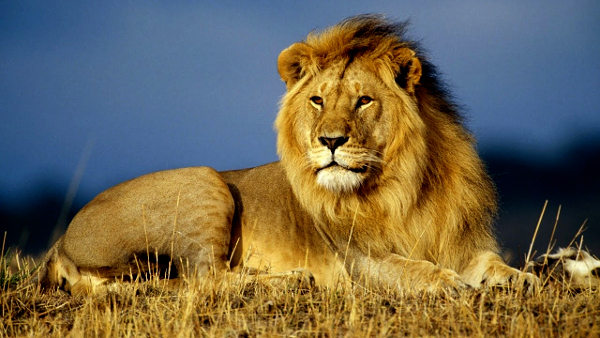
India has placed the Asiatic lion at the centre of its global big-cat conservation diplomacy, with Union Environment Minister Bhupender Yadav inaugurating the ‘Lion’ Species Spotlight Programme at Sasan Gir in Gujarat as a pre-summit event for the upcoming International Big Cat Alliance Summit 2026. The event, organised under the Ministry of Environment, Forest and Climate Change, highlighted India’s long-term conservation model for the Asiatic lion and its growing role in international wildlife cooperation.
The programme was presided over virtually by Gujarat Chief Minister Bhupendra Patel and was attended by Gujarat Forest Minister Arjun Modhwadia, Minister of State for Forest Pravin Mali, senior officials of the International Big Cat Alliance, and representatives from the Union and State Governments. The event formed part of a wider series of species-focused programmes being held ahead of the first-ever IBCA Summit, which India will host in New Delhi on June 1–2, 2026.
Speaking at the event, Chief Minister Bhupendra Patel said Gir has become a living example of how economic progress and wildlife conservation can move together through an ecological approach. He credited community participation as one of the strongest pillars of Asiatic lion conservation, noting that the lion is deeply embedded in the culture and identity of the Gir region. He also referred to the development of Barda Wildlife Sanctuary as a new site for the natural dispersal of Asiatic lions.
Union Environment Minister Bhupender Yadav described Sasan Gir as a symbol of India’s biodiversity and conservation commitment. He said the Gir lion is not only Gujarat’s identity but also a national symbol of pride, courage and natural heritage. The Minister said India’s ongoing conservation measures include the Asiatic Lion Population Estimation initiative, the National Wildlife Referral Centre in Junagadh, and the development of Barda National Wildlife Sanctuary for the natural expansion of the lion population.
A major highlight of the event was the latest conservation figure: the lion population in the Greater Gir Landscape has risen to an estimated 891 individuals in 2025, marking a 32 percent increase compared with 2020. This growth has been presented as evidence of India’s successful landscape-based conservation strategy, supported by habitat protection, population monitoring, community involvement and long-term management planning.
The programme also placed India’s lion story within the larger global context. Yadav said lion populations worldwide have declined by more than 30 percent due to habitat loss and degradation, while the Asiatic lion continues to survive as a single wild population in India’s Gir landscape. As apex predators, lions play a crucial ecological role by regulating herbivore populations, maintaining ecosystem balance and shaping biodiversity dynamics.
Project Lion, launched by the Government of India in 2020, remains the central policy framework for the long-term protection of Asiatic lions. The project follows a comprehensive landscape-based approach that includes habitat restoration, ecological resilience, population management and strengthening of conservation infrastructure. The Asiatic lion also receives the highest level of legal protection under Appendix I of CITES and Schedule I of the Wildlife Protection Act, 1972.
The upcoming IBCA Summit 2026 will carry the tagline “Save Big Cats, Save Humanity, Save Ecosystem.” According to the Ministry, the summit will bring together Heads of State and Government, ministers, policymakers, scientists, conservation practitioners, multilateral agencies, financial institutions, partner organisations and around 400 representatives from 95 range countries across Asia, Africa and the Americas.
The International Big Cat Alliance has been designed as a global coalition for the conservation of seven major big-cat species: tiger, lion, leopard, snow leopard, cheetah, jaguar and puma. Its focus is on international cooperation, scientific exchange, technical collaboration and capacity building among countries that host these species.
The Sasan Gir event also featured the launch of a Lion Conservation Brochure, along with presentations and educational films on big-cat conservation. Students from educational institutions in the region were also part of the programme, underlining the importance of public awareness and youth participation in wildlife protection.
For India, the event carried both ecological and diplomatic significance. Gir’s Asiatic lion story is one of the world’s most closely watched conservation successes, and India is now using that experience to shape a broader international conversation on big-cat protection. As the country prepares to host the first IBCA Summit, the message from Sasan Gir is clear: conservation is no longer only about protecting a species inside a forest; it is about linking biodiversity, communities, science and international cooperation into one shared ecological future.
You may also like
-
A Decade of Cosmic Flickering Reveals New Clues About A Rare Giant Binary Black Hole System
-
Indian Researchers Screen 94 Pea Lines to Identify High-Protein, Mineral-Rich Breeding Material
-
Indian Researchers Combine AI and Infrared Spectroscopy to Detect Parkinson’s-Linked Biochemical Changes in Fruit Flies
-
Sanchar Saathi Crosses 30 Crore Visits as Citizens Help India Fight Telecom Fraud
-
PRAHAAR: India’s First National Counter-Terrorism Policy and Strategy
