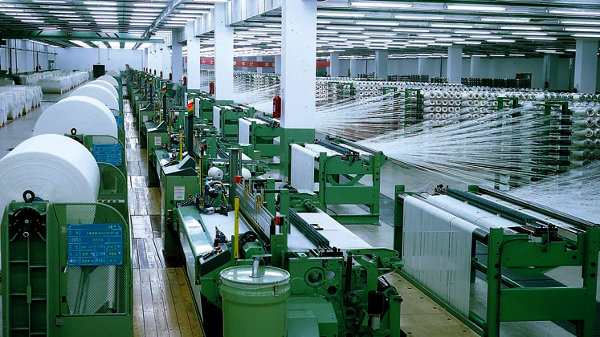
India’s textile sector is being pushed into a new phase of ambition, with the government setting a target of US$ 100 billion in textile exports and US$ 250 billion in textile production by 2030. The numbers signal a sharp shift in policy thinking: textiles are no longer being seen only as a traditional employment-heavy industry, but as a strategic manufacturing sector that can connect agriculture, industry, fashion, exports, sustainability and global branding in one large value chain.
The message delivered at the TEXPROCIL Export Awards in Mumbai was built around a simple but powerful idea — India must strengthen every link from the cotton farm to the global fashion market. This matters because the textile economy begins with farmers and fibre, moves through spinning, weaving, processing, garmenting and design, and finally reaches international buyers through branding, logistics and trade networks. If any part of this chain remains weak, India loses value to competing countries that have integrated production, faster turnaround and stronger export systems.
The scale of the challenge is clear from the data. India’s textile exports stood at around US$ 33.5 billion in 2025–26, while the 2030 target is US$ 100 billion. That means exports must nearly triple within a short period. This cannot be achieved through routine growth alone. It will require higher productivity, better quality control, stronger design capability, deeper market access, modern machinery, skilled workers, reliable cotton supply, faster logistics and stronger branding of Indian textile products abroad.
India already has a strong foundation. It is the sixth-largest textile exporter in the world, contributes around 2.3% to GDP, accounts for nearly 12% of India’s total export earnings, and supports close to six crore livelihoods directly and indirectly. This makes textiles one of the rare sectors where India’s export ambition is directly linked to mass employment, rural incomes, MSMEs, women’s work participation and industrial growth.
The cotton textile segment is especially important. TEXPROCIL’s network of around 2,000 exporters contributes nearly US$ 11 billion in exports, while the wider cotton textile ecosystem supports about 35 million jobs. This shows that cotton is not merely a raw material story; it is a national economic chain involving farmers, ginners, spinners, weavers, processors, exporters, transporters and global buyers.
The government’s larger textile strategy rests on infrastructure, technology and skilling. The PM MITRA Parks scheme is meant to create large integrated textile hubs where manufacturing, processing, logistics and export activity can happen in a more coordinated manner. Seven such parks are under development, and investment MoUs worth more than ₹27,000 crore have already been signed. If implemented well, these parks can help India reduce fragmentation and build globally competitive production clusters.
Technology modernisation is another key requirement. Global textile competition is increasingly shaped by automation, precision processing, technical textiles, sustainable dyes, traceability, digital design, advanced machinery and faster delivery cycles. India’s earlier strength came from scale and tradition; its next strength must come from quality, innovation and speed. Schemes such as the Amended Technology Upgradation Fund Scheme and newer textile initiatives are aimed at helping the industry modernise production and move towards higher-value exports.
Skilling will decide whether this ambition becomes real on the factory floor. The sector needs trained workers not only in stitching and weaving, but also in export documentation, design, machinery operation, quality testing, e-commerce, sustainability compliance and international trade. The launch of TEXPROCIL’s Advanced Certificate Programme in International Trade is significant because export growth depends as much on market knowledge as on production capacity.
Sustainability is becoming another decisive battlefield. Global buyers are increasingly demanding traceable cotton, lower carbon footprints, ethical labour practices, water-efficient processing and credible certification. India’s efforts around Kasturi Cotton, including branding, certification and traceability, can help position Indian cotton as a premium and trustworthy product in international markets. This is important because the future of textile exports will be shaped not only by price, but also by sustainability credentials.
The reference to India’s ancient textile heritage also carries modern economic value. India’s weaving traditions, cotton history, silk production, handloom clusters and craft diversity give it a unique identity in global fashion and home textiles. But heritage alone cannot win export markets. It must be combined with modern design, standardised quality, global marketing, digital platforms and faster supply chains. The opportunity lies in turning civilisational memory into contemporary export power.
The real test will be execution. India must compete with countries that have strong garmenting ecosystems, rapid production cycles and deeply embedded export networks. To reach the US$ 100 billion export mark, India will need to scale both cotton and man-made fibre segments, expand technical textiles, improve processing capacity, reduce logistics bottlenecks and help MSMEs integrate into global supply chains.
This is why the textile target is more than an industry number. It is a jobs target, a farm-income target, an MSME target, an export-diversification target and a manufacturing target rolled into one. If India can build a seamless chain from farm to fibre, factory, fashion and foreign markets, textiles can become one of the strongest engines of Viksit Bharat — rooted in tradition, powered by modern manufacturing, and visible on global shelves.
You may also like
-
Tata Projects and MDS Aero Partner to Build Advanced Aero-Engine Test Infrastructure in India
-
Flying Wedge Defence Partners With Portugal’s Keydef to Manufacture Kaal Bhairava and YAMA Drones in Europe
-
Armenia Conducts Live-Fire Exercise With Indo-French TRAJAN 155 mm Howitzers Manufactured in India
-
Centre Approves ₹1,176 Crore Six-Lane Bridge Across Teesta River on NH-10 at Sevoke
-
Kapil Future Tech Showcases Indigenous Ground Control System for Indian UAVs
