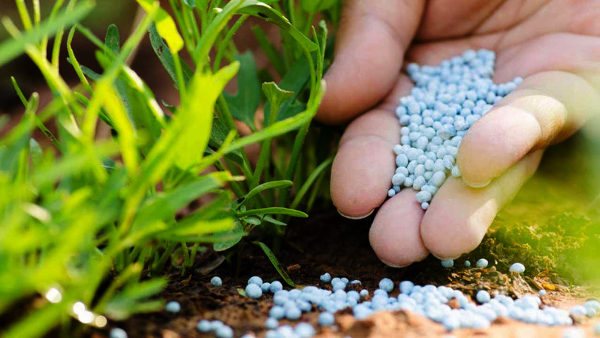
India’s fast-changing farm-input market is drawing fresh international interest, with German agritech company B+H Solutions GmbH planning to invest around ₹11.12 crore, or US$ 1.17 million, in India in 2026 to expand its nano-fertiliser business. The move reflects a larger shift in Indian agriculture, where farmers, regulators and companies are increasingly looking at precision nutrition, lower input intensity and technology-backed crop solutions.
The company operates in India through Dr Heinisch Agro Solutions India Private Limited, and its latest expansion plan comes after securing Fertiliser Control Order registration for its AgroCopper nano-copper product. This regulatory approval is significant because fertiliser products in India need formal recognition before they can be marketed at scale. The firm is also seeking approval for nano iron, which suggests that its India strategy is not built around a single product but around a wider portfolio of metal-based nano crop inputs.
Unlike the more familiar nano urea and nano DAP products, B+H Solutions is focusing on metal-based nanotechnology using elements such as copper, silver and trace nutrients. The company positions these products as “fertiliser-plus” solutions, meaning they are aimed not only at plant nutrition but also at improving nutrient efficiency, strengthening crop health and helping plants withstand disease pressure. This places the company in a specialised segment of the agri-input market, where the promise is targeted action with lower volume application.
The timing is favourable for such a move. India has already seen a sharp rise in nano-fertiliser adoption, with the Union Ministry of Chemicals and Fertilizers reporting cumulative sales of 1,593.37 lakh bottles of 500 ml each, including 1,219.27 lakh bottles of Nano Urea and 374.10 lakh bottles of Nano DAP since their introduction. Official field studies have also indicated that nano urea, when used as a foliar spray along with the recommended basal dose of conventional fertiliser, can reduce urea use by 25–50% while delivering comparable yields in several crops.
This background matters because B+H Solutions is entering a market where the idea of nano-enabled crop inputs is already familiar to many farmers. India’s vast farming base, rising fertiliser costs, soil-health concerns and increasing interest in precision agriculture create a natural opening for companies offering nutrient-efficient solutions. The company has also said that Indian farmers have shown stronger acceptance of nanotechnology than farmers in Germany, which gives India a special place in its global expansion plan.
B+H Solutions reported global sales of around ₹222.34 crore, or US$ 23.30 million, in 2025. The India investment may look modest in absolute terms, but strategically it signals confidence in a market that could become one of the world’s most important testing grounds for nano-enabled farming. India’s agriculture sector has the scale, crop diversity and farmer network needed to turn specialised agri-tech products into large commercial categories if field performance, affordability and regulatory trust align.
The company currently has eight products in India, including AgroBeize, a product developed specifically for Indian agriculture and also registered as a disinfectant. Its broader portfolio is being pitched across crops such as tomatoes, chillies, black pepper, pomegranates and flowers. The company has claimed yield gains of up to 30% in trials, but such figures should be read as company-reported performance claims that will gain wider credibility only through larger field validation across regions, soils and crop seasons.
The expansion plan also shows how India’s fertiliser market is moving from bulk input dependency towards smarter nutrient delivery. For decades, Indian agriculture relied heavily on conventional fertilisers applied in large quantities. The new generation of products is trying to deliver nutrients in smaller doses, with better absorption and more targeted plant response. If such technologies work consistently, they can reduce wastage, lower application burden and support more balanced fertiliser use.
This shift also fits into India’s policy direction. The government has been promoting sustainable fertiliser use through programmes such as PM-PRANAM, which incentivises states and Union Territories that reduce chemical fertiliser consumption compared with their previous three-year average. Field demonstrations for nano DAP and nano urea have also been carried out across India’s agro-climatic zones, showing that nano-fertilisers are now part of the country’s larger soil-health and input-efficiency conversation.
B+H Solutions began its India operations in Himachal Pradesh, Haryana and Karnataka, and is now expanding into Rajasthan through a combination of in-house sales teams and distribution partners. This state-by-state expansion is practical because Indian agriculture is highly regional. Crops, soils, climate, pest pressure and farmer buying behaviour change sharply from one region to another. A nano-fertiliser product that works well in horticulture belts may need different positioning from one used in cereal or plantation crops.
The larger importance of the investment lies in what it represents. India is becoming a serious destination for advanced agricultural inputs, not merely a market for traditional fertiliser volumes. A German company choosing to deepen its Indian presence in nano-fertilisers shows that global firms see India as both a demand centre and an innovation laboratory for the future of farming.
For Indian farmers, the real test will be simple: the products must deliver visible crop benefits at a reasonable cost. For regulators, the challenge will be to ensure safety, quality and scientific validation. For companies, success will depend on demonstration, farmer education and after-sales agronomic support. If these pieces come together, nano-fertilisers could become an important part of India’s next farm productivity wave — one that uses science not to replace the farmer’s instinct, but to sharpen it.
You may also like
-
Armenia Conducts Live-Fire Exercise With Indo-French TRAJAN 155 mm Howitzers Manufactured in India
-
Centre Approves ₹1,176 Crore Six-Lane Bridge Across Teesta River on NH-10 at Sevoke
-
Kapil Future Tech Showcases Indigenous Ground Control System for Indian UAVs
-
Bharat Skytech and Evercell Showcase Made-in-India Drone Power Systems in New Delhi
-
ARKin Labs Showcases Indigenous UAV Avionics for Defence, Agriculture and Enterprise Drones
