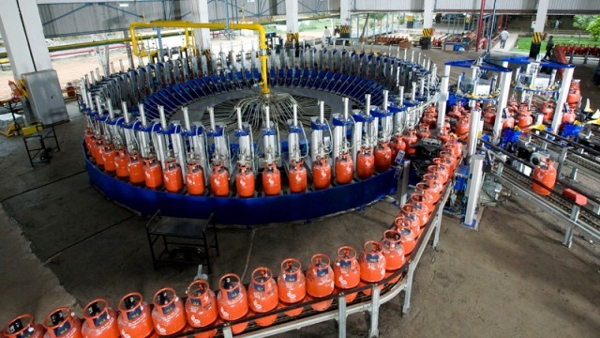
India has recorded a 25 percent rise in domestic LPG production after the government directed refineries and petrochemical complexes to maximise LPG output for household supply. The move was announced during an inter-ministerial briefing on West Asia-related energy developments in New Delhi, where Sujata Sharma, Joint Secretary in the Ministry of Petroleum and Natural Gas, said that the government order was issued on 8 March 2026.
The order asked refineries and petrochemical complexes to divert streams of propane, butane, propylene and butenes into the LPG pool. These hydrocarbons can be channelled into liquefied petroleum gas production, giving the country a faster way to increase availability during a period of global supply pressure. The result has been a rise of about one-fourth in domestic LPG output, with the entire domestic production being directed towards household consumers.
This is a significant step because LPG is one of India’s most important household fuels. It powers cooking in millions of homes and is closely linked to household welfare, women’s health and rural energy access. Any disruption in LPG supply has an immediate social impact. By increasing domestic output, the government has tried to protect ordinary consumers from external volatility.
The decision also reflects a larger shift in India’s energy management. Instead of depending only on imported LPG cargoes, India is using its domestic refining and petrochemical network to increase internal supply. This approach strengthens short-term resilience and gives oil marketing companies more room to manage distribution during uncertain global conditions.
The West Asia situation added urgency to the move. According to the briefing, India’s crude oil supplies remained secure, with about 70 percent of crude imports coming from outside the Strait of Hormuz. The government also said that the volume of crude secured exceeded what would normally have arrived through the Strait of Hormuz. India imports crude oil from around 40 countries, and oil marketing companies have arranged cargoes from different sources to keep supplies stable.
The Strait of Hormuz is one of the world’s most sensitive energy routes. Any tension in that region can affect crude, LNG and LPG movement. For India, supply diversification is therefore a strategic necessity. The government’s message is that crude procurement has been spread across multiple geographies, reducing the pressure created by a single maritime chokepoint.
The LPG measure is also tied to household prioritisation. The government has directed domestic LPG production towards household consumers, showing that cooking fuel availability has been placed at the centre of the response. This helps protect families from panic buying, local shortages and sudden supply uncertainty.
At the same time, India’s gas companies have procured LNG cargoes from new sources, and two LNG cargoes were reported to be on their way to India. This shows that the response is not limited to LPG alone. It covers the wider gas and petroleum supply chain, including crude oil, LNG, maritime logistics and refinery operations.
The strategy has three clear layers. The first is domestic production maximisation through refineries and petrochemical complexes. The second is import diversification across crude and LNG sources. The third is consumer prioritisation, especially for household LPG users. Together, these measures build a buffer against external shocks.
There is also an industrial angle. Refineries are being asked to adjust product streams in favour of LPG availability. This requires operational flexibility, coordination between ministries, and quick action by public and private energy companies. It shows how refining infrastructure can serve as a national resilience tool during global disruptions.
The development also strengthens the case for long-term energy planning. India’s energy demand will continue to grow as households, industries, transport networks and urban centres expand. A larger domestic production base, diversified imports, strategic reserves, flexible refining operations and stronger port logistics will all become important parts of India’s energy security architecture.
The government also used the briefing to highlight the safety of Indian nationals and seafarers in the West Asia and Persian Gulf region. The External Affairs Ministry said Indian missions are in regular touch with community members in GCC and West Asian countries. The Ministry of Ports, Shipping and Waterways said 28 Indian-flag vessels with 778 Indian seafarers were operating in the Persian Gulf and were being actively monitored.
This shows that India’s response is wider than fuel supply alone. It includes citizens, seafarers, merchant vessels, ports, exporters and energy companies. In a crisis-prone region, energy security and human security often move together.
The 25 percent rise in LPG production is therefore an important signal. It shows that India can activate domestic capacity, redirect refinery streams, prioritise households and diversify imports when global energy routes become uncertain. For consumers, the immediate value lies in stable cooking fuel supply. For the country, the larger value lies in a stronger and more responsive energy security system.
You may also like
-
India to Track Challenges Faced by Women Entrepreneurs in New National Business Survey
-
India Updates Vehicle Rules to Strengthen E85 and E100 Flex-Fuel Technology
-
Adani Green Energy Expands Battery Storage to 6.63 GWh at Khavda, Strengthening India’s Renewable Power Infrastructure
-
Manastu Space Secures ₹116 Crore Government Support to Develop Indigenous Green Propulsion Systems
-
GeM’s AABHAR Collection Showcases 294 Indigenous Products, Strengthens Market Access for Indian Artisans
