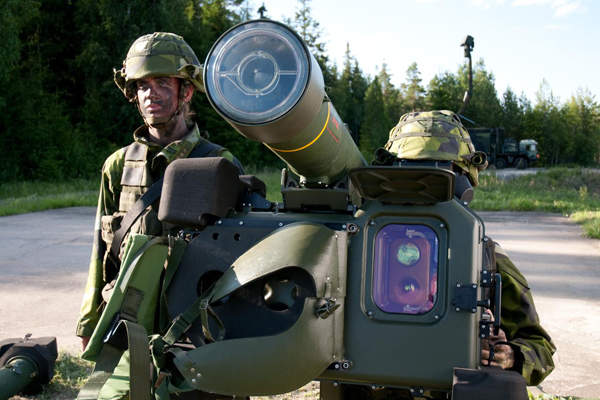
India’s indigenous very-short-range air-defence programme is moving toward a lighter and more mobile configuration as DRDO works toward a shoulder-fired derivative of its VSHORADS missile. The effort aims to translate technologies already proven on the tripod-launched VSHORADS into a true MANPADS-class weapon that can be carried and fired directly by frontline troops.
The existing VSHORADS is already a major technological advance over older-generation infrared-guided missiles. Developed by DRDO’s Research Centre Imarat, the fourth-generation system incorporates an uncooled Imaging Infrared seeker, miniaturised reaction-control system, integrated avionics and a dual-thrust solid-propellant motor. These technologies give the missile better target discrimination, manoeuvrability and resistance to conventional infrared countermeasures.
The current missile weighs about 21.5 kg and is fired from a 25 kg man-portable tripod launcher. It has an officially stated engagement range of approximately 0.5 to 6 km and can engage targets at altitudes of up to around 3.5 km. The next stage is intended to remove the dependence on the tripod and reduce the overall weapon weight sufficiently for shoulder operation.
Recent defence reporting indicates that DRDO is targeting a missile weight of approximately 15–18 kg for the shoulder-fired configuration while attempting to retain an engagement range close to six kilometres. These figures have not yet been released as formal DRDO specifications and should therefore be regarded as reported development targets rather than validated performance figures.
Achieving that reduction would require substantial advances in miniaturisation, lightweight structures, propulsion, electronics and seeker packaging. DRDO would need to compress the guidance computer, power supply, actuators and infrared seeker while also reducing the mass of the motor and launch tube without compromising range or manoeuvrability.
The programme benefits from the maturity of the parent VSHORADS. DRDO completed a series of important development trials during 2024 and subsequently conducted three successive user-validation firings on 27 February 2026 at Chandipur. The missiles intercepted high-speed aerial targets under different engagement conditions while operating in their final deployment configuration, demonstrating that the basic seeker, propulsion and guidance technologies are already well established.
The move toward a shoulder-fired version also reflects the growing importance of low-level air defence against drones and loitering munitions. Modern battlefields increasingly contain small UAVs operating below the coverage of larger surface-to-air missile systems. A compact imaging-infrared MANPADS would give infantry and mobile formations a rapidly deployable kinetic option against drones, helicopters and low-flying aircraft.
Such a weapon would be especially valuable in mountain warfare, where heavy air-defence systems can be difficult to move. A shoulder-fired missile could be carried by small teams to remote forward positions and deployed within seconds, giving units greater freedom to relocate after firing and establish concealed air-defence ambushes.
The project also supports India’s effort to reduce dependence on imported Igla-family MANPADS. While India continues to operate and procure foreign shoulder-fired systems to meet immediate requirements, an indigenous successor would give the Armed Forces greater control over production, upgrades, seeker algorithms, counter-countermeasure techniques and missile stocks.
The most important advancement is therefore not simply a reduction from 21.5 kg toward the reported 15–18 kg class. DRDO is attempting to package a modern fourth-generation seeker, high-agility controls and contemporary guidance electronics into a weapon light enough for individual soldiers to operate. If successfully demonstrated, the new configuration could give India its first modern indigenous shoulder-fired air-defence missile and complete the transition of VSHORADS technology from a man-portable tripod system into a true Indian MANPADS.
You may also like
-
Indian Navy Vice Chief Inspects Japan’s Mogami-Class Stealth Frigate as India-Japan Shipbuilding Cooperation Expands
-
India and Russia Explore Joint Icebreaker Construction as Maritime Industrial Cooperation Expands
-
Philippine Marine Wargames Reportedly Show BrahMos Can Penetrate Chinese Destroyer Air Defences
-
Safran Signs 18 Agreements with Indian Aerospace Suppliers, Expanding Make in India Manufacturing Partnerships
-
Indian Army’s Vajra Corps Certifies First Batch of Drone Operators, Strengthens Battlefield Surveillance
