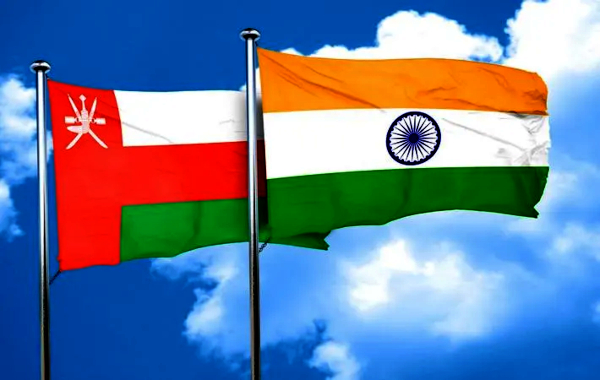
India’s trade pact with Oman marks an important step in strengthening the country’s long-term energy security, export competitiveness and strategic presence in the Gulf region. At a time when global energy routes remain vulnerable to geopolitical shocks, India’s deepening partnership with Oman gives New Delhi a more stable commercial and logistical gateway in West Asia.
Energy security is one of the strongest pillars of this agreement. India depends heavily on imported crude oil, natural gas and petrochemical inputs to support its industries, transport network, power needs and manufacturing economy. Oman, with its established energy sector and trusted relationship with India, offers a reliable supply partner in a region that remains central to global oil and gas flows.
The geography of Oman adds special importance to the pact. Its coastline lies outside the Strait of Hormuz, one of the world’s most sensitive energy chokepoints. This gives Oman a valuable strategic advantage as a trade and energy gateway, especially during periods of conflict, maritime disruption or regional tension. For India, this location supports supply-chain resilience and creates another dependable route for energy and merchandise movement.
The agreement also expands the economic value of the India-Oman relationship beyond oil and gas. Oman can grow as a manufacturing, logistics and re-export hub for Indian companies looking to reach markets across West Asia, Africa and the wider Indian Ocean region. Indian businesses can use Oman’s port infrastructure, regional connectivity and stable policy environment to build stronger export networks.
For Indian exporters, the trade pact opens the door to better market access through reduced duties, smoother regulations and lower compliance barriers. This can benefit sectors such as refined petroleum products, iron and steel, machinery, rice, engineering goods and processed commodities. A more predictable trade framework helps exporters plan better, price better and compete with greater confidence.
Bilateral trade already shows the depth of the economic relationship. Indian exports to Oman stood at around ₹35,068 crore, led by refined petroleum products, calcined alumina, iron and steel products, machinery and rice. India’s imports from Oman stood at around ₹63,122 crore, with crude oil, liquefied natural gas and fertilisers forming major components. These figures show a partnership tied closely to both energy needs and industrial growth.
The pact also supports India’s wider Gulf policy. West Asia remains central to India’s energy imports, diaspora links, maritime trade, investment flows and food-security networks. A stronger partnership with Oman adds balance to India’s regional engagement and gives New Delhi another trusted anchor in the Arabian Sea.
The fertiliser component is equally important. Secure access to fertiliser inputs supports India’s agriculture sector, which depends on stable supply chains for crop productivity and rural income. In this sense, the trade pact connects energy security, food security and industrial security under one wider strategic framework.
For Oman, the agreement brings a major Asian market closer. India’s rising demand for energy, commodities, infrastructure inputs and logistics services creates new opportunities for Omani exporters and investors. The pact can also attract Indian companies into Omani industrial zones, ports and manufacturing clusters.
The India-Oman trade pact should therefore be seen as more than a commercial arrangement. It is a strategic economic bridge linking energy flows, maritime stability, export growth, supply-chain security and regional diplomacy. As India expands its global economic footprint, Oman is positioned to become a key partner in securing India’s energy future and strengthening its access to the Gulf and beyond.
You may also like
-
India’s E-Commerce Platforms Record ₹24,000 Crore Festive Sales in Two Days as Meesho Reports 75% Surge in Orders
-
Exercise Tarang Shakti 2026 Concludes in Jodhpur, Showcasing India’s Air Power, Indigenous Defence Technology
-
India’s Economic Warfare Challenge: Strategic Autonomy, Energy Security and the Rise of a Global Power
-
India-US Trade Deal Stalemate: Why Washington’s Tariff Pressure Has Failed to Secure an Agreement
-
US Double Standards in Foreign Policy: 16 Recent Cases Involving India, Russia, China and Global Trade
