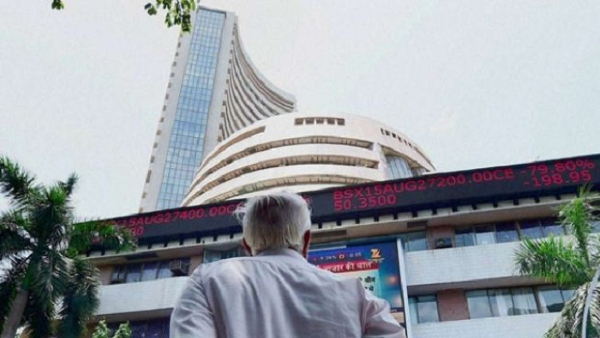
India is preparing to operationalise its first dedicated mineral exchange as part of a wider reform of the country’s mining and mineral-marketing system. The proposed exchange is intended to create a regulated electronic marketplace where major minerals can be traded through standardised, delivery-based contracts, improving transparency in price discovery and giving both producers and industrial consumers access to a broader national market.
The initiative follows the notification of the Mineral Exchange Rules, 2026 by the Ministry of Mines. These rules establish the legal and regulatory framework for setting up mineral exchanges in India and place their supervision under the Indian Bureau of Mines. The broader objective is to move part of India’s mineral trade away from fragmented bilateral transactions towards an organised marketplace where prices, quality, volumes and delivery obligations are more transparent.
Mines Additional Secretary Veena Kumari Dermal said in September 2026 that the Government expects the first mineral exchange to be registered and operationalised during the next financial year. The current effort is therefore moving from policy design towards actual implementation.
Mineral Exchange Rules Establish the Regulatory Foundation
The legal basis for the new system was created through amendments to the Mines and Minerals (Development and Regulation) Act. The MMDR Amendment Act, 2025 introduced provisions enabling the Central Government to promote organised trading in minerals, mineral concentrates, processed mineral products and metals.
The Ministry of Mines subsequently circulated draft Mineral Exchange Rules for stakeholder consultation in March 2026 before notifying the final Mineral Exchange Rules on June 30. The rules came into force following publication in the Official Gazette and now provide the framework for registration, governance, trading, surveillance and dispute management.
For minerals administered by the Ministry of Mines, the Indian Bureau of Mines has been designated as the regulatory authority. Its role includes registering exchanges, overseeing market functioning, approving contracts and monitoring compliance.
A National Electronic Marketplace for Major Minerals
The mineral exchange is intended to function as an organised electronic marketplace in which approved mineral commodities can be bought and sold through physical-delivery contracts. The framework is therefore designed around actual mineral transactions rather than speculative financial trading.
Buyers and sellers will be able to place bids, conclude transactions and settle obligations through exchange-approved mechanisms. The system will also require standardised contracts covering mineral grade, quantity, delivery conditions and other commercial parameters.
This could gradually create a national reference market for major minerals, making it easier for producers and consumers to compare prices across different regions and transactions.
Transparent Price Discovery Is a Central Objective
One of the main reasons for creating a mineral exchange is the need for more transparent price discovery.
Mineral prices can vary significantly because of differences in grade, transportation costs, regional demand, state-level levies and local market structures. In markets where transactions are negotiated privately, smaller producers and buyers may have limited visibility into prevailing prices elsewhere in the country.
A regulated exchange can reduce this information gap by bringing multiple buyers and sellers onto the same platform. Competitive bidding can create clearer market-based reference prices while transaction data can provide greater visibility into volumes and demand conditions.
The Mineral Exchange Rules specifically require exchanges to provide fair, transparent, neutral and efficient price discovery while maintaining robust market systems.
Standardised Quality Will Be Essential for Mineral Trading
Minerals cannot be traded efficiently unless buyers and sellers agree on the quality of the material being delivered.
Two consignments of the same mineral can have substantially different commercial value depending on purity, grade, moisture content, impurities and physical characteristics. The exchange system therefore includes provisions for grading, sampling, weighing, assaying and delivery standards.
Independent assaying agencies may be used to collect and test samples under approved procedures. These agencies are expected to operate under recognised accreditation systems so that buyers and sellers can rely on consistent quality certification.
Standardised assessment can reduce disputes and make mineral contracts more comparable across producing regions.
Rules Include Safeguards Against Market Manipulation
The Government has also included market-integrity provisions intended to prevent misuse of the exchange.
The rules address practices such as cartelisation, circular trading, insider trading, misleading price signals and other forms of manipulation. Exchanges are expected to maintain electronic records and surveillance systems capable of identifying unusual trading patterns.
The Indian Bureau of Mines will have powers to inspect records, issue directions, approve or suspend contracts and take regulatory action where required.
These safeguards are intended to ensure that the exchange develops as a credible price-discovery platform rather than becoming vulnerable to coordinated trading by dominant participants.
Coal Is Moving Through a Separate Exchange Framework
Coal is being handled through a separate but parallel reform process under the Ministry of Coal.
The Ministry notified the Coal Exchange Rules, 2026 in June and designated the Coal Controller Organisation as the regulatory authority. An online application process for registering coal exchanges was subsequently launched in July.
The coal exchange framework is intended to create a many-to-many marketplace in which multiple producers and consumers can trade coal and its processed forms through delivery-based contracts.
This is separate from the mineral exchange governed by the Ministry of Mines. The distinction is important because coal has its own regulator, rules and registration process, even though both reforms share the broader objective of improving market transparency and domestic resource availability.
Coal Exchange Registration Has Already Begun
The coal-market reform has already moved into the registration stage.
Eligible companies can apply to establish coal exchanges subject to the Coal Exchange Rules and regulatory approval. These exchanges will be permitted to develop market rules, trading systems and standardised contracts under the supervision of the Coal Controller Organisation.
The Government expects this system to expand the range of buyers available to coal producers while also giving industrial consumers another route to access domestic coal.
Public-sector coal companies, commercial miners and captive producers could all potentially participate within the framework, subject to applicable regulations.
Domestic Coal Production Remains a Strategic Priority
The exchange reform is closely linked to India’s broader objective of increasing domestic coal production and reducing dependence on imports where suitable domestic supplies are available.
Coal remains a major fuel for power generation and is also critical to industries such as steel, cement, aluminium and sponge iron. Reliable domestic availability therefore has implications for both energy security and industrial competitiveness.
A more transparent marketplace could allow producers to reach a wider range of consumers while giving buyers improved access to competitively priced domestic coal.
The Government has repeatedly emphasised that increased domestic production, improved logistics and market reforms are all necessary to reduce unnecessary import dependence.
Major Minerals Will Form the Core of the Wider Exchange
The broader mineral exchange framework will apply to major minerals and their concentrates or processed forms under the jurisdiction of the Ministry of Mines.
This creates the possibility of organised trading in important industrial raw materials used by the steel, aluminium, cement, electrical, construction and manufacturing sectors.
Minerals such as limestone, bauxite, copper-bearing ores and several other metallic and non-metallic commodities could eventually be brought within the exchange framework through approved contracts.
Minor minerals, which are largely regulated by state governments, remain outside this central framework.
Exchange Trading Could Reduce Information Gaps
One of the strongest potential advantages of the mineral exchange is the reduction of information asymmetry between producers and buyers.
A smaller industrial consumer negotiating directly with a large supplier may have limited knowledge of prices prevailing elsewhere. Similarly, a smaller mine may find it difficult to identify buyers willing to offer better terms.
An organised exchange places multiple participants in the same transparent marketplace and makes transactional information more visible.
This does not mean mineral prices will become identical across India. Transportation costs, grades, taxes and regional demand will continue to influence final prices. The exchange can, however, provide a common benchmark against which local transactions can be evaluated.
India’s Mineral Auction System Has Expanded Rapidly
The exchange reform comes at a time when India’s auction-based mining sector is expanding significantly.
The Ministry of Mines reported that 200 mineral blocks were successfully auctioned during the 2025–26 financial year, the highest number achieved in a single year since the present auction regime was introduced.
These included mining leases as well as composite licences combining exploration with a pathway towards eventual production.
As more auctioned mineral blocks become operational, India will have a larger and more diverse group of producers. This creates a stronger commercial basis for developing an organised marketplace connecting mines with industrial consumers.
Critical Minerals Are Being Developed Through a Parallel Strategy
The mineral exchange is only one part of India’s wider effort to strengthen mineral security.
The Government has identified a group of critical and strategic minerals that are essential for electric vehicles, renewable energy, defence systems, aerospace, electronics and advanced manufacturing.
India has accelerated auctions of critical-mineral blocks across several states while also increasing exploration for lithium, rare earth elements, graphite, vanadium, gallium, tungsten, molybdenum and other strategically important resources.
This strategy is intended to reduce India’s dependence on highly concentrated overseas supply chains and support emerging domestic manufacturing sectors.
India Is Also Securing Mineral Resources Overseas
Domestic exploration is being complemented by overseas mineral acquisition.
Khanij Bidesh India Limited has been pursuing mineral assets in foreign countries as part of India’s long-term resource-security strategy. One of the most important developments has been its agreement in Argentina for five lithium brine blocks in Catamarca province.
These blocks cover a substantial exploration area and give India a direct foothold in one of the world’s important lithium-producing regions.
The overseas mineral strategy is especially relevant for commodities where India has limited domestic reserves or where global supply is concentrated in a small number of countries.
Mineral Security Is Becoming Part of Industrial Policy
The importance of mining reform has increased as India expands manufacturing in electric vehicles, renewable energy equipment, electronics, semiconductors, defence systems and advanced engineering.
Many of these industries depend on minerals that are strategically important and often difficult to source.
Lithium is critical for many battery technologies, rare earth elements are central to permanent magnets and specialised electronics, while copper demand is rising with the expansion of power networks, renewable energy and electric mobility.
Mineral policy is therefore increasingly being treated as an important part of industrial and strategic policy rather than as a narrow mining-sector issue.
A Structural Change in India’s Mineral Market
The proposed mineral exchange could eventually change the way a significant part of India’s mineral output is marketed.
For decades, much of the country’s mineral trade has depended on direct contracts, captive consumption, producer auctions and bilateral commercial arrangements.
A regulated exchange adds another channel by creating an electronic marketplace where standardised mineral contracts can be traded among multiple buyers and sellers.
The system will not replace existing supply arrangements, but it can provide another route for transactions and a transparent benchmark for market prices.
For smaller producers and consumers in particular, this could improve access to a wider national market.
First Exchange Expected in the Next Financial Year
The legal and regulatory foundations are now largely in place. The MMDR framework has been amended, the Mineral Exchange Rules have been notified and the Indian Bureau of Mines has been designated as regulator.
Work is now progressing towards registration of the first exchange.
According to the latest statement from the Ministry of Mines, India’s first mineral exchange is expected to be registered and operationalised during the next financial year.
Its launch would mark the beginning of a new phase in Indian mineral-market reform. The eventual success of the system will depend on the participation of producers and consumers, reliable quality certification, sufficient trading volumes and confidence in the prices generated through the exchange.
If these elements develop successfully, India could establish a transparent national marketplace capable of connecting producers and industrial consumers while generating credible reference prices for some of the country’s most important mineral resources.
References
Ministry of Mines, Government of India — Mineral Exchange Rules, 2026, Notification dated June 30, 2026.
Ministry of Mines, Government of India — Draft Mineral Exchange Rules, 2026 and Public Consultation Notice, March 2026.
Mines and Minerals (Development and Regulation) Amendment Act, 2025 — Provisions relating to Mineral Exchanges.
Ministry of Coal, Government of India — Coal Exchange Rules, 2026.
Press Information Bureau, Ministry of Coal — Empowering India’s Energy Markets: Coal Exchange for Viksit Bharat, June 2026.
Press Information Bureau, Ministry of Coal — Launch of Application for Registration of Coal Exchanges in India, July 2026.
Press Information Bureau, Ministry of Mines — India Achieves Historic Milestone of 200 Mineral Block Auctions in FY 2025–26, March 2026.
Press Information Bureau, Ministry of Mines — Operationalisation of Auctioned Mineral Blocks, May 2026.
Press Information Bureau, Ministry of Mines — Eighth Tranche of Auction of Critical and Strategic Mineral Blocks, July 2026.
Ministry of Mines / KABIL — Official information on India’s lithium exploration and development agreement for five blocks in Argentina.
PTI / ETGovernment — Remarks by Mines Additional Secretary Veena Kumari Dermal on the expected operationalisation of India’s first mineral exchange, September 2026.
You may also like
-
Pune Startup Hyperonic Engineering Develops Indigenous Hydrogen Refuelling Systems for Clean Transportation
-
IIT Madras Startup Folium Sensing Develops Fibre-Optic Technology to Monitor Railways, Pipelines and Border Security
-
IIT Roorkee Startup Metastable Materials Develops Indigenous Technology to Recover Critical Battery Metals
-
Chennai Startup Evoxia Develops Hydrogen Plasma Technology for Indigenous Silicon Manufacturing
-
IIT Bombay Startup MumbaiSemi Develops Indigenous RF Chip Supporting India’s NavIC and Global Satellite Navigation Systems
