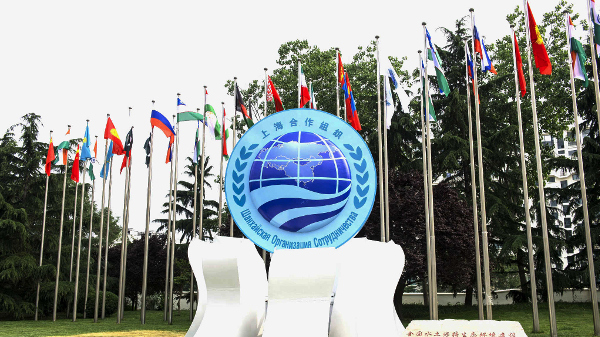
External Affairs Minister Dr S. Jaishankar met Shanghai Cooperation Organisation Secretary General Nurlan Yermekbayev in New Delhi on 22 May 2026, in a diplomatic engagement focused on the SCO’s ongoing initiatives, organisational activities, and wider regional and global developments. The meeting was reported by both The Tribune and News On AIR, confirming that the interaction formed part of India’s continued engagement with the SCO framework.
The meeting comes at a time when India is using the SCO platform with a careful but practical approach. For New Delhi, the SCO is not merely a diplomatic forum. It is a difficult but important table where India sits alongside major Eurasian powers, Central Asian partners, China, Russia and Pakistan, while still pushing its own priorities on connectivity, counter-terrorism, trade, regional stability and sovereignty. The Jaishankar–Yermekbayev meeting therefore reflects India’s continuing effort to stay engaged in Eurasian diplomacy without allowing the platform to dilute India’s independent strategic voice.
According to the report, Jaishankar and Yermekbayev discussed the SCO’s initiatives and activities as well as key regional and global issues. The wording is brief, but the context is important. The SCO has become one of the central multilateral platforms connecting South Asia, Central Asia, Russia, China and the wider Eurasian region. For India, such engagement matters because Central Asia remains important for energy security, trade routes, counter-terrorism cooperation and long-term connectivity planning.
Yermekbayev’s India visit also had an economic dimension. On the same day, the SCO Secretariat reported that the Secretary General participated in a FICCI event in New Delhi, where he spoke about the organisation’s development agenda, trade and industrial cooperation, logistics connectivity, energy cooperation, youth and academic exchanges, and the SCO Development Strategy until 2035. He also appreciated India’s economic dynamism, digitalisation, fintech and IT strength, while noting that Indian industry could contribute to sustainable supply chains and trade clusters across the SCO region.
This gives the meeting a broader meaning. India’s SCO engagement is no longer limited to security statements or summit diplomacy. It increasingly includes business associations, industry bodies, academic networks, transport discussions and technology-linked cooperation. That fits India’s larger foreign policy style: use every platform to widen economic space, build strategic access, and keep channels open even with countries where differences remain serious.
Security remains the harder side of the SCO equation. The Tribune report places the Jaishankar–Yermekbayev meeting against the background of India’s recent participation in SCO defence-level engagements. In April 2026, Defence Minister Rajnath Singh held bilateral meetings with his Kyrgyz, Kazakh and Belarusian counterparts on the sidelines of the SCO Defence Ministers’ Meeting in Bishkek. Those engagements covered defence cooperation, capacity building, training and regional security concerns.
India’s outreach to Kyrgyzstan during that meeting also carried a humanitarian and technology element. Rajnath Singh gifted two indigenously developed Bhishm Aarogya Maitri Health Cubes to Kyrgyzstan for humanitarian assistance, disaster relief and search-and-rescue operations. He also announced completion of a project involving computer systems for Kyrgyz military institutions, along with wargaming software installation and training.
This is where India’s SCO strategy becomes visible. New Delhi is not approaching the organisation only through speeches. It is using practical diplomacy: medical aid systems, training support, defence exchanges, business outreach, connectivity discussions and technology cooperation. Such actions help India build goodwill in Central Asia while avoiding overdependence on any single bloc.
The SCO’s own official account of the April 2026 Defence Ministers’ Meeting in Bishkek noted that member states discussed terrorism, extremism, transnational crime, information security and cybersecurity, while also stressing cooperation among defence agencies, joint exercises and exchange of experience. This aligns with India’s long-standing insistence that counter-terrorism must remain a core SCO concern rather than a symbolic phrase.
For India, the challenge inside SCO is delicate. The platform includes countries with competing strategic interests, and India has serious concerns about cross-border terrorism, sovereignty, connectivity routes and China-backed infrastructure projects. Yet walking away from the platform would reduce India’s visibility in Eurasia. By staying engaged, India keeps a seat at the table, maintains links with Central Asian republics, and prevents the SCO from becoming a space shaped entirely by others.
The Jaishankar–Yermekbayev meeting should therefore be read as part of India’s larger Eurasian balancing act. India is deepening ties with the West through Quad, technology partnerships and trade talks, while simultaneously maintaining old and new channels with Russia, Central Asia and multilateral Eurasian institutions. This is not contradiction; it is multi-vector diplomacy. A country of India’s size cannot afford a narrow foreign policy map.
The positive signal from the meeting is continuity. India remains willing to engage constructively with the SCO on practical issues such as connectivity, security, trade, industry, energy and people-to-people cooperation. At the same time, India’s participation does not mean surrendering its red lines. New Delhi’s approach is to work where cooperation is useful, speak firmly where core interests are affected, and keep expanding India’s role in every forum that shapes Asia’s strategic future.
In that sense, the meeting between Jaishankar and Nurlan Yermekbayev was more than a routine diplomatic call. It showed India’s effort to remain active in a complex Eurasian platform while projecting its own priorities: regional stability, practical connectivity, counter-terrorism, economic cooperation, technological strength and strategic autonomy. For India, the SCO may be a difficult room, but it is still a room where India intends to be heard.
You may also like
-
India, Russia and the Ukraine Conflict: Putin Highlights Modi’s Continued Push for Dialogue and a Negotiated Settlement
-
India and France Discuss Aerospace Manufacturing, UPI Integration and India-EU FTA
-
Côte d’Ivoire Military Delegation Visits HAL, Shows Interest in India’s Indigenous Aerospace Platforms
-
India and Netherlands Move to Deepen Agricultural Cooperation in Seeds, Horticulture and Innovation
-
Tarang Shakti Delegates from 28 Countries Visit HAL and BEL to Explore India’s Defence Manufacturing Ecosystem
