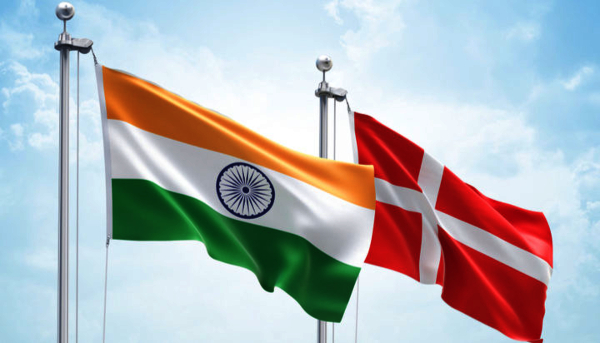
Prime Minister Narendra Modi met Denmark’s Acting Prime Minister Mette Frederiksen in Oslo on the sidelines of the 3rd India-Nordic Summit, with both leaders reviewing the progress made under the India-Denmark Green Strategic Partnership. The meeting placed strong emphasis on climate action, green transition, water management, emerging technologies and deeper business cooperation between the two countries.
The India-Denmark Green Strategic Partnership, launched in 2020, has become one of India’s most focused European partnerships in the field of environment and climate change. During the Oslo meeting, both leaders welcomed the progress achieved so far and agreed to further strengthen collaboration in areas that can support green growth in both economies.
A key message from Prime Minister Modi was India’s readiness to welcome Danish technologies for green solutions in the country’s rapidly expanding economy. Denmark has strong capabilities in clean energy, water systems, sustainable urban solutions and industrial efficiency, while India offers scale, market depth and a large transition opportunity. This makes the partnership important not only for bilateral ties, but also for practical climate cooperation between a major developing economy and a Nordic green-technology leader.
The two leaders also decided to expand cooperation into new and emerging sectors such as advanced research, communications, start-ups, academic exchanges, defence and artificial intelligence. This shows that the India-Denmark relationship is gradually moving beyond its original green transition focus into a broader technology-and-innovation partnership.
One important area of cooperation discussed was water management. Both sides noted the successful collaboration to establish the Smart Laboratory on Clean Rivers in Varanasi, a tripartite initiative involving the Government of India, IIT-Banaras Hindu University and the Government of Denmark. The project reflects how the partnership is being translated into practical work on clean rivers, sustainable water systems and urban environmental management.
Prime Minister Modi also invited Danish companies to establish a presence in GIFT City, Gujarat. This invitation is significant because it links Denmark’s technology and investment ecosystem with India’s growing international financial services hub, creating scope for deeper business, finance and innovation linkages.
The leaders also discussed mobility partnership and exchanged views on regional and global issues of mutual interest. Prime Minister Modi conveyed his good wishes for Denmark’s ongoing tenure as a non-permanent member of the United Nations Security Council.
The Oslo meeting underlines the increasingly practical nature of India’s Nordic diplomacy. With Denmark, the core theme remains green transition, but the relationship is now widening into technology, defence, AI, research, start-ups, education and mobility. For India, Denmark offers specialised expertise in sustainability and clean solutions. For Denmark, India provides scale, opportunity and a major role in shaping the global green economy.
You may also like
-
India, Russia and the Ukraine Conflict: Putin Highlights Modi’s Continued Push for Dialogue and a Negotiated Settlement
-
India and France Discuss Aerospace Manufacturing, UPI Integration and India-EU FTA
-
Côte d’Ivoire Military Delegation Visits HAL, Shows Interest in India’s Indigenous Aerospace Platforms
-
India and Netherlands Move to Deepen Agricultural Cooperation in Seeds, Horticulture and Innovation
-
Tarang Shakti Delegates from 28 Countries Visit HAL and BEL to Explore India’s Defence Manufacturing Ecosystem
