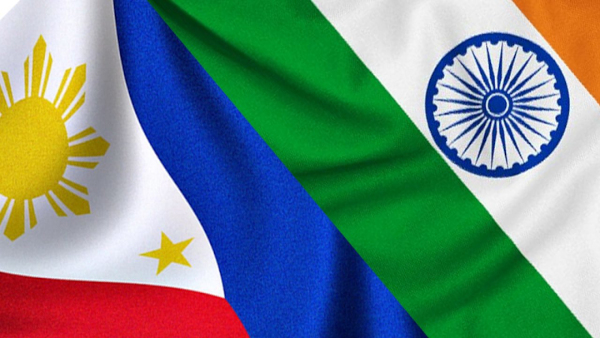
India and the Philippines are moving to deepen their economic partnership as bilateral trade reached $3.9 billion in FY26, or around ₹34,466 crore. The development was discussed during the 14th meeting of the India–Philippines Joint Working Group on Trade and Investment, held in Manila. The meeting focused on trade trends, investment opportunities, priority products, services and new areas of commercial cooperation.
The rise in bilateral trade shows that India’s engagement with Southeast Asia is steadily moving beyond diplomacy into practical economic partnership. The Philippines is a major market in ASEAN, with strong demand in technology, healthcare, infrastructure, energy, consumer goods and services. For India, this creates space for exports, investment, digital cooperation and supply-chain partnerships. For the Philippines, India offers scale, skilled manpower, pharmaceutical strength, IT capability and a large manufacturing base.
The Manila meeting explored cooperation in several important sectors, including film, energy, construction, infrastructure, ICT, IT-BPM, artificial intelligence and pharmaceuticals. These sectors are highly relevant because both countries are service-driven economies with young populations, English-speaking talent pools and expanding digital markets. India’s IT and pharmaceutical industries can find strong opportunities in the Philippines, while Philippine companies can look at India as a manufacturing, services and investment destination.
A major focus of the discussion was improving the business environment. Both countries discussed customs cooperation, trade facilitation, agricultural cooperation and market access for specific products. These steps are important because trade growth depends on smoother rules, faster clearances, predictable standards and easier movement of goods. When customs systems and regulatory mechanisms become more efficient, businesses on both sides can trade with greater confidence.
One of the most interesting points discussed was the possibility of trade settlement in national currencies. This reflects a wider trend in India’s trade policy, where reducing dependence on third-country currencies and creating smoother settlement mechanisms have become important goals. Such arrangements can help businesses manage currency risk, lower transaction friction and make bilateral trade more resilient in uncertain global conditions.
The meeting also discussed the early conclusion of the ASEAN–India Trade in Goods Agreement review. After that, both sides may explore engagement on a possible India–Philippines Preferential Trade Agreement. This is significant because a focused trade arrangement could create better market access, reduce trade barriers and give businesses a clearer framework for long-term planning.
The interaction with Indian businesses operating in the Philippines added a practical dimension to the talks. Business communities often understand ground-level challenges better than official delegations alone. Their feedback on market access, investment prospects, regulatory issues and sectoral opportunities can help shape more effective trade policy.
The larger importance of this development lies in the Indo-Pacific context. India and the Philippines are both maritime democracies with growing economic and strategic relevance. Stronger trade ties can support wider cooperation in technology, supply chains, infrastructure, energy security and healthcare. As global supply chains shift and countries search for trusted partners, India–Philippines cooperation can become a useful pillar in India’s Act East engagement.
The next meeting of the Joint Working Group on Trade and Investment will be held in New Delhi. That meeting will be important for converting the Manila discussions into concrete outcomes. With trade already touching $3.9 billion, the next phase should focus on faster implementation, stronger business linkages, sector-specific roadmaps and easier movement of goods, services and investment between the two countries.
You may also like
-
India Hosts 12th BRICS Parliamentary Forum in New Delhi
-
India Strengthens Trade Ties with Netherlands as Piyush Goyal Visits Port of Rotterdam
-
India to Train 600 Nigerian Army Soldiers in Specialised Jungle and Mountain Warfare
-
India and Russia Strengthen Parliamentary Diplomacy as Om Birla Meets State Duma Chairman Vyacheslav Volodin
-
India Seeks South Korean Shipbuilding Partnerships as Sarbananda Sonowal Begins Four-Day Visit to Busan
