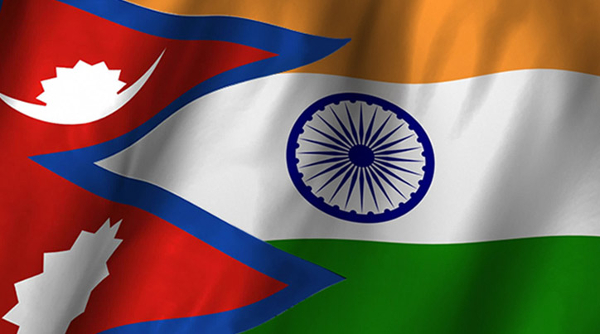
India has taken another significant step in its development partnership with Nepal by handing over 72 health facilities and 12 cultural heritage projects completed under the post-2015 earthquake reconstruction programme. External Affairs Minister Dr. S. Jaishankar virtually handed over the projects after his meeting with Nepal’s Foreign Minister Shisir Khanal in New Delhi, marking a major milestone in India’s long-term support for Nepal’s recovery, resilience and public infrastructure rebuilding.
The handover carries both practical and symbolic importance. The health facilities strengthen Nepal’s local medical infrastructure, especially in communities that required durable reconstruction after the devastating earthquake of 2015. These centres support public health delivery, emergency care, community-level treatment and access to essential medical services. In a mountainous country where geography can make healthcare access difficult, rebuilt health institutions become lifelines for ordinary citizens.
The cultural heritage projects add a deeper civilisational dimension to the partnership. Nepal’s heritage structures are part of a shared historical, spiritual and cultural world that connects India and Nepal through temples, monasteries, pilgrimage routes, language, art and community traditions. Their restoration represents more than physical reconstruction. It preserves memory, identity, sacred architecture and the living cultural confidence of local communities.
India’s reconstruction support in Nepal has followed a structured and sector-wise model. After the 2015 earthquake, India committed grant assistance for rebuilding work across housing, education, health and cultural heritage. This approach made reconstruction broad-based rather than limited to one sector. Homes gave families security. Schools restored learning. Health facilities brought medical care back into damaged areas. Heritage projects revived cultural spaces that hold emotional and religious value.
The latest handover also shows how India’s neighbourhood diplomacy works on the ground. Development cooperation becomes meaningful when it reaches hospitals, schools, roads, homes, temples and community institutions. India’s assistance in Nepal has consistently focused on projects that touch everyday life. This creates trust at the people-to-people level and gives bilateral ties a human foundation beyond formal diplomacy.
The timing of the handover is also significant because India and Nepal are trying to deepen cooperation in both traditional and emerging sectors. During the meeting, both sides discussed areas such as connectivity, energy, education, health, digital technology, culture and capacity building. The launch of the linkage between India’s UPI and Nepal’s National Payments Interface adds a modern digital layer to the relationship. It can make cross-border personal remittances easier and more efficient for families, workers, students and small traders connected across the open border.
The MoU between Digital India Bhashini and Kathmandu University further expands the partnership into artificial intelligence and language technology. A voice-first language translation platform can help Nepal build digital public infrastructure suited to its linguistic diversity. This connects India’s digital governance experience with Nepal’s social and technological needs, opening space for cooperation in AI, startups, education and citizen-facing services.
India and Nepal share one of the most unique relationships in South Asia. The open border, family ties, religious circuits, trade routes and cultural closeness make the relationship deeply people-centred. The reconstruction projects fit naturally into this broader relationship because they serve communities directly. A health facility in a remote district and a restored heritage site in a historic town both strengthen the social fabric that binds the two countries.
The 72 health facilities and 12 cultural heritage projects therefore stand as more than completed development works. They represent India’s commitment to Nepal’s recovery after a national tragedy, its respect for Nepal’s cultural identity and its readiness to support long-term resilience in the neighbourhood. As India and Nepal move into newer domains such as digital payments, AI, renewable energy and connectivity, these completed reconstruction projects provide a strong reminder that the foundation of diplomacy remains service to people.
The handover marks a mature phase in India–Nepal development cooperation. It combines disaster recovery with healthcare, heritage conservation with public infrastructure, and traditional friendship with modern digital partnership. For Nepal, it strengthens local institutions. For India, it reinforces the principle of standing with neighbours in times of need. For the region, it offers a model of reconstruction diplomacy rooted in trust, continuity and shared civilisational bonds.
References:
- News on AIR — EAM S. Jaishankar hands over 72 health facilities and 12 heritage projects to Nepal
https://newsonair.gov.in/eam-s-jaishankar-hands-over-72-health-facilities-and-12-heritage-projects-to-nepal/ - Embassy of India, Kathmandu — India and Nepal review progress of Post-earthquake Reconstruction projects in Nepal – 5th JPMC
https://www.indembkathmandu.gov.in/media-detail/673 - Ministry of External Affairs — Visit of Minister for Foreign Affairs of Nepal to India
https://www.mea.gov.in/press-releases?dtl/41272/Visit_of_Minister_for_Foreign_Affairs_of_Nepal_to_India= - Ministry of External Affairs — Opening remarks by EAM Dr. S. Jaishankar during his meeting with Foreign Minister Shisir Khanal of Nepal
https://www.mea.gov.in/speeches-statements?dtl/41273/Opening_remarks_by_EAM_Dr_S_Jaishankar_during_his_meeting_with_Foreign_Minister_Shisir_Khanal_of_Nepal_June_06_2026=
You may also like
-
Tarang Shakti Delegates from 28 Countries Visit HAL and BEL to Explore India’s Defence Manufacturing Ecosystem
-
Swiss President Guy Parmelin to Visit India as EFTA Economic Partnership Deepens
-
India and Brazil Move to Expand Mercosur Trade Pact Beyond 450 Tariff Lines
-
India and Qatar Accelerate FTA and Investment Treaty Talks
-
India and Russia Review Bilateral Ties and International Developments in Moscow
