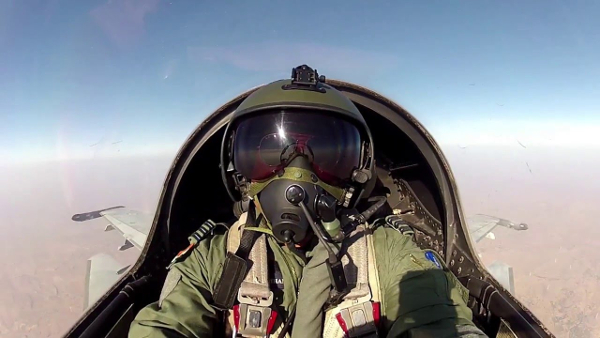
Two or three fighter pilots of the Indian Air Force (AIF) would be the main astronauts for India’s first manned space flight mission, Gaganyaan, director general armed forces medical service (DG-AFMS) Lieutenant General Bipin Puri said here on Saturday.
The space mission is likely to be launched in 2022. Lt Gen Puri said Bengaluru-based IAF’s Institute of Aerospace Medicine (IAM) has initiated the process of finalizing the crew.
“We have got big groups of pilots, of whom the best two or three would will be selected for the mission,” Lt Gen Puri told TOI on the sidelines of the platinum jubilee celebrations of Artificial Limb Centre (ALC) of the Indian Army in the city.
The IAM and Indian Space Research Organisation (Isro) have held several meetings to deliberate on medical aspects in the last few months. The government has roped in the institute to select the right members because it has adequate database related to flying and aerospace medicines, IAF sources said.
The institute has a dedicated teaching faculty, posted on the basis of core competency in the sub-fields of aerospace medicine. It also conducts regular interactions with international aerospace medicine specialists, aviation pathologists, aeronautical engineers, psychologists and aircrew to understand the current trends in the field.
“The institute has played a pivotal role in several aerospace missions, including long hours of flying of fighter jets,” a senior IAF officer.
Former commandants of ALC and former director generals of medical services were also present during the event. Officers from Armed Forces Medical College, Command Hospital Southern Command, other military establishments and medical students from various colleges of Pune and Mumbai also attended the programme.
Source:TNN
Image Courtesy: IAF
You may also like
-
How Indigenous Indian Technologies Are Helping Aircraft and Trains Navigate Safely Through Dense Fog
-
ISRO Successfully Completes Critical Gaganyaan Crew Module Separation Tests at VSSC
-
ISRO’s Aditya-L1 Expands Global Solar Research as Joint Observations with Europe’s Proba-3 Reveal New Insights
-
ISRO Advances Indigenous 1,100 kN Methane Rocket Engine for Next-Generation Launch Vehicle
-
Indian Scientists Identify A Few Martian Analogue Sites
