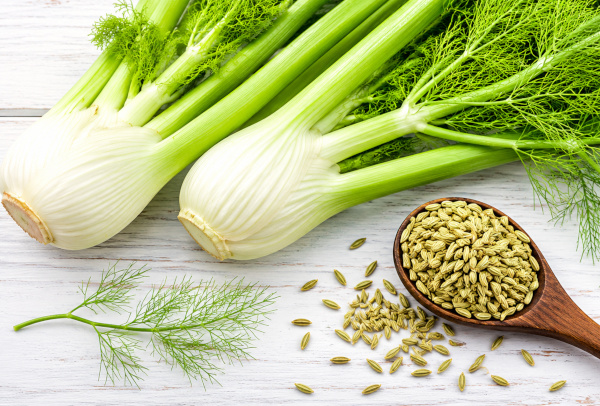
Fennel seeds, known in Indian homes as saunf, are one of those rare kitchen ingredients that sit comfortably between food, medicine and daily habit. After a heavy meal, a pinch of saunf is not merely a mouth freshener; in Ayurveda, it is a small digestive intervention. It sweetens the breath, settles the stomach, supports the movement of Vata, cools excess Pitta and helps the body process food without the harsh heat of stronger spices like ajwain or black pepper.
In classical Ayurvedic language, fennel is commonly identified as Mishreya, Mishi or Madhurika. The Ayurvedic Pharmacopoeia of India identifies Mishreya as the dried ripe fruit of Foeniculum vulgare Mill., belonging to the Umbelliferae family, now commonly placed under Apiaceae. The plant is described as an aromatic herb, usually 1–2 metres high, cultivated widely in India and sometimes found wild. What we casually call fennel “seeds” are botanically the dried fruits of the plant.
Identification and Names
Fennel seeds are long, ridged, slightly curved and greenish to yellowish-brown in colour. Good-quality saunf has a fresh, sweet, cooling aroma and a mild liquorice-like taste. Old or poorly stored fennel loses its green tone and becomes dull, brownish and flat in smell. The Ayurvedic Pharmacopoeia records its names across Indian languages: Saunf in Hindi and Urdu, Variyali in Gujarati, Badisompu or Doddasompu in Kannada, Shombu in Tamil, Sopu in Telugu, Badishop in Marathi and Panamadhuri in Odia.
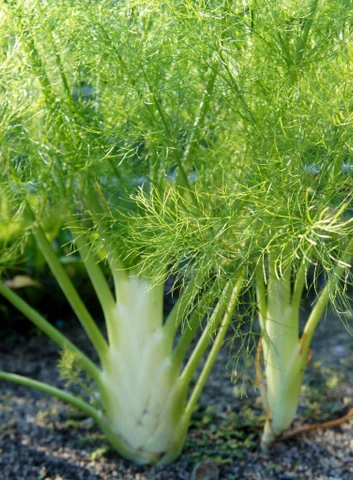
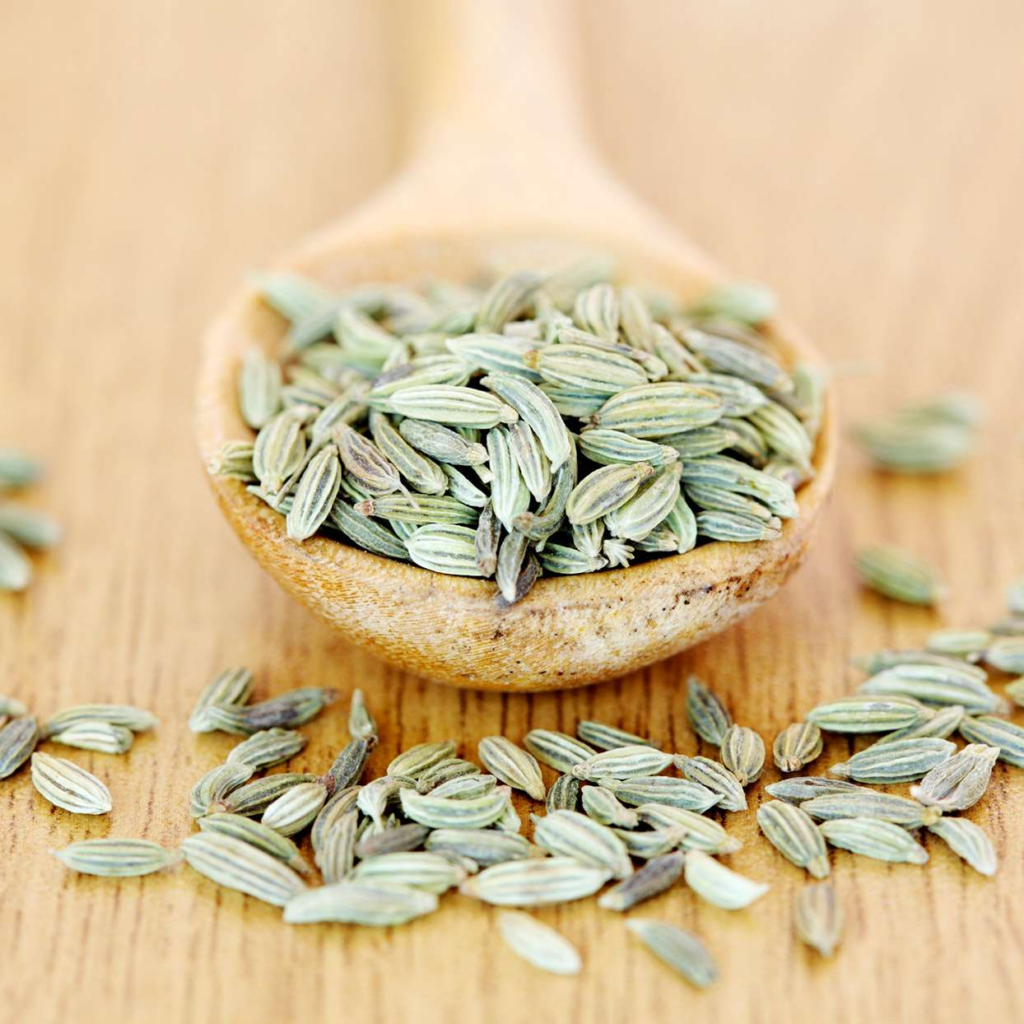
In Malayalam households, fennel is familiar as perumjeerakam, especially in spice blends, meat dishes, biryani masalas, herbal waters and digestive home remedies. It should not be confused with cumin, caraway, ajwain or dill. These spices may look related because they belong to the same broad aromatic seed family, but their Ayurvedic actions are different. Fennel is gentler, sweeter and more cooling than most of them.
Ayurvedic Properties of Fennel Seeds
According to the Ayurvedic Pharmacopoeia of India, Mishreya has Madhura, Katu and Tikta rasa — sweet, pungent and bitter taste. Its guna are laghu and ruksha, meaning light and dry. Its virya is shita, or cooling, and its vipaka is madhura, meaning it has a sweet post-digestive effect. Its listed karmas include anulomana, balya, dipana, vata-pitta-hara and ama-dosha-hara.
This makes fennel very important in Ayurveda because it improves digestion without aggressively heating the body. Many digestive herbs kindle Agni by sharp heat, but fennel has the special advantage of being Pitta-friendly. It can support appetite and digestion while still being cooling. This is why it is often preferred after oily, spicy or heavy meals, especially when digestion is weak but acidity, burning or heat tendency is also present.
Its anulomana quality means it helps guide Vata in its proper downward direction. In practical household language, this is why saunf is used for bloating, trapped gas, abdominal discomfort and that heavy “food sitting in the stomach” feeling after meals. Its dipana quality supports digestive fire, while its ama-dosha-hara action makes it useful when food is not being processed properly and leaves behind heaviness, coating, sluggishness or mild digestive dullness.
Why Fennel Became an Indian After-Meal Habit
The Indian custom of chewing saunf after food is a brilliant example of food wisdom becoming public culture. Heavy meals, especially meals with rice, wheat, pulses, curd, fried items, meat or sweets, can leave the stomach overloaded. A small quantity of fennel wakes up the digestive process, refreshes the mouth and reduces the post-meal heaviness that often comes from weak Agni.
Unlike mint-based mouth fresheners, fennel does more than mask odour. Bad breath after food is often linked to fermentation, indigestion or coating in the mouth and gut. Saunf addresses the digestive root more gently. It also pairs well with mishri, coriander, cumin, cardamom and dry ginger depending on the person’s constitution and complaint.
Fennel for Digestion
The strongest traditional use of fennel is in digestion. Ayurveda uses it in conditions linked with agnimandya — weak digestive fire — and shula, or abdominal pain/colic. The Ayurvedic Pharmacopoeia lists therapeutic uses including shula, agnimandya, kasa, pravahika, raktadosha and arshas.
For everyday use, fennel is especially suitable for people who feel bloated after meals but cannot tolerate very hot spices. A person with strong Pitta may feel burning after using too much ajwain, black pepper or dry ginger. Fennel is milder. It can be used as a post-meal chew, infused in warm water or lightly roasted and powdered with small amounts of cumin and coriander.
Fennel and Pitta Balance
Fennel is one of the best kitchen spices when digestion is weak but heat is high. In Ayurveda, this combination is common: the person feels hungry irregularly, gets acidity easily, feels bloated after meals and may have a burning sensation in the chest or abdomen. Strong heating herbs may worsen the burning, while purely cooling foods may weaken digestion further. Fennel sits in the middle. It is cooling in virya but still supports Agni.
This is why fennel water is often used in summer, after spicy meals, or in people who feel internal heat. It is not as strongly cooling as vetiver, sandalwood or amla, but as a daily kitchen herb it is far easier to use. A light fennel-coriander infusion can be a useful summer digestive drink when taken in moderation.
Fennel and Vata
Fennel’s role in Vata is equally important. When Vata is disturbed in the digestive tract, the person may experience gas, irregular appetite, abdominal sounds, cramps, dryness, constipation tendency and variable digestion. Fennel’s anulomana action helps regulate this disturbed movement. Its sweetness gives softness, while its lightness prevents heaviness.
For Vata-type digestion, fennel often works better when lightly roasted and combined with a little warm water. In colder bodies, it may be combined with dry ginger or ajwain in small amounts. In Pitta-Vata digestion, fennel is better paired with coriander or cumin.
Fennel and Kapha
Fennel is not the strongest Kapha-reducing spice, but its ruksha and laghu qualities make it useful after heavy, oily or sweet foods. It helps reduce the dull, coated, sleepy feeling after meals. However, for strong Kapha conditions with thick mucus, sluggish metabolism and cold heaviness, fennel alone may be too gentle. It is then usually combined with trikatu-type herbs, ginger, black pepper, long pepper or ajwain under proper guidance.
Medicines and Ayurvedic Formulations Containing Fennel
Fennel appears both as a single herb and as an ingredient in digestive formulations. The Ayurvedic Pharmacopoeia specifically lists Mishreyarka and Panchasakara Churna as important formulations connected with Mishreya. It also gives the general dose of Mishreya fruit powder as 3–6 g.
| Ayurvedic medicine / formulation | Role of fennel | Usual traditional purpose |
|---|---|---|
| Mishreyarka / Saunf Arka | Distilled fennel preparation | Used as a gentle digestive, carminative and post-meal support |
| Panchasakara Churna / Panchsakar Churna | Fennel is one of the five ingredients in many standard descriptions | Used traditionally for constipation, gas, abdominal heaviness and piles-related constipation; should not be used casually for long periods because it often contains senna |
| Mishreya Churna / Saunf powder | Single-herb powder | Used for mild indigestion, bloating, post-meal heaviness and breath freshness |
| Abhayarishta | Some ingredient lists include saunf as a secondary digestive ingredient | Used traditionally for constipation and arsha/piles-related bowel irregularity; should be taken only as advised |
| Digestive churnas and post-meal herbal mixtures | Used as a carminative, flavouring and Pitta-friendly digestive | Used for bloating, appetite support and mouth freshness |
A useful editorial caution: not every formulation name that sounds similar should automatically be linked to fennel. For example, Shatapushpa is often used for dill in many Ayurvedic contexts, while fennel is more safely identified through names such as Mishreya, Mishi, Madhurika or Saunf. Therefore, for any manufactured medicine, the label should be checked for Foeniculum vulgare or saunf before claiming fennel as an ingredient.
Panchasakara Churna and Fennel
Panchasakara Churna is one of the best-known formulations where fennel appears. Standardization studies describe it as a polyherbal Ayurvedic formulation containing ingredients such as Cassia angustifolia, Terminalia chebula, Zingiber officinale, Foeniculum vulgare and Saindhava lavana. It is traditionally used for constipation, piles and abdominal disorders.
However, this is not a casual daily mouth freshener. Because many Panchasakara preparations contain senna, it can act as a laxative. Long-term unsupervised use may create dependency, dehydration or bowel irritation in sensitive people. It belongs in the medicine cabinet, not in the after-meal snack bowl.
Fennel in Women’s Health
In traditional practice, fennel is often associated with menstrual comfort, lactation support and abdominal cramps. Modern reviews also discuss fennel’s traditional use in digestive, reproductive, respiratory and endocrine contexts, while noting that research quality varies by condition.
For menstrual cramps, fennel’s traditional role is linked with Vata regulation and abdominal spasm relief. For lactation, it is often described as a galactagogue in traditional systems, but this is an area where caution is important. Pregnant women, breastfeeding mothers, people with hormone-sensitive conditions and those taking hormone-related medicines should not use high-dose fennel preparations or fennel essential oil without medical advice.
Fennel for Respiratory Comfort
The Ayurvedic Pharmacopoeia lists kasa, or cough, among the therapeutic uses of Mishreya. In practical household use, fennel is usually not treated as a powerful respiratory medicine by itself. Instead, it is used as a supporting herb when cough is linked with digestive weakness, throat irritation after food, mild mucus, or Vata-type dryness.
A warm infusion of fennel with a little dry ginger may suit cold, Kapha-type coughs, while fennel with licorice or coriander may suit dry or heat-associated throat irritation. But persistent cough, fever, wheezing, chest pain, blood in sputum or breathlessness needs proper medical evaluation.
Nutritional Value of Fennel Seeds
Fennel seeds are used in small quantities, so their nutritional value should not be exaggerated like a staple food. Still, they are mineral-rich for a spice. Nutrition databases commonly list fennel seed at around 345 kcal per 100 g, with about 15.8 g protein, 14.9 g fat, 52.3 g carbohydrate and roughly 40 g fibre per 100 g. They are also rich in minerals such as calcium, iron, magnesium, potassium, zinc and manganese.
The more important point is not that someone will eat 100 g of fennel. Nobody should. The real value is that even a teaspoon adds aroma, digestive support and trace nutrition without burdening the body. In Indian cooking, this is exactly how medicinal spices work: they are not eaten as bulk food, but used as intelligent micro-ingredients.
Simple Household Uses
For post-meal digestion, chew ¼ to ½ teaspoon of fennel slowly after food. This is the simplest and most common method. For bloating, lightly crush 1 teaspoon fennel, add it to hot water, cover for 7–10 minutes, strain and sip warm. For summer digestion, fennel and coriander can be soaked overnight and the water sipped in the morning. For mouth freshness, fennel may be lightly roasted and mixed with a little mishri, but sugar should be avoided in diabetes or weight-control diets.
For children, pregnant women, breastfeeding mothers, elderly people with multiple medicines, and those with chronic disease, even kitchen remedies should be used carefully. Fennel as a food spice is generally different from fennel capsules, extracts, essential oil or concentrated arka.
How to Use Fennel in Indian Food
Fennel belongs naturally in Indian cuisine because it improves flavour while helping digestion. It can be added to vegetable curries, lentil dishes, rasam-like digestive waters, biryani masala, meat dishes, pickles, herbal teas and post-meal mixtures. In North India, it often appears in masala blends and mouth fresheners. In Kerala and Tamil cooking, it is used in garam masala-style spice mixes, non-vegetarian dishes and certain festive preparations.
The best method is gentle roasting. Over-roasting destroys aroma and makes the seed bitter. Powdered fennel should be made in small batches because it loses volatile oils quickly. Whole fennel keeps better than powder.
How to Grow Fennel at Home
Fennel grows best in sunny locations with well-drained soil. It prefers moderate watering and does not like waterlogging. Seeds can be sown directly in soil, and the plant needs space because it can grow tall. The feathery leaves are also aromatic and edible. Once the flower umbels mature and dry, seeds can be collected, further dried in shade and stored in airtight jars.
For home use, the most important step is storage. Fennel should be protected from moisture, direct sunlight and insects. Good fennel should remain aromatic when crushed between the fingers. If it smells dusty, rancid or flat, it has lost much of its value.
Safety and Cautions
Fennel as a culinary spice is usually safe for most people when used in normal food quantities. The caution begins with high-dose powders, extracts, capsules and essential oils. Fennel contains volatile compounds such as anethole, estragole and fenchone, which are part of its medicinal aroma and activity, but concentrated forms should be handled carefully. Reviews of fennel describe these volatile oil constituents as important bioactive compounds.
Pregnant women should avoid medicinal/high-dose fennel unless advised by a qualified clinician. People with hormone-sensitive conditions, those taking estrogen-related medicines, oral contraceptives, tamoxifen or anti-seizure medicines should be cautious. Fennel essential oil should not be taken internally without expert supervision. Drug-information sources also note possible allergic skin reactions and neurological risks with fennel oil in sensitive or excessive-use situations.
Conclusion
Fennel seeds are one of Ayurveda’s most elegant examples of kitchen medicine. They are sweet yet digestive, cooling yet Agni-supporting, light yet strengthening, gentle yet effective. In the Ayurvedic view, saunf is not a dramatic herb; it is a daily intelligence herb. It works quietly after meals, helps Vata move properly, keeps Pitta from flaring, reduces post-meal heaviness and brings freshness to the mouth and stomach.
Its real greatness lies in balance. Ajwain is sharper, ginger is hotter, black pepper is more penetrating, cumin is more earthy, coriander is more cooling — but fennel sits beautifully between them. That is why Indian families kept it near the dining area, not hidden away in the medicine shelf. Used wisely, fennel reminds us of a central Ayurvedic truth: the best medicine is often not rare, expensive or exotic. Sometimes it is a humble seed chewed slowly after a meal.
You may also like
-
Indian Pharmaceutical Market Grows 12.96% in August as Chronic Therapies Drive Expansion
-
Kardi Ai Brings AI-Powered Long-Term ECG Monitoring Technology to India
-
How Much Exercise Is Enough According to Ayurveda?
-
AIIA and 132 ECO Task Force Launch 10,000-Plant Ashwagandha Research Initiative in Delhi’s Aravalli Landscape
-
Dr Reddy’s to Bring India’s First CDSCO-Approved Dengue Vaccine QDENGA to Private Market in 2027
