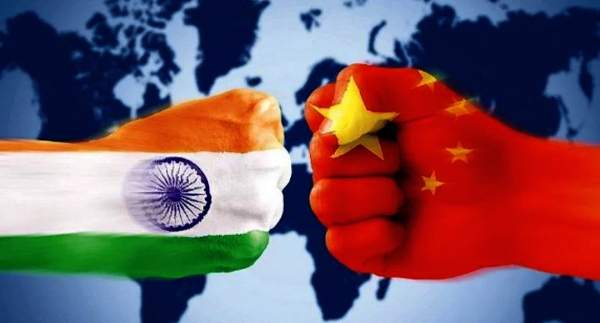
Operation Sindoor was launched by India in May 2025 after the Pahalgam terror attack of April 22, 2025, in which 26 people were killed. India said the operation targeted terror infrastructure in Pakistan and Pakistan-occupied Kashmir, with strikes on nine selected targets linked to groups such as Jaish-e-Mohammed, Lashkar-e-Taiba and Hizbul Mujahideen.
Until now, Indian military officials had repeatedly warned that China had provided Pakistan with more than routine military backing during the crisis. In July 2025, Deputy Chief of Army Staff Lieutenant General Rahul R Singh said Pakistan was the “front face” while China provided “all possible support.” He also said that 81% of Pakistan’s military hardware procured over the previous five years was Chinese, and accused Beijing of treating the battlefield as a “live lab” for testing its systems.
The latest Chinese media disclosure gives fresh weight to those Indian concerns. While the public remarks from Chinese engineers do not by themselves confirm every Indian claim about real-time intelligence or battlefield data sharing, they do establish that Chinese technical personnel were physically involved in supporting Pakistan’s Chinese-origin combat systems during the conflict. That is a major shift from the earlier perception of China as only a weapons supplier.
The J-10CE and PL-15 missile combination has already drawn international attention. Reuters earlier reported that Pakistan used Chinese-made J-10C fighters and PL-15 missiles during the May 2025 aerial battle, and that the engagement highlighted the importance of long-range missiles, sensor fusion and multi-domain “kill chains” in modern air warfare. Reuters also reported that Pakistan built a network linking air, land and space sensors, giving its fighters better situational awareness during the clash.
For India, the larger lesson is not only about one fighter jet or one missile system. The real concern is the growing fusion of Pakistan’s military structure with Chinese equipment, Chinese technicians, Chinese weapons and possibly Chinese battlefield learning. SIPRI data shows that China delivered major arms to 44 states during 2020–24, but nearly two-thirds of Chinese arms exports went to Pakistan alone, making Islamabad Beijing’s most important defence customer.
This creates a serious strategic challenge for New Delhi. Pakistan’s air force operates Chinese-origin J-10CE fighters and the jointly developed JF-17 Thunder, while its air defence, naval and drone ecosystems also have deep Chinese linkages. When such systems are supported directly by Chinese engineers during a live conflict, the India-Pakistan battlefield becomes a testing ground for Chinese platforms under real combat pressure.
The timing of the disclosure is also significant. It comes around the first anniversary of Operation Sindoor and after months of Indian commentary about the China-Pakistan military axis. It also follows reports that Chinese military officials studied Pakistan’s use of Chinese equipment during the conflict, including its multi-domain operational network.
From a defence-planning perspective, this means India has to prepare for a battlespace where Pakistan may not be operating alone in the technological sense. Even when Chinese forces are not directly engaged, Chinese-origin sensors, aircraft, missiles, drones, electronic systems and technical support teams can influence the battlefield. This is the core of India’s emerging two-front-plus problem: Pakistan at the front, China in the systems layer, and external partners strengthening Pakistan’s operational ecosystem.
The development also strengthens the case for India to accelerate indigenous air defence, electronic warfare, data-link integration, satellite surveillance, long-range air-to-air missiles and multi-domain command systems. Modern warfare is no longer decided only by platform quality. It is increasingly decided by who sees first, who shares data faster, who jams better, who links sensors to shooters more efficiently, and who can adapt tactics during combat.
The Chinese admission therefore turns Operation Sindoor into a wider strategic case study. It shows that future India-Pakistan crises may involve not just bilateral military confrontation, but a deeper technological contest in which Chinese systems are tested, refined and marketed through Pakistan’s operational experience. For India, the message is clear: the next conflict will not merely be a contest of aircraft against aircraft or missile against missile. It will be a contest of networks, intelligence, industrial depth and the ability to defeat a China-backed Pakistani war machine in real time.
Sources:
https://www.ndtv.com/world-news/operation-sindoor-india-china-pakistan-for-1st-time-china-confesses-on-site-tech-support-to-pak-during-op-sindoor-11468095
https://m.economictimes.com/news/defence/china-admits-providing-support-to-pakistan-during-operation-sindoor-against-india-last-may/articleshow/130962018.cms
https://timesofindia.indiatimes.com/world/china/china-provided-on-site-tech-assistance-to-pak-during-operation-sindoor/articleshow/130970040.cms
https://indianexpress.com/article/india/pakistan-military-hardware-china-indian-army-operation-sindoor-10105847/
https://www.reuters.com/business/aerospace-defense/how-pakistan-shot-down-indias-cutting-edge-fighter-using-chinese-gear-2025-08-02/
https://www.sipri.org/sites/default/files/2025-03/fs_2503_at_2024_0.pdf
You may also like
-
Armenia Conducts Live-Fire Exercise With Indo-French TRAJAN 155 mm Howitzers Manufactured in India
-
Indian Captain’s Courage Helps Save Flydubai Flight During Mid-Air Cockpit Crisis
-
Indian Experts to Participate in Moscow Startup Summit as Global Technology Leaders Gather in Russian Capital
-
India Emerges in Black Sea Shipping Diplomacy as Ukraine Seeks Maritime Truce With Russia
-
Before Asking India to Stop Russian Oil, Ukraine Must Confront the Druzhba Question
