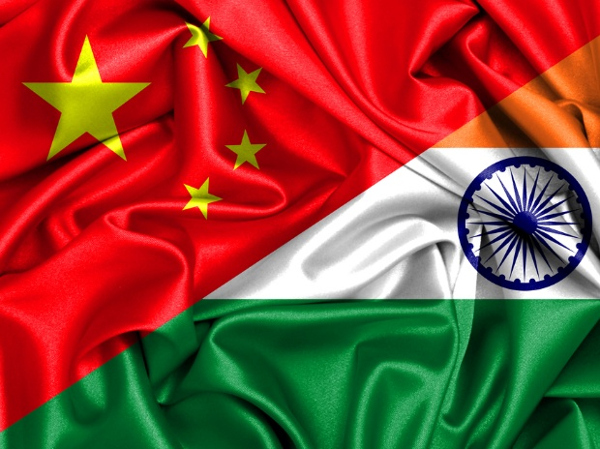
India’s Ministry of Defence has reported a reduction in Chinese military deployment opposite the country’s northern borders during 2025, even as the Indian Army maintained a robust operational posture across the Line of Actual Control. The assessment forms part of the Ministry’s Annual Report 2025-26, which reviews developments along the China frontier, the security situation in Jammu and Kashmir and India’s continuing shift towards indigenous defence procurement.
According to the report, the situation along India’s northern borders remained stable but sensitive. Following the disengagement arrangements reached at Depsang and Demchok in 2024, deployment levels of China’s People’s Liberation Army declined during 2025, both opposite the northern borders and in its traditional training areas. The Ministry nevertheless made clear that India continues to treat the frontier as an active security challenge rather than assuming that reduced deployments have removed the underlying military risks.
PLA Deployment Reduced, but Significant Forces Remain
The Defence Ministry said the PLA continued to maintain formations equivalent to around 10 Combined Arms Brigades in tactical and operational depth opposite India’s northern borders, along with another comparable presence in training areas. The overall pattern of Border Management Posture remained broadly unchanged from 2024.
For India, the reduction in Chinese troop levels has therefore not translated into any relaxation of military readiness. The Ministry said Indian Army deployments across all sectors of the LAC remain robust, well positioned and prepared to deal with emerging contingencies.
India has also strengthened its frontier posture through the induction of newer equipment and specialised formations. The Defence Ministry highlighted the deployment of Rudra Brigades, Divyastra Batteries and Bhairav Battalions, alongside improvements in infrastructure, connectivity and troop accommodation across the northern border areas. These measures point to a broader effort to improve mobility, firepower and responsiveness in difficult high-altitude terrain.
Military and Diplomatic Engagement Helps Stabilise the LAC
The report linked the relative stability along the frontier to sustained engagement between India and China at the political, diplomatic and military levels. During 2025, the two countries continued discussions through the Working Mechanism for Consultation and Coordination on India-China Border Affairs, the Special Representatives mechanism and senior military commander-level meetings.
The Defence Ministry said these channels were used to address mutual concerns along the LAC and to preserve peace and tranquillity on the basis of mutual and equal security. Border Personnel Meetings also continued between the two armies at the local level.
This engagement followed the breakthrough reached in 2024 regarding patrolling and disengagement at Depsang and Demchok, two of the last major friction points remaining from the military confrontation that began in eastern Ladakh in 2020. The reduction in PLA deployment recorded during 2025 suggests that the subsequent stabilisation process produced measurable changes on the ground, although the Indian Army continues to maintain substantial forces and infrastructure along the frontier.
Jammu and Kashmir Security Situation Remains Under Control
The Annual Report also assessed the security situation in Jammu and Kashmir as remaining firmly under control. According to the Ministry, sustained Army operations and a wider whole-of-nation approach contributed to a reduction in violence and protests, while stone-pelting incidents fell to zero.
The Ministry noted that conditions in Jammu and Kashmir and along the Line of Control changed significantly during Operation Sindoor. Following Director General of Military Operations-level talks on May 10 and May 12, 2025, the situation stabilised considerably, although the report cautioned that it remains unpredictable.
Longer-term government figures also point to a substantial decline in organised unrest in Jammu and Kashmir. Stone-pelting incidents, which averaged around 2,654 annually between 2010 and 2014, had fallen by more than 87 per cent by 2020 and have remained near zero since 2022, according to government data. The improvement in security has been accompanied by a revival in tourism, infrastructure development and economic activity across the Union Territory.
India Continues Shift Towards Domestic Defence Procurement
Another major theme of the Defence Ministry’s assessment is India’s continuing effort to reduce dependence on imported military equipment. The Annual Report said approximately 75 per cent of defence procurement was directed towards domestic sources, strengthening Indian defence manufacturers and supporting the wider objective of strategic self-reliance.
This policy is also reflected in defence budget allocations. For FY 2025-26, the government earmarked ₹1,11,544.83 crore, representing 75 per cent of the modernisation budget, for procurement through domestic sources. Of this domestic allocation, ₹27,886.21 crore was provisioned specifically for procurement from Indian private-sector defence companies.
The trend has continued into FY 2026-27. The government has earmarked ₹1.39 lakh crore, again representing about 75 per cent of the capital acquisition budget, for purchases from domestic industry. India’s defence production reached a record ₹1.78 lakh crore in FY 2025-26, while defence exports climbed to ₹38,424 crore, reflecting the growing scale of the domestic military-industrial ecosystem.
Reduced Tension Without Reduced Preparedness
The Defence Ministry’s assessment presents a more stable strategic picture along India’s northern frontier than during the years immediately following the 2020 eastern Ladakh confrontation. Reduced PLA deployments, continued diplomatic engagement and the disengagement achieved at Depsang and Demchok have lowered immediate tensions.
India, however, has not treated stabilisation as a reason to reverse the military buildup undertaken over the past several years. The continued deployment of Army formations, new specialised units, improved infrastructure and greater indigenous procurement indicate that New Delhi is preparing for a long-term security environment in which dialogue with China and sustained military preparedness will have to proceed simultaneously.
The emerging posture is therefore one of guarded stability rather than normalisation. India and China have reopened military and diplomatic channels and reduced some forward deployments, but the Indian Army continues to maintain the capability to respond rapidly should conditions along the LAC deteriorate again.
You may also like
-
DRDO Opens Actuators, Infrared Seeker, Lightweight Torpedo and Armour Technologies to Indian Industry
-
Indian Army to Add 225 Indigenous FPV Drones; Aerodrone Says Systems Were Tested Up to 17,500 Feet
-
DRDO Opens Indigenous Electro-Mechanical Actuator Technologies to Indian Industry
-
Hical Technologies Expands Rafale and Aerospace Manufacturing with New Bengaluru Facility
-
IZI Enterprise Wins DRDO Order for VANA Surveillance Drones
