The Union government’s decision to reclaim the Delhi Gymkhana Club’s sprawling Lutyens’ Delhi premises has turned one of India’s most exclusive colonial-era institutions into the centre of a larger debate on public land, elite privilege, national security and the changing character of power in the capital. The order, issued through the Land & Development Office under the Ministry of Housing and Urban Affairs, directs the club to hand over its 27.3-acre property at 2, Safdarjung Road by 5 June 2026. The official reason given is that the land is required for strengthening defence-related infrastructure and other vital public security purposes.
The Delhi Gymkhana Club is no ordinary social club. Founded in the colonial era as the Imperial Delhi Gymkhana Club, it has long occupied a prime address in the heart of New Delhi’s high-security administrative zone. Its location, close to the Prime Minister’s residence on Lok Kalyan Marg and near important government and defence establishments, gives the land a strategic value far beyond its social prestige. The government’s order reportedly invokes the lease framework under which the land was allotted, stating that the plot, buildings, lawns, structures and fittings would vest with the lessor, the President of India through the Land & Development Office, upon re-entry.
The move is also rooted in a longer legal and administrative history. Tribunal records show that the club was incorporated in 1913 as a company limited by guarantee under the name Imperial Delhi Gymkhana Club Ltd, with objectives including the promotion of sports and pastimes. The National Company Law Appellate Tribunal noted that the club functioned on government-leased land and that the Ministry of Housing and Urban Affairs was the lessor of about 27 acres given on lease in 1928.
Over the past few years, the club has been caught in a separate corporate-governance dispute. The Ministry of Corporate Affairs moved under Sections 241 and 242 of the Companies Act, which deal with oppression, mismanagement and public-interest intervention. In 2024, NCLAT upheld the earlier NCLT order that allowed the Centre to nominate a 15-member committee to manage the affairs of the club, while also making clear that supersession of management could not continue indefinitely and that remedial measures and elections had to follow.
That distinction matters. The earlier dispute concerned alleged governance failures, financial irregularities, membership issues and the club’s functioning as a company with stated public and sporting objects. The present order concerns land resumption, public purpose and security needs. Together, however, they have made the Delhi Gymkhana Club a symbol of something larger: the transition of valuable colonial-era institutional spaces from private elite control back into active state scrutiny.
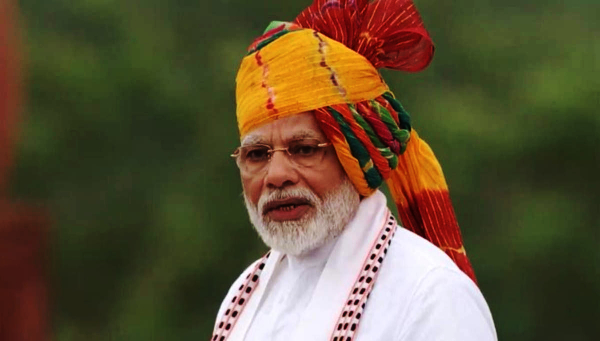
International coverage, has framed the decision against the political backdrop of Prime Minister Narendra Modi’s challenge to older elite networks and colonial-era institutions. That interpretation will attract debate, especially because the club has historically been associated with senior bureaucrats, judges, politicians, military officers, business leaders and Delhi’s old power circles. But the official line, as reported by Indian agencies, is more specific: the land is required for defence infrastructure, governance needs and public-security projects in a sensitive zone of the national capital.
The order is likely to face legal resistance. Reports say club members are expected to challenge the directive, arguing that there is no immediate security threat linked to the premises. That sets up a possible court battle over lease conditions, public purpose, proportionality and the government’s power to resume high-value land originally allotted for a limited institutional purpose.
For the government, the case can be presented as a question of national priorities: whether strategically placed public land in the capital should continue to serve a closed social club or be integrated into defence and public-security planning. For critics, the issue may be framed as state overreach into an old private institution. The legal outcome will depend on the terms of the lease, the strength of the public-purpose claim, and how courts view the government’s power of re-entry.
Whatever the next step, the Delhi Gymkhana Club controversy is no longer just about a club. It is about the fate of colonial-era privilege, the use of prime public land, the legal responsibilities of institutions created under public-interest objects, and the state’s authority to reclaim strategic space in the capital. The June 5 deadline now turns a long-running governance dispute into a direct test of law, land and power in New Delhi.
You may also like
-
PRAHAAR: India’s First National Counter-Terrorism Policy and Strategy
-
Takshak Heavyweight Torpedo: How India’s Indigenous Submarine Weapon Compares With the World’s Leading Torpedoes
-
Embraer Builds Dual Aerospace Strategy in India Through C-390 Military and E175 Regional Aircraft Programmes
-
NextLeap Tests Indigenous Jet Engine for Long-Range Stryker Kamikaze UAV
-
Côte d’Ivoire Military Delegation Visits HAL, Shows Interest in India’s Indigenous Aerospace Platforms
