Indian Engineers Develop Software for World’s Largest Telescope
The software has been developed by ThoughtWorks Technologies based in Pune. This team is also developing another software component for the telescope – Executive Software product.
News on Science, Technology and Research in India
The software has been developed by ThoughtWorks Technologies based in Pune. This team is also developing another software component for the telescope – Executive Software product.
Yadav, who dreams of starting an indigenous aircraft manufacturing centre in India, has floated Thrust Aircraft Company and named his TAC003 prototype aircraft after Narendra Modi and Devendra Fadnavis–
VT NMD. He has to take the flight test in the presence of flight test experts (FTE).
The technology, called CFLOWS, is India’s first integrated coastal flood warning system. It was conceptualised by the office of the Principal Scientific Adviser to the Union Government, after the devastating 2015 Chennai floods.
Researchers from Indian Institute of Technology Hyderabad and KIIT School of Architecture, Bhubaneshwar, have developed bricks from agricultural waste products. They have developed a process to use dry waste like paddy straws, wheat straws and sugarcane bagasse to make bricks.
The RLV program aims to cut down on launch costs by, well, reusing the spacecraft. ISRO’s current project appears to be using a hybrid design that sits somewhere between NASA’s now-shuttered Space Shuttle program and SpaceX’s reusable rockets.
Two diagnostic kits developed by Indian Council of Agricultural Research (ICAR) – Indian Veterinary Research Institute (IVRI) under the ‘Make in India’ initiative, namely the Bluetongue sandwich ELISA (sELISA) and the Japanese Encephalitis lgM ELISA kit for the control of Swine and Detection of Antigen
Researchers used technique called ‘floating film transfer method’ to obtain ultrathin films of an organic material, squaraine, and to transfer it over the copper articles as layers. The anti-corrosion activity was tested in the presence of hydrochloride using electrochemical techniques as well as surface characterization techniques. The tests showed that nearly 40% corrosion protection is reached with just one layer of squaraine and increased up to 98% with four layers.
“Usually eel-loaches are found in fast-flowing streams of south and south-east Asia. Some species are found in Indonesia and the North-Eastern parts of India. This is the first species found in the Western Ghats and more importantly, this is the first subterranean eel-loach species to be found in the world,” says Rajeev Ragavan, assistant professor at the Department of Fisheries Resource Management at KUFOS, who is leading the team studying the species.
The study includes species such as the spitting spiders (Scytodes thoracica), spiders with ‘natural’ mirrors in their abdomen (Thwaitesia sp) and those that steal others’ food (Argyrodes flavescens) – a phenomenon which scientists term as kleptoparasitism. Then there are species which are found only in India.
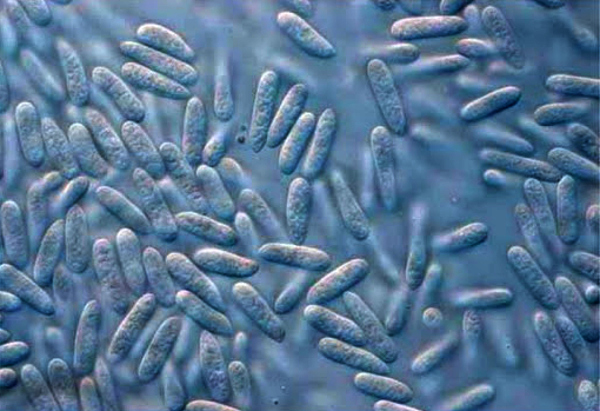
The bacterial species namely Exiguobacterium sibiricum strain DR11 and Exiguobacterium undae strain DR14 were isolated from the wetlands adjoining the university.