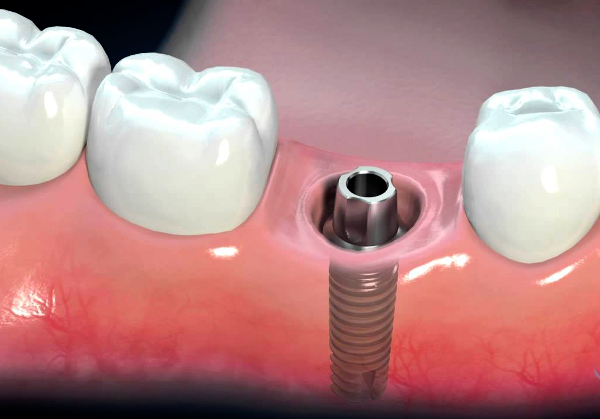
New Delhi: Dental implants are useful to make up for the teeth lost due to dental caries, gum diseases, and other causes. They help to restore normalcy in aesthetics and functions. Titanium is a popular implant material because of its mechanical properties, biocompatibility, chemical stability, low toxicity, and corrosion resistance.
Implant alloys have improved in design to achieve success in almost 95 % cases. However, implant failures occur in around 5% of cases due to poor oral hygiene, bacterial infections, diabetes, hypertension, and the use of tobacco products.
Knowing the property of silver in inhibiting the growth of bacteria, scientists at the Agharkar Research Institute (ARI), Pune have successfully carried out implant surface modifications by depositing a nano-scale thin film of silver on the titanium surface to address the challenge of implant failures, especially due to bacterial infections. ARI is a Pune based autonomous institute of the Department of Science & Technology.
The critical area of an implant is at the junction of the bone and the oral cavity. Silver-deposited titanium (Ti-Ag) inhibited the growth of Pseudomonas aeruginosa, Streptococcus mutans, Staphylococcus aureus, and Candida albicans. The ‘nano-silver’ coat ensured controlled release of silver up to 22 days, maintaining a long-term antibacterial activity. Human gingival fibroblast cells, the most abundant cell types in periodontal connective tissues, could proliferate in the vicinity of the nano-silver coated abutments.
Thus, the modified surfaces showed excellent bioactivity. The nano-scale coating can prevent the initial microbial adhesion and help in the soft tissue integration of the implant. The above findings have been reported in a paper published in a peer-reviewed journal Colloids and Surface B: Biointerfaces.
This nano-scale thin film of silver on the titanium surface could reduce implant failures due to infection, which can affect our lives.
Source: Vigyan Prasar
You may also like
-
IIT Hyderabad Develops Lung-Derived Bioink for 3D Bioprinting and Regenerative Medicine
-
Indian Scientists Discover Molecular Switch That Can Regulate Cellular Autophagy
-
Scientists Map Earliest Glow of Hydrogen, Opening A New Window to the Universe
-
Indian Researchers Study RAD51 DNA-Repair Gene Variant in Prostate Cancer
-
TDB Backs Multi Nano Sense With ₹37.51 Crore to Build Indigenous Multi-Gas Sensor Platform
