Research

News on Science, Technology and Research in India

Indian Scientists Find A Way to Enhance Fat-Burning Capacity of Chilli

The hormone, produced in the digestive system, affects food intake by signaling through the brain. It affects accumulation of glycerolipids through what biochemists term as PPAR-gamma signaling. It is one of the many satiety factors that send messages to the brain saying the belly is full. The capsaicin seems to increase the effect of obestatin, explained Dr. Uma V. Manjappara, the lead scientist.

India’s Space Station Likely to Have Space for Three

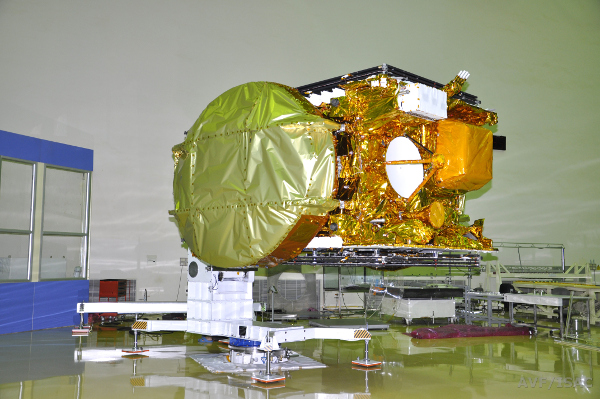
The space station will be an extension of the human spaceflight programme Gaganyaan. TOI has learned that the initial designs for the space station – still in a nascent stage – suggest a 20-tonne modular abode in the low earth orbit (LEO), at an altitude of 120km to 140km.

North India Gets its First ‘Cold Spray’ Lab with IIT Ropar-GE Collaboration

This facility has been primarily funded under Uchchatar Avishkar Yojana (UAY) and FIST-DST, Government of India. This cold-spray facility has the capability to provide working pressure of more than 50 bar at 1000oC for repair, refurbishment and component manufacturing for several advanced applications in power generation, aerospace, automobile, bio-medical, textile and processing industries. Cold spray is an eco-friendly and high rate production alternative to its various counterparts in the domains of additive manufacturing and coating technology.

Guidelines Released for Evaluation of Nano-Pharmaceuticals in India

Dr. Harsh Vardhan informed that these “Guidelines for Evaluation of Nano pharmaceuticals in India” is one of the most important steps for delineating quality, safety and efficacy assessment of the novel nano formulations. He further added that these guidelines are intended to provide transparent, consistent and predictable regulatory pathways for nano pharmaceuticals in India.

Now, India has Own Genetic Database – INDIGEN

For the first time, the Council of Scientific and Industrial Research (CSIR) has collected genome sequence of 1,008 Indians, representing over 55 different ethnic populations and age groups, creating a bank of genetic data. Genome sequencing is the process of figuring out the order of DNA nucleotides, or bases, in a genome.

Isro All Set to Test Gaganyaan’s Crew Abort System

A crew abort system is important in a manned space mission because it allows the capsule with the crew members to quickly separate from the rocket in case of an emergency. Prior to the actual manned mission, four crew abort tests have been planned with the new rocket, Somanath said during a media interaction at the International Astronautical Congress now being held in Washington DC.