Elephant Population Crosses 2,000-Mark in Uttarakhand, Around 30% Rise Since 2015
Elephant population crosses 2,000-mark in Uttarakhand, around 30% rise since 2015
News on Science, Technology and Research in India
Elephant population crosses 2,000-mark in Uttarakhand, around 30% rise since 2015
The Finn’s Weaver or Yellow Weaver was first spotted in Uttarakhand in the 1950s by eminent ornithologist Dr Salim Ali. The bird, usually found in areas near agricultural fields or the Terai region, has seen a decline in population since the past few decades.
Researchers at the Indian Institute of Technology (IIT) Guwahati, in collaboration with Shri Sankaradeva Nethralaya Guwahati, have developed a point-of-care testing device that can detect diabetic retinopathy at an early stage. The procedure does not need any invasive testing. The team has filed an Indian patent for this idea and device.
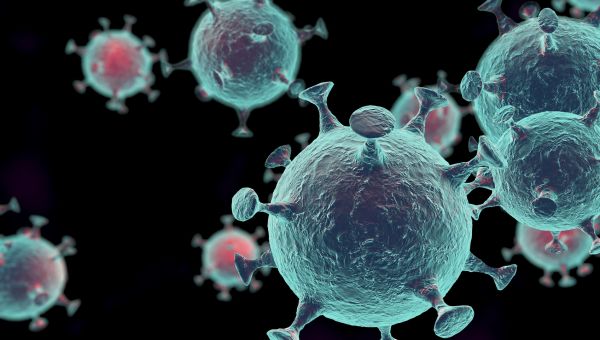
In a significant breakthrough in the battle against antibiotic resistance, a research team from the Indian Institute of Science (IISc) has synthesized a nanomaterial that mimics an enzyme and disintegrates the cell membranes of a range of disease-causing bacteria. The study, published in the journal ACS Applied Bio Materials, is a collaboration between researchers from the Department of Inorganic and Physical Chemistry (IPC) and the Department of Microbiology and Cell Biology (MCB).
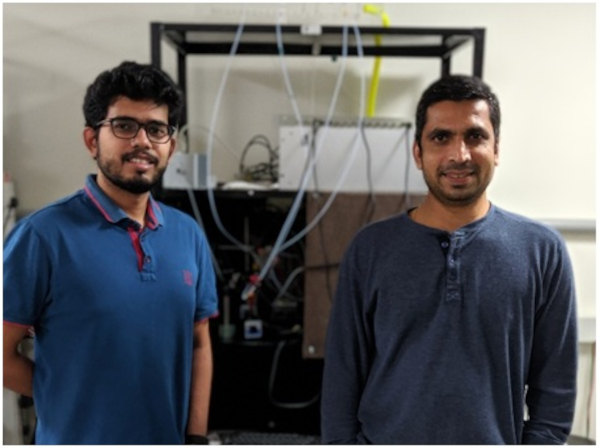
A team of researchers at the Department of Biotechnology’s National Centre for Cell Science (DBT-NCCS) in Pune led by Dr. Shailza Singh has been exploring ways to tackle miltefosine resistance. The researchers worked with one of the species of Leishmania that causes infection, called Leishmania major. They tried to manipulate these transporter proteins in the species in a manner that would result in increased uptake of the drug and decrease in its being thrown out of the parasite’s body.
Scientists at the Institute of Nano Science & Technology (INST), an autonomous institute of the Department of Science and Technology (DST), Govt. of India, have developed a nanotechnology-based industry-friendly and low-cost method for the production of antiepileptic drug ‘Rufinamide’.
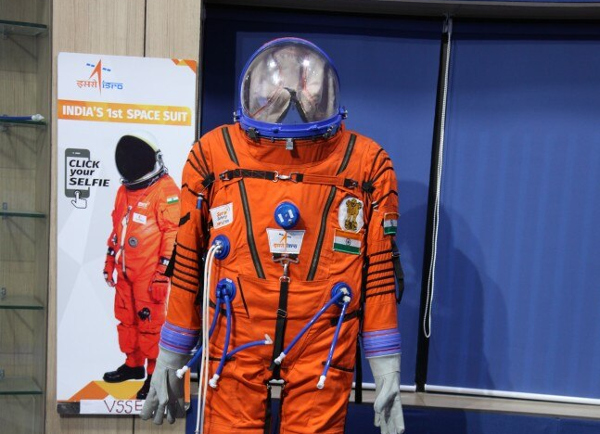
The ISRO said that the garment is a close fitting long garment, covering the torso and limbs from neck to toe as a single piece lightweight comfort inner wear over which the flight suit has to be worn
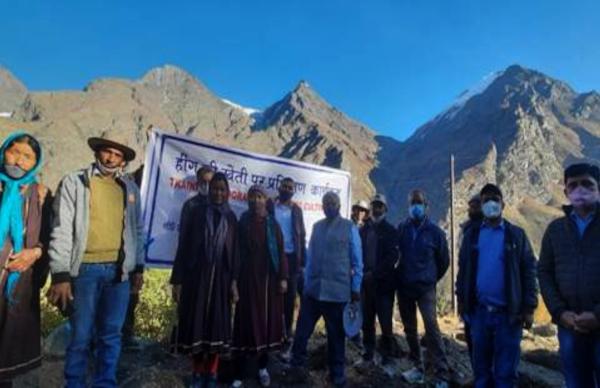
Researchers at Indian Institute of Technology (IIT) Mandi have developed a herbal infusion technology as a sustainable means of income for local marginal farmers in the mid-Himalayan region.
Researchers at the Indian Institute of Technology (IIT) Madras have shown that simple copper-coated jute beads are highly effective in protecting water and preventing microbial contamination. These jute beads could be helpful in solving problem of water contamination and water-borne diseases in India, say researchers.
A rare celestial event, annular solar eclipse, popularly called as ring of fire eclipse will be visible this Sunday. The first solar eclipse of this year takes place on the summer solstice, which is the longest day in the Northern Hemisphere. While people living along the path annular eclipse passing through Anupgarh, Suratgarh, Sirsa, Jakhal, Kurukshetra, Yamunanagar, Dehradun, Tapowan and Joshimath will be able to see the annular phase, people in rest of India can witness a partial eclipse.